
Bangladesh at the Crossroads: Muhammad Yunus, Reform, and the Fragility of Transitional Power

Paromita Das
GG News Bureau
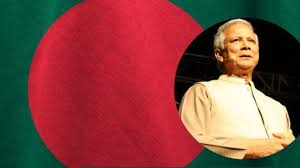
New Delhi, 2nd June: In the tumultuous history of South Asian politics, transitions of power rarely unfold smoothly. But even by regional standards, Bangladesh’s latest political experiment has taken an unexpectedly precarious turn. When Nobel Peace Prize laureate Muhammad Yunus was appointed as Chief Advisor and head of the interim government, both domestic and international observers reacted with cautious optimism. His appointment was seen not just as a breath of fresh air in a deeply polarized environment, but as a potential corrective to the increasingly authoritarian tendencies of previous governments.
Yet months into his leadership, the promise of democratic renewal is giving way to rising political instability. What began as a hopeful chapter of reform now risks ending as a cautionary tale in overreach, miscalculation, and institutional resistance. The tension at the heart of the crisis stems from Yunus’s commitment to a reform-before-elections agenda—an approach fundamentally misaligned with the expectations of Bangladesh’s entrenched political forces.
The Fallout from the Awami League Ban
Central to the current crisis is the dramatic and controversial decision to ban the Awami League, the country’s dominant party since independence. Though justified by the interim administration as a necessary response to years of political suppression, corruption, and democratic erosion, the move has destabilized the political landscape. For the opposition, particularly the Bangladesh Nationalist Party (BNP), the Awami League’s removal presented an unexpected but welcome shift in power dynamics. However, rather than embracing the opportunity for long-term institutional reform, many in the opposition see this as their chance to swiftly regain power.
Calls for immediate elections have grown louder, as the BNP and smaller parties now press for a limited transitional window. Their impatience is understandable—political advantage is a fleeting thing, especially in a volatile environment. But this clamor for quick polls directly undercuts Yunus’s broader vision: to transform the structural DNA of Bangladeshi democracy before handing it back to partisan control.
This has left the interim government in a tightening vise. On one side are politicians eager for elections, and on the other is a population growing weary of a process that appears stalled.
Cracks Within the Interim Structure
The internal mechanics of the interim government have not helped its cause. What was meant to be a neutral advisory council has increasingly come under scrutiny. Allegations that certain advisors are covertly aligned with the newly formed National Citizens Party (NCP) have damaged public trust. The NCP, perceived by many as an elite-led technocratic formation with little grassroots legitimacy, has benefited—perhaps inadvertently—from the administrative vacuum left by traditional parties.
Moreover, tensions within the civil service have surged in response to the Public Service (Amendment) Ordinance. Widely viewed as an attempt to centralize control over bureaucratic appointments and dismissals, the ordinance has triggered protests and strikes within key ministries. Government functionality is now under direct threat, with growing fears of a paralysed state apparatus.
What is more concerning is that these developments are taking place in an environment where the margin for political miscalculation is extremely slim. Bangladesh is not unfamiliar with interim governments, but this one carries a far heavier burden: it must not only conduct elections but also attempt sweeping reform in an increasingly narrow time frame.
Public Mood: Between Hope and Disenchantment
Initially, the Yunus-led administration inspired a surge of civic hope. His legacy as a global figure—founder of the Grameen Bank, pioneer of microfinance, and longstanding advocate for the poor—offered a stark contrast to the populist and dynastic politics of the past. Civil society, urban youth, and sections of the business community rallied behind his vision of cleaner governance, institutional reform, and economic accountability.
But goodwill is a finite resource. The absence of concrete reform, the lack of a clear electoral roadmap, and internal contradictions within the interim setup have gradually eroded public patience. The broad coalition of support that once gave Yunus political breathing space is now fragmenting. Disillusionment is seeping into the public discourse, especially among those who had hoped that the transitional period would rapidly deliver institutional changes and a new democratic ethos.
In today’s digitally connected society, where narratives shift with every news cycle, sustaining legitimacy is harder than ever. Without visible progress, even the most revered reformers can find themselves facing mass skepticism.
The Shadow of the Military
No conversation about governance in Bangladesh is complete without acknowledging the military’s enduring influence. While it has taken a backseat in this civilian-led interim arrangement, its presence remains palpable. Army Chief General Waker-Uz-Zaman’s recent remarks, urging the government to ensure elections by December 2025, serve as a clear and measured warning. While a military takeover remains improbable, the underlying message is unmistakable: the army will not tolerate prolonged political uncertainty.
This institutional impatience drastically reduces Yunus’s room to maneuver. His administration is now pressed to deliver tangible progress under both civic and military scrutiny. The clock is ticking, and time may soon run out on his broader reformist ambitions.
A Delicate Reckoning Ahead
At this juncture, Yunus faces a stark dilemma. His original mandate—reform first, elections later—has become politically untenable. With pressure mounting on all fronts, from opposition parties to public opinion to the military, a recalibration is not only prudent but necessary.
The likely outcome is a compromise: a more modest reform package paired with a defined electoral timeline. Such an outcome may feel like a retreat from idealism, but it may be the only realistic path forward. If Yunus insists on maximalist reforms without securing broad consensus, he risks not only failure but also discrediting future reform efforts in Bangladesh.
Between Principle and Pragmatism
Bangladesh’s interim government, under Muhammad Yunus, represents one of the most ambitious attempts in recent memory to reset a nation’s political trajectory. But noble intentions are not enough to steer a country through deep institutional rot and political cynicism. For reforms to stick, they must be owned not only by elites but also by the political class and the people.
Yunus’s dilemma is, in many ways, the classic reformer’s paradox: how to change a system while being constrained by it. His leadership still holds the promise of transition, but only if it adapts to political reality. The success of this interim experiment will depend not on idealistic purity, but on hard-headed negotiation, transparent process, and an unshakeable commitment to inclusive governance. Bangladesh is at a crossroads—and the world is watching.
