
The Siege of Balochistan: Is Pakistan’s Grip Finally Slipping?

Poonam Sharma
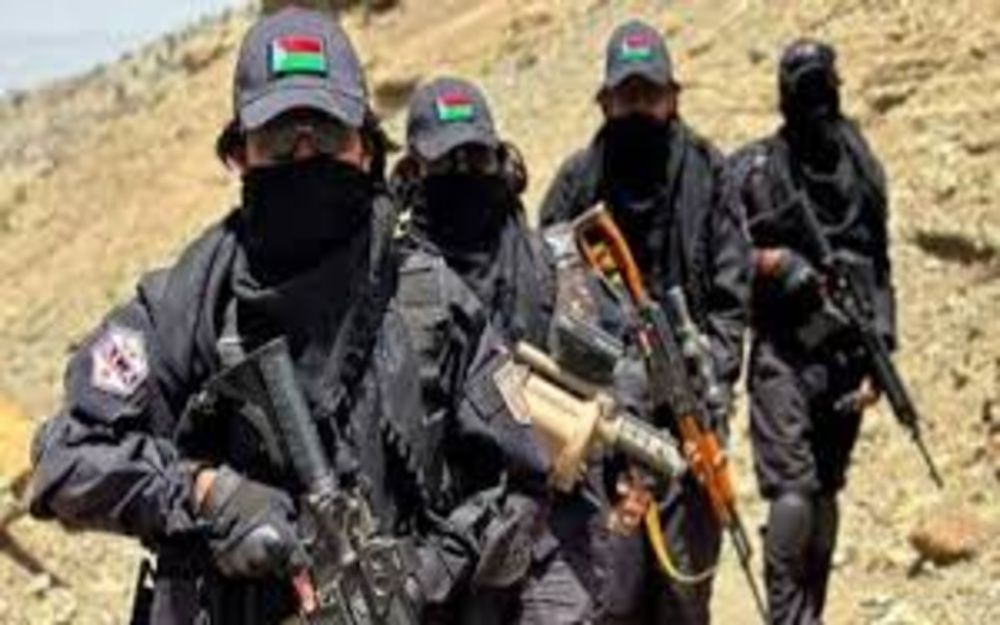
The dust has never quite settled in Balochistan, but recently, the air has grown thick with the smoke of a full-scale uprising. The Baloch Liberation Army (BLA) has moved beyond hit-and-run tactics, launching what they call “Operation Herof Phase 2.” This isn’t just a skirmish; it is a coordinated, high-intensity offensive that has left the Pakistani military reeling.
The Ground Reality: A Battlefield of Minerals and Blood
For decades, the narrative from Balochistan has been one of systematic exploitation. The region is a treasure trove of critical minerals—gold, copper, and natural gas—yet its people remain some of the most impoverished in the world. The BLA’s leadership argues that Pakistan treats the province not as a part of a nation, but as a colony to be plundered.
The recent reports are staggering. While the Pakistani government has enforced a strict information blackout, unconfirmed reports and social media footage suggest a massive toll on security forces. Numbers being discussed range from hundreds to over a thousand Pakistani soldiers killed or captured. The BLA claims to have seized government buildings, tanks, and police stations across districts like Kalat, Mastung, Gwadar, and Panjgur. For the first time, the “Majid Brigade”—the BLA’s elite unit—seems to have paralyzed the movement of the Pakistani army on its own soil.
The China-US Tug-of-War
Balochistan is no longer just a local issue; it is the center of a global tug-of-war. For China, Balochistan is the crown jewel of the CPEC (China-Pakistan Economic Corridor). For the United States, specifically under the leadership of Donald Trump, the region represents a vital source of “critical minerals” necessary for the tech and energy sectors.
However, the BLA has sent a clear message: no international deal is valid without the consent of the Baloch people. They are making it impossible for foreign entities to extract resources while the local population lives under the shadow of “enforced disappearances” and military crackdowns.
The India Factor and the “Air Power” Dilemma
As per its usual playbook, Pakistan has pointed the finger at India, with Interior Minister Mohsin Naqvi claiming Indian intelligence is fueling the fire. India’s Ministry of External Affairs has dismissed these claims as baseless, pointing out that the unrest is a direct result of Pakistan’s internal failures and human rights violations.
The most provocative development is the BLA’s appeal for air support. They argue that if they had even a fraction of air power to counter the Pakistani Air Force’s indiscriminate bombing, they could achieve full independence within days. This puts New Delhi in a delicate position. Should India intervene more directly to stop the humanitarian crisis? Or would that play right into Pakistan’s narrative of foreign interference?
Conclusion: The End of the Status Quo
The sheer scale of the current violence suggests that the “simmering” conflict has reached a boiling point. If the BLA continues to hold hundreds of soldiers hostage and occupy key administrative zones, Pakistan will be forced to the bargaining table—or face a fragmentation similar to 1971. The world can no longer ignore Balochistan. Whether it’s the UN or the incoming Trump administration, the focus must shift from “mineral deals” to the human rights of the 60 million people living in the crossfire.
