

Poonam Sharma
For those who have watched The Bengal Files, history is not a distant academic chapter. It is a wound that never fully healed. It is memory passed down in whispers—streets overcrowded with corpses, of neighborhoods burning, of families uprooted overnight. For many Bengali Hindu families, especially Brahmins and other communities, the shadow of Direct Action Day of 1946 and the subsequent violence did not end with Partition. It became generational memory.
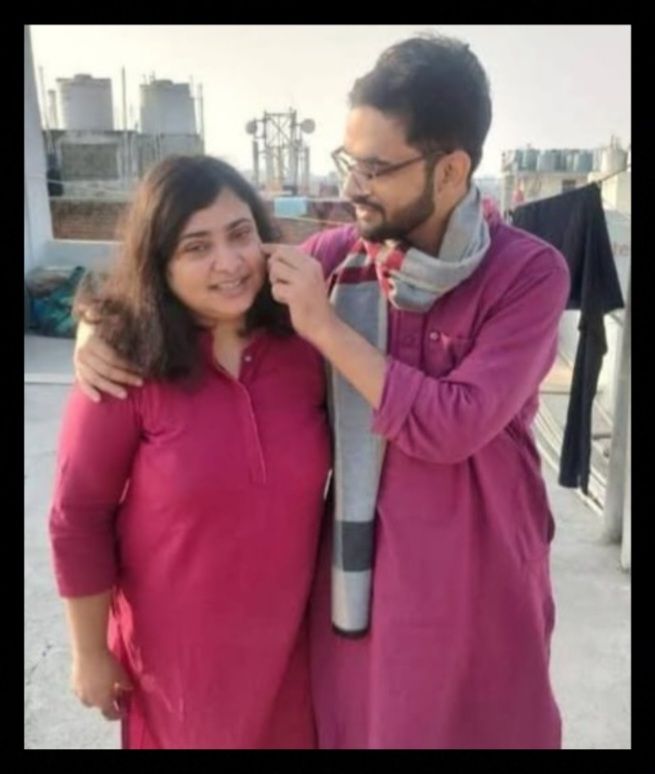
Against this backdrop, Banojyotsna Lahiri a Bengali Hindu Brahmin is the girlfreind of Umar Khalid is not merely a personal love story. How It becomes a deeply symbolic and unsettling case—one that forces uncomfortable questions about history, ideology, and selective amnesia.
At one level, love is personal. Adults are free to choose their partners, and no democracy should police emotions. Yet, when personal relationships intersect with radical political ideology, historical trauma, and international lobbying, they stop being purely private matters. They become political symbols—whether intentionally or not.
The Weight of Historical Memory
Bengal’s Hindu society, particularly families that lived through or inherited the trauma of Direct Action Day, carries a specific historical consciousness. The violence of August 16, 1946, was not random; it was organized, ideological, and targeted. Hindu homes were marked, women were assaulted, and entire localities were erased. Survivors rebuilt their lives with silence, resilience, and a deep mistrust of political Islamism.
For such families, history is not hatred—it is lived experience.
When a young Bengali Hindu Brahmin woman emerges as an active advocate for the bail of Umar Khalid, a man accused by the Indian state of involvement in the Delhi riots and alleged anti-national activities, it triggers a moral and emotional dissonance. Is this love— because of what she is defending, and whom she is mobilizing global power structures for.
Love or Ideological Alignment?
The most disturbing question is not romantic—it is ideological. Is this merely love crossing political boundaries? Or is it love shaped by a specific ideological ecosystem where Banajyotsna , where she as a Hindu has compromised her identity , and Islamist radicalism as perpetually accepted ?
Umar Khalid is not a politically neutral figure. He represents a strain of treachery against nation that consistently frames India as structurally unjust, Hindu society as majoritarian, and global intervention as morally necessary. Supporting such a figure is not a passive act; it is an act of political choice.
When that support reportedly extends to international lobbying—reaching out to figures like New York politician Zohran Mamdani—it raises another troubling question: why is India’s internal judicial process being internationalized? Why is global pressure sought instead of faith in Indian courts? For families shaped by Partition, foreign intervention is not a romantic ideal—it is a reminder of betrayal.
Generational Disconnect
Perhaps the most painful element of this case is the generational rupture it exposes.The generation that survived Direct Action Day did not have the luxury of ideological abstraction. Violence was real, immediate, and brutal. The current generation, raised in elite academic spaces and global activist networks, often engages with history selectively—viewing trauma through the lens of theory rather than blood and loss. This disconnect allows for strange moral inversions: Victims of past violence are asked to “move on.”
Ideologues accused of inciting unrest are portrayed as persecuted intellectuals. Hindu identity is treated as a political problem, while radical ideologies are reframed as resistance.
In such an environment, love becomes questionable not because society forces it to be—but because ideology reshapes moral priorities.
Feminism, Agency, and Blind Spots
Some will argue that questioning this relationship undermines a woman’s agency. That is a false framing. Agency does not exist in a vacuum. It includes responsibility, awareness, and ethical reflection.
True feminism does not require suspending critical thought. Supporting a cause—or a partner—without interrogating the consequences is not empowerment; it is ideological capture.
If a woman from a community historically scarred by political violence actively supports a narrative that dismisses or relativizes that violence, criticism is not misogyny. It is moral accountability.
A Mirror to Society
Ultimately, this is not just about Umar Khalid or Banojyotsna Lahiri. It is about modern India’s struggle with memory.
Do we honor historical pain, or do we overwrite it with fashionable politics? Do we defend free thought while ignoring its real-world consequences? Do we confuse global validation with moral truth?
For those who have seen The Bengal Files, this case feels less like a love story and more like a warning—a reminder that when history is forgotten, it does not disappear. It returns, disguised as ideology, dressed in the language of justice, and protected by silence. Love can be blind. Societies cannot afford to be.
