

Poonam Sharma
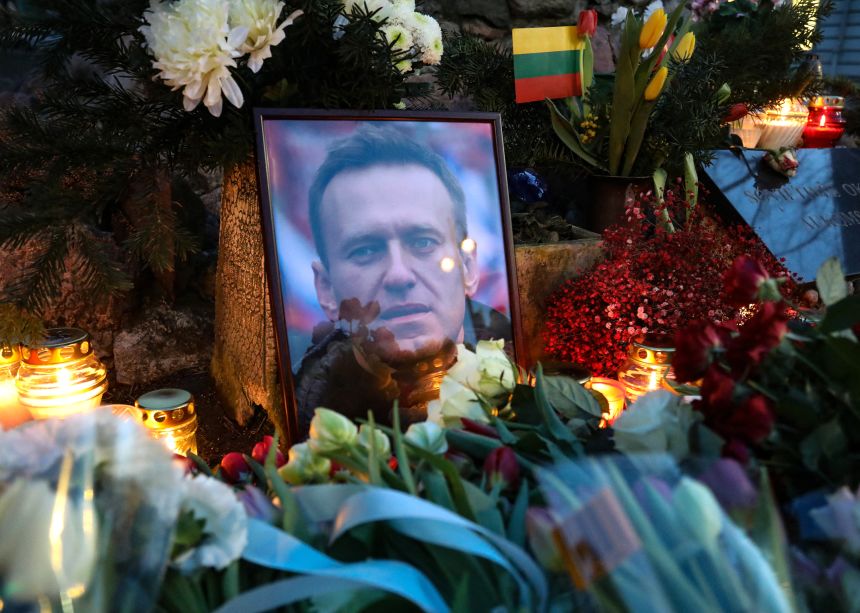
Two years after the death of Russian opposition leader Alexei Navalny in a remote Siberian penal colony, the UK and several European governments have publicly accused the Kremlin of killing him using a rare toxin derived from poison dart frogs. Their claim centers on the alleged detection of epibatidine in biological samples taken from Navalny’s body — a substance so unusual and potent that officials argue there is no innocent explanation for its presence.
A Rare and Unusual Poison
The announcement was made at the Munich Security Conference by UK Foreign Secretary Yvette Cooper, alongside a joint statement from the UK, Sweden, France, Germany and the Netherlands. According to the statement, only the Russian state had the “means, motive and opportunity” to administer such a toxin while Navalny was imprisoned under strict state control. The Russian government has rejected the accusation, describing it as politically motivated.
Epibatidine is not a conventional poison. It was first isolated from certain species of poison dart frogs native to northern South America. In laboratory research, it has been studied for potential pain-relief applications because it is believed to be around 200 times more potent than morphine. However, its extreme toxicity has ruled out any clinical use.
In the human body, epibatidine acts on receptors in the central nervous system. It can trigger muscle twitching, seizures, respiratory failure and cardiac arrest. Toxicology experts describe it as an extraordinarily rare and impractical choice — unless someone specifically wanted a substance that is difficult to trace and nearly impossible to explain away.
What makes the allegation particularly striking is that epibatidine does not naturally occur in Russia. Even dart frogs in captivity do not produce it; they acquire the toxin from specific insects in their wild diet. For it to appear in Navalny’s system would suggest deliberate synthesis or highly specialized extraction. Western officials argue that this complexity strengthens the case that a state actor was involved.
A Pattern That Raises Questions
Navalny’s widow, Yulia Navalnaya, has long maintained that her husband was poisoned. Shortly after his death in February 2024 at age 47, she accused Russian authorities of murder. Months later, she said independent laboratory analysis of smuggled samples showed he had been killed, though at the time she did not specify the toxin involved. Following the latest announcement, she said she had always believed poisoning was the cause and that the new findings confirmed her conviction.
To fully grasp the weight of these accusations, it is important to look at the broader context. Navalny was widely regarded as the most prominent and persistent critic of Russian President Vladimir Putin. Through anti-corruption investigations and large-scale protests, he built a political movement that directly challenged the Kremlin’s authority. That visibility made him a target long before his final imprisonment.
In 2020, Navalny survived a previous poisoning attempt involving a Novichok nerve agent — a class of chemical weapons developed during the Soviet era. After collapsing on a domestic flight, he was evacuated to Germany for treatment. International investigators later concluded that Novichok had been used. When he returned to Russia in 2021, he was immediately arrested and eventually sentenced to lengthy prison terms on charges widely viewed by Western governments as politically motivated.
The use of rare or exotic poisons in cases involving Kremlin critics is not without precedent. The 2018 poisoning of former Russian intelligence officer Sergei Skripal and his daughter in the United Kingdom also involved Novichok. That incident led to coordinated Western sanctions and diplomatic expulsions. Over the years, Russia has repeatedly denied involvement in such incidents, often calling them smear campaigns. Still, the pattern of alleged poisonings has kept suspicions alive internationally.
Political Message or Plausible Deniability?
Critics of the Kremlin argue that such methods serve multiple purposes: silencing dissent while sending a chilling message to others. The unusual nature of the toxins — substances that are difficult to obtain and scientifically complex — reinforces the perception of state involvement. At the same time, Moscow consistently rejects these claims, framing them as geopolitical attacks designed to isolate Russia.
If the findings about epibatidine are confirmed by international bodies, the diplomatic consequences could be significant. The UK has reportedly informed the Organisation for the Prohibition of Chemical Weapons about what it describes as a potential breach of the Chemical Weapons Convention. That step signals the seriousness with which Western governments are treating the allegation.
A Death That Deepens Divides
Ultimately, the truth may hinge on access to evidence that remains tightly controlled or politically contested. For Navalny’s supporters, the scientific details only reinforce what they have long believed: that a government unwilling to tolerate opposition was prepared to eliminate its most determined critic. For Russia, the accusation fits into a broader narrative of external hostility and coordinated pressure.
What is clear is that Navalny’s death has deepened already severe tensions between Russia and the West. Whether this latest claim leads to accountability or becomes another unresolved chapter in a history of suspected poisonings remains uncertain. What is not uncertain, however, is the lasting political impact of Navalny’s life — and the controversy that continues to surround his death.
