

Poonam Sharma
Dubai Under Fire as Regional War Intensifies
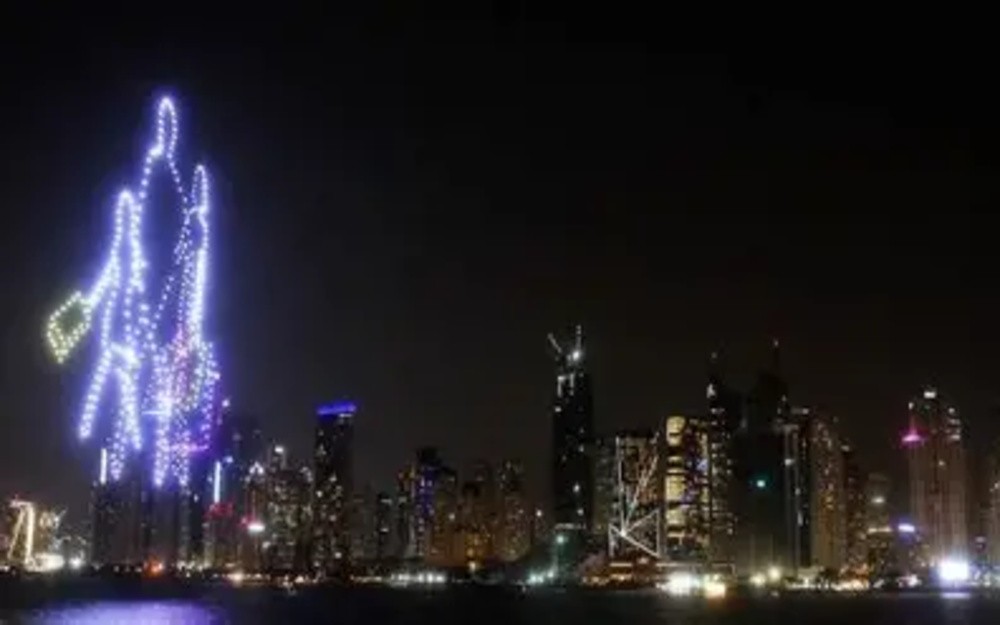
Dubai, a city once seen as insulated from regional turmoil, woke up to the sound of distant explosions and streaks of light across the sky. What began as scattered reports of drone movements quickly escalated into confirmed missile interceptions over parts of the UAE.
According to emerging regional reports, more than 200 drones were launched toward strategic targets across the Gulf. Defense systems tracked and neutralized several, but not before explosions rattled buildings and sent residents scrambling for updates. For hours, the skyline flickered with interceptors and smoke trails.
The situation intensified following reports of a massive strike on Iran’s Supreme Leader, Ali Khamenei. While official confirmation remains absent from Tehran, multiple regional intelligence sources claim that a precision daytime strike targeted a secure meeting location attended by senior Revolutionary Guard officials and national security advisors.
Strike on Leadership, Shockwaves Across the Region
If confirmed, the strike on Khamenei would represent one of the most consequential targeted attacks in modern Middle Eastern history. Reports suggest that over 30 precision-guided munitions were used in a coordinated assault on what was described as a high-security compound.
The alleged operation is believed to have involved detailed surveillance and insider intelligence. Analysts say such a strike could not have occurred without real-time coordinate sharing and internal breach of security layers.
In the hours following the reported strike, Iran launched retaliatory missile barrages. Several US-linked installations across the region, including naval assets in the Gulf, were reportedly targeted. Iran’s state media claimed heavy American casualties — figures that remain unverified by Washington.
The Israeli defense system, including Iron Dome, was reportedly under intense pressure as waves of ballistic missiles attempted to breach layered air defenses.
Dubai Airport Falls Silent
For residents and travelers in Dubai, the war is no longer abstract. Dubai International Airport — one of the busiest hubs in the world — fell silent. Airspace tracking platforms showed near-zero civilian aircraft over UAE skies.
Thousands of passengers were left stranded. Hotels reached capacity within hours. Families slept on terminal floors. With regional air corridors closed across parts of Iran, Iraq, Jordan, Qatar, and the UAE, aviation networks faced unprecedented disruption.
Financial markets reacted sharply. Investors braced for volatility as oil prices surged in overnight trading. Analysts speculated that global powers might attempt rapid diplomatic intervention before major Western stock exchanges open, fearing economic shockwaves.
Leadership Vacuum and Uncertain Future
Reports suggest internal uncertainty within Iran’s leadership structure. Discussions over succession have intensified, though no official announcement has been made. Observers warn that a leadership vacuum during wartime could further destabilize the region.
Meanwhile, missile exchanges have not ceased. Interceptions continue, black smoke remains visible in parts of the Gulf, and the fear of escalation lingers heavily.
Dubai — often described as the Middle East’s financial sanctuary — now finds itself directly within the arc of a widening conflict. The coming hours may determine whether this confrontation stabilizes or spirals further.
The world is watching — and waiting.
