
Affordable Prices, Better Earnings: Nagaland Welcomes GST Cuts
Tax cuts from 12% to 5% across key sectors promise better earnings, affordable products, and inclusive growth

Harshita Rai
Nagaland’s economy—rich in craft, colour, and community—is set for a welcome transformation. The Centre’s latest GST reforms, slashing rates from 12% to 5% across major sectors like handloom, bamboo, coffee, and tourism, are more than just tax adjustments—they’re a lifeline for small producers and artisans who form the heart of the state’s economy.
Weaving Prosperity
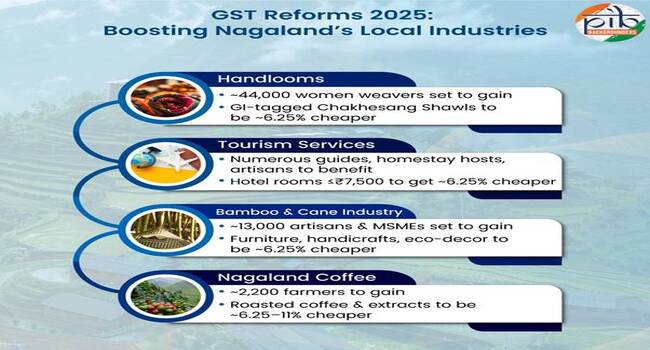
For decades, Nagaland’s women have kept its handloom tradition alive, spinning stories into every thread. With nearly 44,000 artisans across Kohima, Phek, and Dimapur, the industry is a backbone of household income. The GST cut from 12% to 5% on handloom shawls and textiles means that products—like the world-famous Chakhesang shawls—will now be around 6% cheaper.
That may sound small, but for a weaver, it could mean more sales, higher margins, and a wider market reach. It’s also a step toward taking Nagaland’s art beyond the Hornbill Festival—to boutiques and buyers across the world.
Tourism Gets a Push
For travellers who have long dreamed of visiting the lush hills of Nagaland, stays just got more affordable. With GST on hotel rooms up to ₹7,500 reduced to 5%, tourism services in Kohima, Dimapur, and Kisama will become nearly 6% cheaper.
This move could draw more domestic and NRI travellers, helping local guides, homestay owners, and small restaurants—many of whom rely on seasonal tourism—earn a steadier income.
Bamboo & Cane: Crafting the Green Future
Bamboo and cane aren’t just crafts here—they’re a way of life. From household furniture to festival décor, Nagaland’s artisans shape beauty from the forests around them. The reduced GST on bamboo and cane products will make items more affordable for buyers while ensuring artisans take home better profits.
With over 13,000 people working in this sector, the move promises sustainable livelihoods and renewed interest in eco-friendly products.
Brewing Growth: Nagaland Coffee
In the misty hills of Mokokchung and Wokha, coffee farmers are celebrating too. With the GST on roasted beans and extracts reduced from up to 18% to just 5%, Nagaland coffee will now be cheaper by 6–11%.
That means more competitive pricing for cafes and exporters—and better returns for the 2,200 small growers who nurture their plantations with care. Already making its mark in markets from South Africa to Germany, Nagaland coffee is now poised to go further.
A Reform Rooted in People
Nagaland’s GST relief isn’t about big numbers—it’s about small dreams taking flight. It’s about a weaver earning a little more for her shawl, a farmer getting a fairer price for his beans, a homestay welcoming more guests, and an artisan seeing his craft valued anew.
These reforms bring economic hope while protecting what makes Nagaland unique—its culture, its craftsmanship, and its community spirit.
