
A Turning Point in Rio: 17th BRICS Summit the Fight Against Terror

Paromita Das
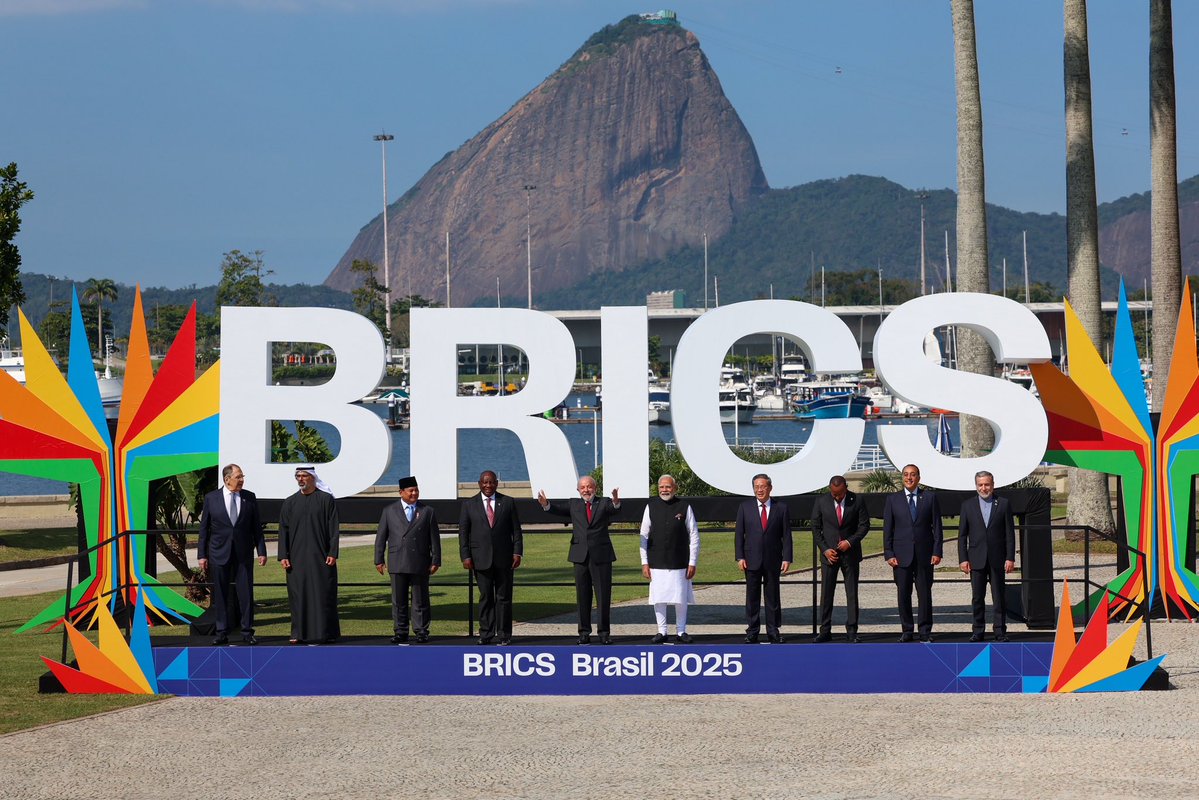
New Delhi, 9th July: In the vibrant city of Rio de Janeiro, where carnival drums echo the spirit of freedom and resilience, an entirely different kind of statement was made this year — one that might shape the global battle against terror for years to come. The 17th BRICS Summit did not merely gather leaders under one roof; it gave voice to a collective conscience that finally refused to look away from the smoke rising from conflict zones like Pahalgam.
When Words Became a Shield
On April 22, Pahalgam — known for its pine forests and serene rivers — turned into a blood-soaked reminder that terrorism spares no soul. Twenty-six innocent lives lost in a single, ruthless attack. For many Indians, this wasn’t just another tragic headline; it was a question mark on whether the world would yet again issue token condolences, only to slip back into silence.
This time, the answer came from Rio. The BRICS nations — Brazil, Russia, India, China, and South Africa — stood side by side, penning a joint declaration that left no ambiguity. They denounced not only the violence but the entire machinery that feeds such horror — cross-border safe havens, terror financing, and double standards that have allowed terrorism to mutate and survive.
Modi’s Unapologetic Clarity
When Prime Minister Narendra Modi took the stage during the Peace and Security session, there was no attempt to soften the blow. He called the Pahalgam attack what it was: an assault on India’s very soul. But more than that, he framed it as an affront to the shared humanity that binds the BRICS nations — an attack on the idea that peaceful co-existence is still possible in a fractured world.
His words were less about mourning and more about resolve. He demanded that the world shed its habit of selective outrage and impose real, biting sanctions on those who orchestrate and sponsor terror. There was a pointed message in his speech, too — though no country was named outright, the shadow of Pakistan loomed large, as did the memory of China’s earlier reluctance to allow UN sanctions against Pakistan-based extremists.
Redefining Global Tables
While terrorism dominated headlines, the summit didn’t just stop at condemning violence. Modi’s remarks on the pressing need for a reformed world order struck a chord that resonated far beyond the summit hall. He likened outdated global institutions to mobile phones without a network — powerful but disconnected from the real world they claim to serve.
His push to modernize the UN Security Council and to amplify the voice of the Global South was more than diplomatic posturing. It was an attempt to remind the older powers that the 21st century will not be shaped in the same smoky rooms where post-World War treaties were signed. The Rio declaration’s endorsement of India’s rightful place at the high table added a layer of credibility to this demand.
India as a Peacekeeper and Reformer
In an age when countries often pick a side between diplomacy and deterrence, India’s approach stands out for its balance. Even as Modi demanded a hard line on terror, he underlined dialogue as the bridge to resolve crises from West Asia to Europe. His four-point plan to make BRICS more relevant — from sustainable AI governance to resilient mineral supply chains — revealed a vision that looked beyond guns and bombs, aiming instead at tackling the seeds of conflict: inequality and technological misuse.
A Subtle Warning to Enablers
Perhaps the strongest message to Pakistan and similar enablers came not through an open threat but through the collective will expressed by the BRICS bloc. The declaration avoided direct finger-pointing, but its call for a zero-tolerance approach and a global convention on terrorism under the UN left little room for plausible deniability. There was no back door to hide behind this time. The world’s emerging powers had spoken in unison.
Why This Summit Matters
In my view, the Rio Summit has done what many larger gatherings have failed to achieve — it transformed condemnation into commitment. In a world fatigued by well-crafted statements and half-hearted resolutions, BRICS’ stand offered a spark of sincerity. It showed that when nations often accused of geopolitical gamesmanship can stand together on an issue as complex as terrorism, perhaps the dream of a unified, safer world is not so far-fetched.
It also showed India’s evolution from a victim seeking sympathy to a leader demanding accountability. By putting terror sponsors on notice and pushing for inclusive global governance, India did not just reclaim moral high ground; it carved out a role as an architect of a future where peace is more than a fragile promise.
Towards 2026 and Beyond
As the last applause faded in Rio and the next summit moves closer to India’s soil, the expectations are immense. The foundation has been laid for a BRICS that is not just an economic bloc but a moral force against the twin threats of extremism and exclusion.
Pahalgam’s tragedy should never have happened, and the twenty-six lives lost there must never be reduced to footnotes. But if the unity shown in Rio can translate into real action — tighter sanctions, no safe havens, a reformed UN — then perhaps those innocent lives will serve as the turning point we so desperately need.
The world does not lack declarations; it lacks the courage to stand by them. In Rio, for once, words may have found a spine.
