
Questioning is India’s Tradition: Prof. Sanjeev Sharma
IGNCA hosts Devendra Swarup Memorial Lecture on Indian Knowledge System

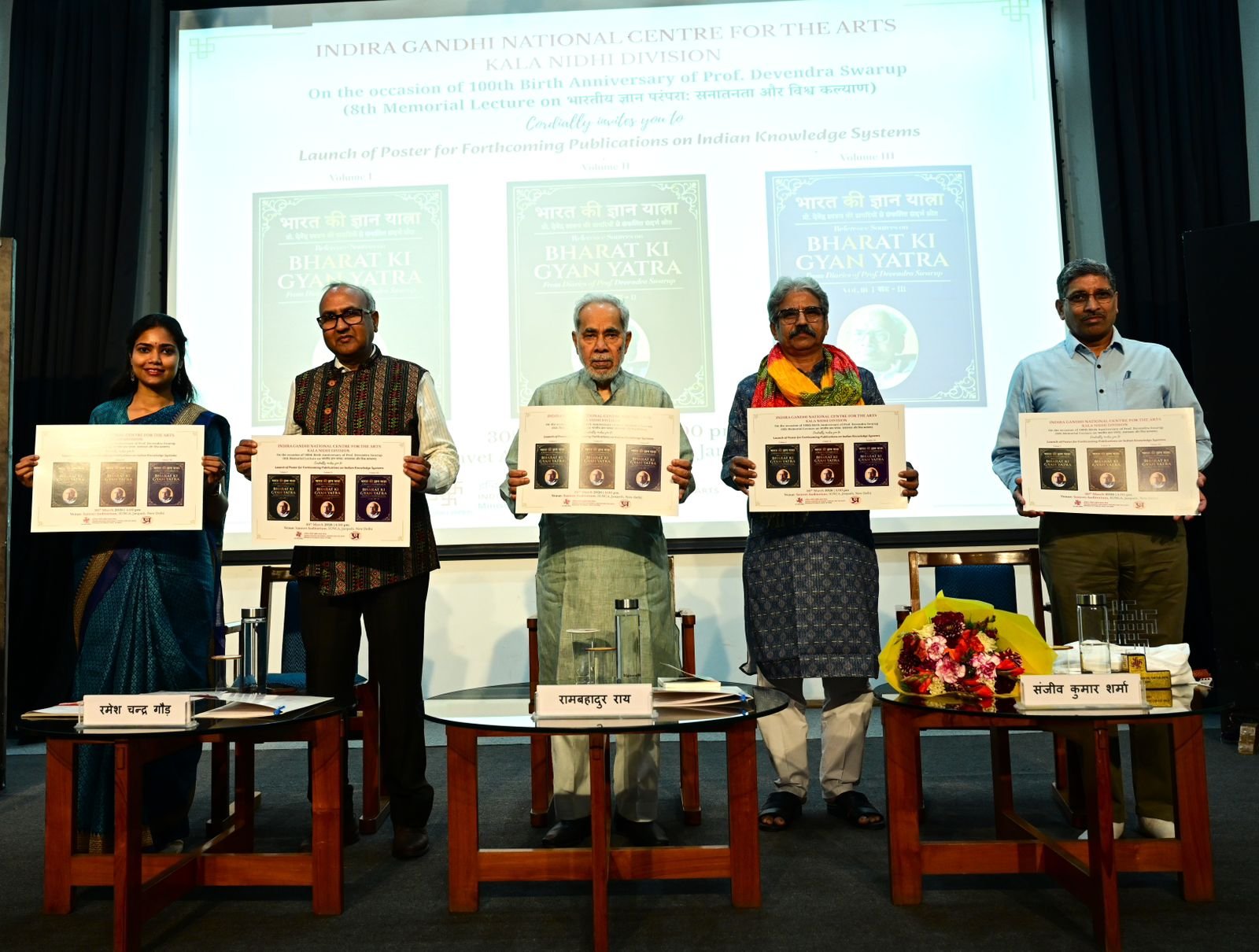
- Indira Gandhi National Centre for the Arts hosts memorial lecture
- Prof. Sanjeev Sharma highlights relevance of Indian knowledge tradition
- Rambhadur Rai calls Gita essence of democracy
- Book poster “Bharat Ki Gyan Yatra” unveiled
GG News Bureau
New Delhi, 31st March: The Indira Gandhi National Centre for the Arts organised the ‘Prof. Devendra Swarup Memorial Lecture’ on the theme “Indian Knowledge Tradition: Eternity and Global Welfare,” bringing together scholars, researchers and students.
Delivering the keynote address, Prof. Sanjeev Kumar Sharma emphasised that questioning has always been a core element of India’s intellectual tradition. Citing dialogues from ancient texts such as the Yaksha-Yudhishthira, Nachiketa-Yama and Krishna-Arjuna conversations, he said that inquiry and debate have shaped Indian knowledge systems since ancient times.
He underlined that knowledge in India has never been considered final and continues to evolve, reflecting both continuity and adaptability. Highlighting inclusivity, he said the Indian tradition is inherently non-discriminatory and rooted in the idea of collective welfare.
IGNCA Chairman Rambhadur Rai, who presided over the event, described the Bhagavad Gita as the essence of democracy. He noted that Lord Krishna encouraged Arjuna to question, reflecting openness and dialogue as central to Indian thought.

Rai also cautioned against reducing India’s knowledge tradition to mere slogans, calling it a result of sustained intellectual discipline and practice.
On the occasion, a poster of the upcoming book “Bharat Ki Gyan Yatra,” based on 36 unpublished diaries of Prof. Devendra Swarup, was unveiled. The event marked his birth centenary year.
Earlier, Prof. Ramesh Chandra Gaur, Dean and Head of the Kalānidhi Division at IGNCA, welcomed the participants and highlighted the importance of connecting India’s intellectual heritage with contemporary discourse.
The programme saw active participation from academicians, scholars and students, reflecting continued interest in India’s civilisational knowledge systems.
