
“Sensitive, Compassionate Use of Power”: Ex-CJI on Euthanasia Order
Supreme Court allows passive euthanasia for man in coma for 12 years, citing dignity and medical consensus

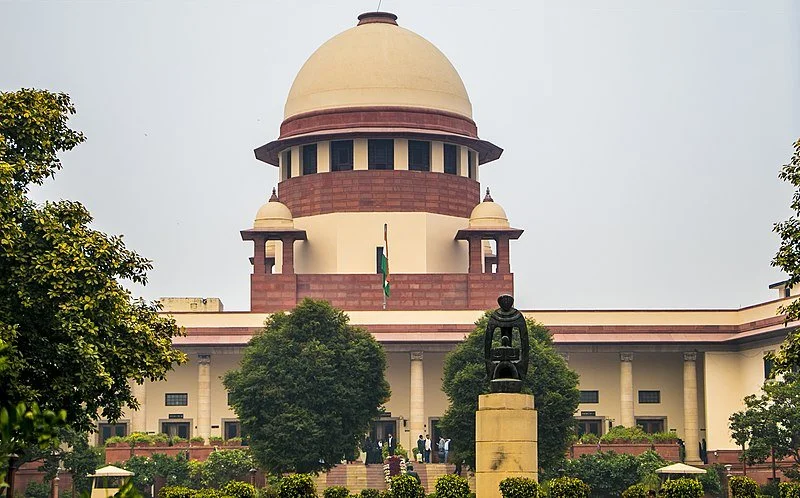
- Supreme Court permits withdrawal of life support for comatose patient Harish Rana
- Former CJI DY Chandrachud calls decision compassionate and constitutionally sound
- Medical boards confirm patient in irreversible vegetative state for over a decade
- Order reinforces 2018 ruling recognising right to die with dignity
GG News Bureau
New Delhi, 11th March: Former Chief Justice of India D.Y. Chandrachud on Wednesday described the Supreme Court’s decision permitting passive euthanasia for a 31-year-old man in a prolonged coma as a “sensitive and compassionate exercise of constitutional power”.
The Supreme Court allowed the withdrawal of artificial life support for Harish Rana, who has remained in a comatose state for more than 12 years following a severe head injury.
Rana, a student of Panjab University, suffered critical brain injuries in 2013 after falling from the fourth floor of his paying guest accommodation. Since then, he had remained in a permanent vegetative state with negligible chances of recovery.
Passive euthanasia refers to allowing a patient to die by withholding or withdrawing life-sustaining medical treatment when recovery is deemed impossible.
Reacting to the judgment, Chandrachud said the ruling reflects the court’s commitment to constitutional values and human dignity.
“This decision by the Supreme Court is a sensitive and compassionate exercise of constitutional power to ensure complete justice. It advances the meaning of human dignity in accordance with constitutional values,” he said in an interview.
Chandrachud, who was part of the Constitution Bench that laid down landmark guidelines on passive euthanasia in 2018, said the ruling provides closure to the family after years of suffering.
“This decision provides final relief to the family of the 31-year-old man who has been in a permanent vegetative state for decades,” he said, adding that the court had reaffirmed the principles established in the Common Cause judgment.
In its 2018 verdict, the Supreme Court recognised the right to die with dignity as a fundamental right, allowing passive euthanasia under strict medical and legal safeguards.
In Rana’s case, his family approached the court seeking permission to withdraw life support, arguing that continuing treatment would only prolong biological survival without dignity.
Two medical boards constituted on the court’s directions examined Rana and concluded that his condition was irreversible, confirming that he had remained in a permanent vegetative state for over a decade.
The patient survived through clinically administered nutrition via percutaneous endoscopic gastrostomy (PEG) tubes, with doctors stating there was no realistic chance of recovery.
The court acknowledged the emotional weight carried by the family in making such a request and praised their dedication.
“In our considered opinion, the greatest tragedy in life is not death, but abandonment. Despite the catastrophic tragedy that struck the applicant, his family never left his side,” the bench observed.
The judges said the case lies at the intersection of love, medicine, loss and mercy, stressing that the order was not about choosing death but about ending the artificial prolongation of life when recovery is impossible.
“It is the decision to withdraw life-sustaining treatment when that treatment no longer heals, restores, or meaningfully improves life. It is allowing nature to take its course when medicine can only delay the inevitable,” the bench said.
Addressing the family, the court said their decision reflected “profound compassion and courage” and emphasised that allowing Rana to pass away with dignity was an act of love rather than surrender.
