

Poonam Sharma
Modern warfare is increasingly defined not just by technology but by arithmetic. In a potential conflict between the United States and Iran, the decisive factor may not simply be which side has the most advanced weapons, but which can sustain the fight longer.
Recent defense analyses suggest that Iran’s strategy of launching large numbers of relatively inexpensive ballistic missiles could place significant pressure on American missile defense systems, particularly the Patriot system’s PAC-3 interceptors. Even though U.S. systems are technologically superior, the sheer volume of incoming missiles could turn the conflict into a war of attrition — one where numbers begin to matter as much as capability.
The Challenge of Advanced Iranian Missiles
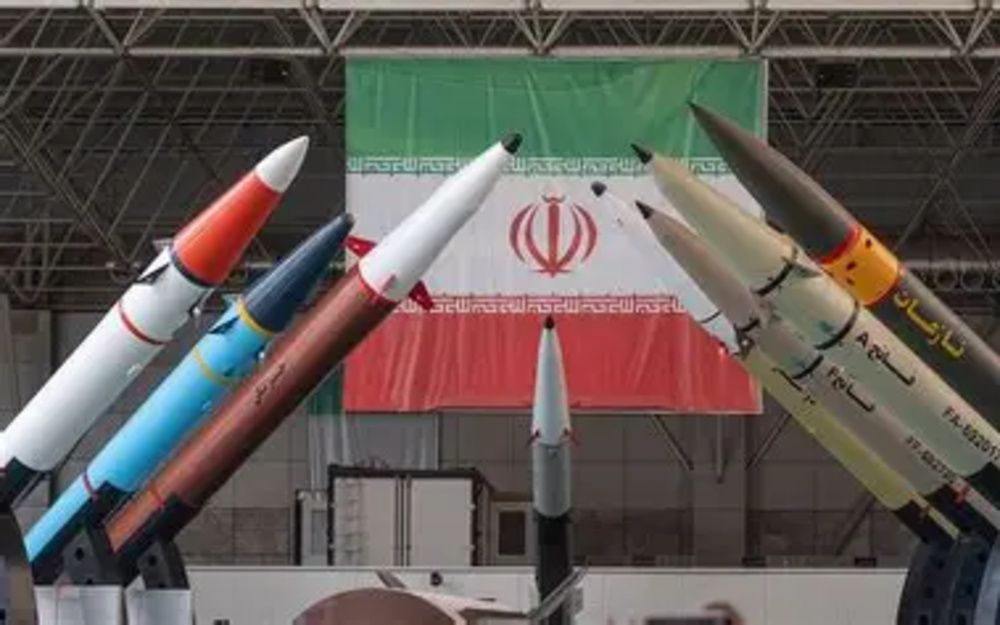
Iran has spent decades developing an increasingly sophisticated missile program. Among its most notable systems is the Fattah hypersonic missile, which Iranian officials claim can maneuver at extremely high speeds, making interception far more difficult than traditional ballistic missiles.
Intercepting such advanced missiles is not simple. In many cases, missile defense doctrine requires multiple interceptors to be fired at a single incoming threat to ensure a high probability of destruction. For complex targets such as maneuvering or hypersonic missiles, that number can climb significantly.
Defense analysts estimate that intercepting one advanced Iranian missile could require anywhere between six and twelve PAC-3 interceptors. The reasoning is simple: each interceptor increases the probability that the incoming missile will be destroyed before it reaches its target.
This approach works well for occasional threats. But if the incoming missiles arrive in large numbers, the equation changes dramatically.
Production vs. Launch Rates
Missile defense is not just about the technology in the launcher — it is also about production capacity.
The United States defense industry produces roughly 600 to 620 PAC-3 interceptors per year. These interceptors are among the most advanced air defense missiles in the world, capable of destroying incoming ballistic threats with high precision.
However, production speed becomes an issue when compared with potential launch rates.
Iran’s missile forces are believed to possess thousands of ballistic missiles of various ranges. Some defense simulations suggest that in a high-intensity conflict, Iran could launch around 100 ballistic missiles per day toward U.S. bases and allied targets in the Gulf region.
If such launch rates were sustained, the mathematics becomes sobering.
At six interceptors per incoming missile, a single day of attacks involving 100 Iranian missiles could require roughly 600 Patriot interceptors. At twelve interceptors per missile, the requirement could rise to 1,200 interceptors.
In other words, one heavy night of missile attacks could consume months’ worth of interceptor production.
The Attrition Problem
These dynamic highlights a classic military problem: attrition.
The United States relies on highly advanced and expensive interceptors designed to defeat sophisticated threats. Iran, on the other hand, has invested heavily in building large numbers of comparatively cheaper missiles that can be produced and launched in significant quantities.
While American systems may intercept many incoming missiles, the cost exchange ratio can favor the attacker if the defender must expend large numbers of expensive interceptors to stop each threat.
Over time, this can create a strategic dilemma. Even if defenses remain effective, stockpiles can shrink rapidly during sustained missile barrages.
Some defense analysts warn that at the current production pace, interceptor supplies in an intense conflict could be exhausted within days or, at most, a couple of weeks if launch rates remain extremely high.
Iran’s Endurance Advantage
Iran’s missile strategy appears designed with endurance in mind. Rather than relying solely on cutting-edge technology, Tehran has focused on building a large and diverse missile arsenal that includes short-range, medium-range, and increasingly advanced systems.
Many of these missiles are produced domestically, allowing Iran to replenish its stockpiles more quickly and cheaply than Western nations can produce advanced interceptors.
This asymmetry creates a scenario where Iran may be able to sustain missile attacks for longer periods, especially if its production facilities remain intact.
Even if Iranian missiles are intercepted at high rates, the continuous flow of new launches can keep pressure on defensive systems.
U.S. Defensive Layers
The United States does not rely on Patriot systems alone. American and allied forces deploy a layered missile defense architecture that includes systems such as THAAD, Aegis ship-based interceptors, and advanced radar networks.
These systems are designed to intercept threats at different phases of flight, increasing the overall chance of stopping incoming missiles before they reach their targets.
However, even layered defenses have limits when faced with large numbers of incoming threats.
Military planners therefore focus not only on interception but also on disrupting missile launches at their source — through intelligence, surveillance, cyber operations, and potential strikes on launch infrastructure.
A War of Logistics
Ultimately, the balance between Iran’s missile forces and U.S. missile defenses may come down to logistics rather than pure technology.
Missile warfare in the modern era increasingly resembles industrial competition: who can build, launch, and replace weapons faster.
For the United States, maintaining interceptor stockpiles and accelerating production capacity could become critical priorities if tensions escalate in the Middle East.
For Iran, the strategy of mass missile launches serves both military and psychological purposes — overwhelming defenses while demonstrating the ability to sustain pressure over time.
The Strategic Reality
None of this means missile defenses are ineffective. In fact, they have proven capable of intercepting many incoming threats in real-world conflicts.
But defense planners increasingly acknowledge that no system can provide perfect protection against large-scale missile barrages.
Instead, the goal is to reduce damage, protect critical infrastructure, and buy time for broader military and diplomatic responses.
In the complex security environment of the Middle East, the contest between missile offense and missile defense is evolving rapidly.
And as the numbers suggest, the outcome may depend less on a single technological breakthrough and more on which side can endure the longest in a prolonged contest of missiles and interceptors.
