
Trump Says ‘Boots on Ground’ May Not Be Needed in Iran Conflict
US signals more firepower as Middle East tensions intensify

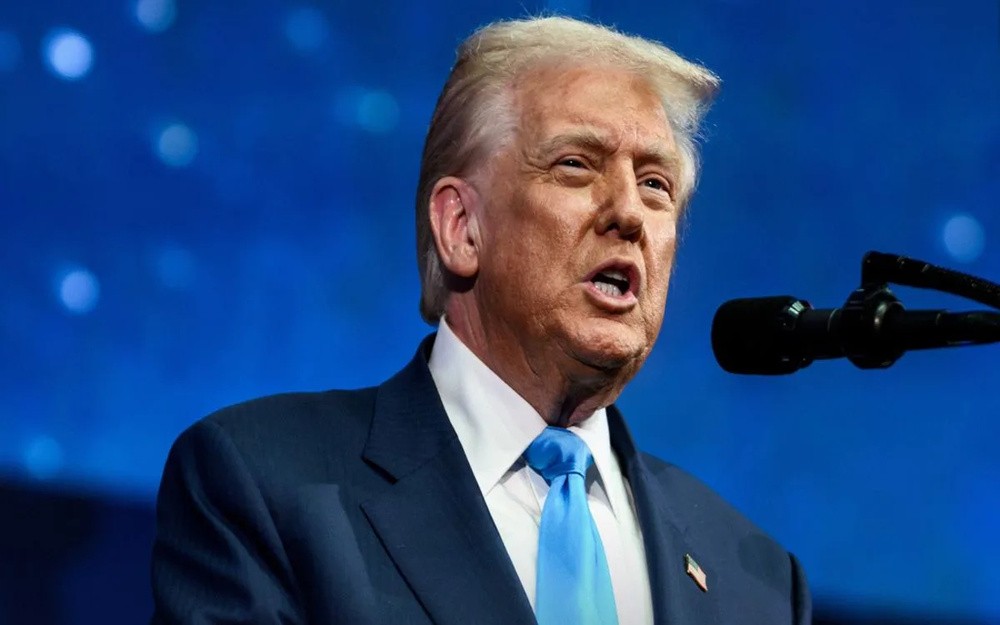
- Trump says ground troops may not be necessary in Iran operations
- Six US service members killed so far in escalating conflict
- Washington outlines objectives: missiles, navy, nuclear program
- Iran threatens Strait of Hormuz; airspace across region shut
GG News Bureau
Washington, 3rd March: US President Donald Trump on Tuesday said “boots on the ground” may not be necessary in the escalating conflict with Iran, even as Washington signalled further retaliation following attacks on US personnel and facilities in the Middle East.
In an interview with NewsNation journalist Kellie Meyer, Trump said retaliation was imminent for the attack on the US Embassy in Riyadh and for the deaths of American service members. As of Monday, six US troops have been killed in action during the ongoing hostilities.
The remarks marked a shift in tone from Trump’s earlier statements. After launching strikes on Iran on Saturday, he had said that while most presidents rule out ground deployments, he would not make absolute commitments, suggesting they would be used only if necessary. On Monday, however, he indicated that such deployment “probably” would not be required.
Despite previously pledging to end US involvement in foreign wars, Trump told media outlets that Washington has “more firepower in store,” adding that “the big wave hasn’t even happened.” He also said the United States has the capacity to sustain military operations beyond the projected four-to-five-week timeframe.
For the first time, Trump outlined specific objectives of the campaign: dismantling Iran’s missile systems, degrading its naval capabilities, targeting its nuclear programme, and curbing its support for armed groups in the region. Notably, regime change was not listed among the objectives.
The United States and Israel have continued coordinated strikes on Iran since Saturday, including operations that reportedly killed Iran’s Supreme Leader Ayatollah Ali Khamenei. Tehran has retaliated with missile and drone attacks across the region.
Iranian Revolutionary Guards General Sardar Jabbari warned that Iran could target vessels transiting the Strait of Hormuz, a strategic chokepoint through which nearly 20 percent of global seaborne oil passes. “We will burn any ship that tries to pass through the Strait of Hormuz,” he said, raising concerns about global energy supplies and economic stability.
Airspace across much of the Middle East remains closed, severely disrupting international flight operations and stranding thousands of passengers.
US Secretary of State Marco Rubio said Washington joined the conflict after learning that Israel was preparing to strike Iran. He told reporters that US officials believed Iran would immediately target American assets if attacked, prompting pre-emptive coordination with its ally.
The conflict, now in its fourth day, continues to intensify, with mounting casualties and growing fears of a prolonged regional war.
