
Iran says Khamenei dead in US-Israel offensive, declares 40 days of mourning

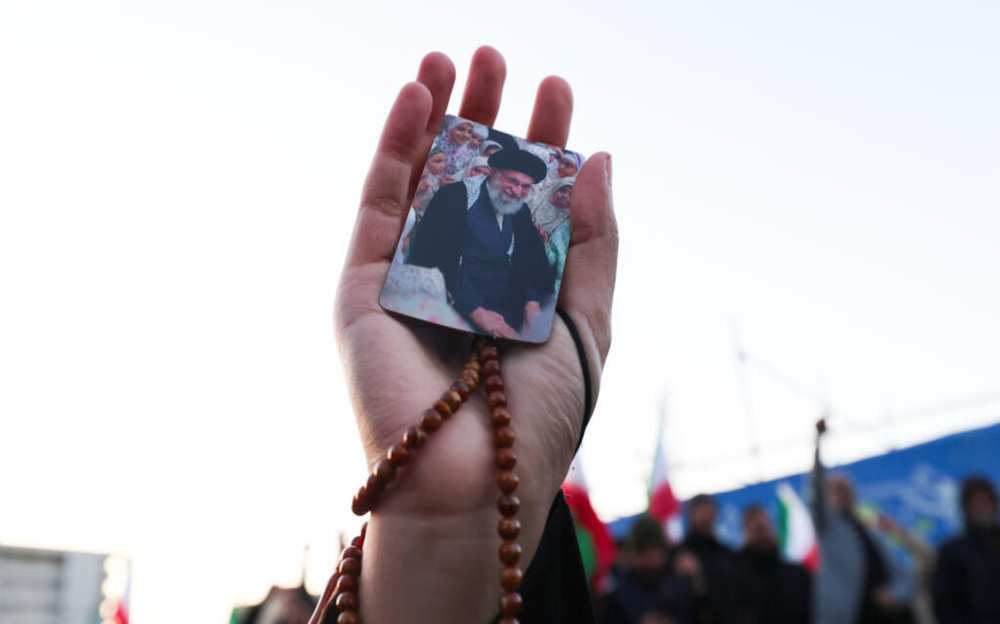
By Anjali Sharma
WASHINGTON – Iran’s Supreme Leader Ayatollah Seyyed Ali Khamenei has been killed on Saturday in coordinated strikes by the Us and Israel, according to Iranian state media and a senior Israeli official who spoke to news media agency.
Tehran has announced 40 days of public mourning, with no clarity yet on succession in Tehran.
The airstrike has sparked regional retaliation, global alarm, and urgent diplomatic outreach from major powers, including India.
The reported death of the 86-year-old cleric marks a dramatic moment in Iran’s 46-year-old Shia theocratic system.
His death ends Khamenei’s 36-year hold over the country and leaves a sudden vacuum at the top of its political and religious hierarchy. There is no clarity yet on who would take charge.
US President Donald Trump announced the operation on Saturday, stated the Iranian leader had been tracked through advanced intelligence systems working “closely with Israel”.
He posted on Truth Social, Trump said there was nothing Khamenei or other leaders killed alongside him “could do” to escape.
Iran launched waves of drones and missiles targeted Israel and several Gulf countries, including Bahrain, Jordan, Qatar, the United Arab Emirates, and Kuwait within hours of the strikes.
Iran’s news agency claimed by the Islamic Revolution Guards Corps that it had struck a supply ship.
UN chief Antonio Guterres said reports indicated that 20 cities across Iran, among them Tehran, Qom, Shahriar, Isfahan, and Tabriz, had come under attack.
French President Emmanuel Macron warned that the spiraling confrontation was “dangerous for everyone” and called for it to stop.
India’s External Affairs Minister S Jaishankar spoke separately with Iran’s Foreign Minister Seyed Abbas Araghchi and Israel’s Foreign Minister Gideon Sa’ar.
Jaishankar posted on X, said he had conveyed India’s “deep concern” and repeated the call for dialogue and diplomacy to cool tensions.
Media reports stated that there were reports that the Iranian port city of Chabahar was also hit. It remains unclear whether the infrastructure developed with India’s cooperation was affected.
US and Israel launched airstrikes against Iran shortly after midnight in Washington, 2 days after negotiations in Geneva, facilitated by Oman, ended without a breakthrough.
Trump had expressed frustration that talks were not yielding a complete halt to Iran’s uranium
Iran saw large protests over rising prices. The government cracked down, with reports saying thousands were killed.
Trump in a video message said that the nuclear issue and urged Iranians to “take over” their government, calling it a rare opportunity. He said the US stood behind them with “overwhelming strength”.
The videos circulated on X appeared to show some Iranians celebrating the reported death. There were no signs of a widespread uprising.
Reza Pahlavi, son of the former Shah who was overthrown in 1979, said he was ready to help “rebuild Iran”. There is no indication that he has US backing or broad support within the country.
The scale of casualties remains uncertain, media reported
Iran’s news agency quoted a local official as saying 57 students were killed and 60 injured after a missile hit a girls’ school in Minab in southern Iran.
UN Secretary General put the reported death toll in Iran at 85, including 2 at a school in Tehran.
Pakistan said one of its citizens had died in the UAE.
British Prime Minister Keir Starmer said UK forces were active as part of “coordinated regional defensive operations”.
China and Russia sharply criticized the US-Israel action.
Guterres condemned what he described as a widening military escalation that threatened international peace and security.
He warned that the region now waits to see who emerges to lead Iran, and whether the violence spreads further.
