
India Post Reform Drive Gains Pace: Scindia
100 Post Offices to Be Modernised by March 2026; Parcel, Speed Post and Export Push to Boost Revenue

- Revenue rises 8.8% to ₹10,211 crore in first three quarters
- 5.97 crore parcels, 71.74 crore Speed Post articles booked
- ₹303 crore export business; services extended to 135 countries
- 100 post offices to be upgraded into modern service centres by March 2026
GG News Bureau
New Delhi, 23rd Feb: The Centre has accelerated comprehensive reforms in the Department of Posts to enhance revenue streams and reduce losses, with a strong focus on modernising parcel services, expanding export operations and upgrading infrastructure.
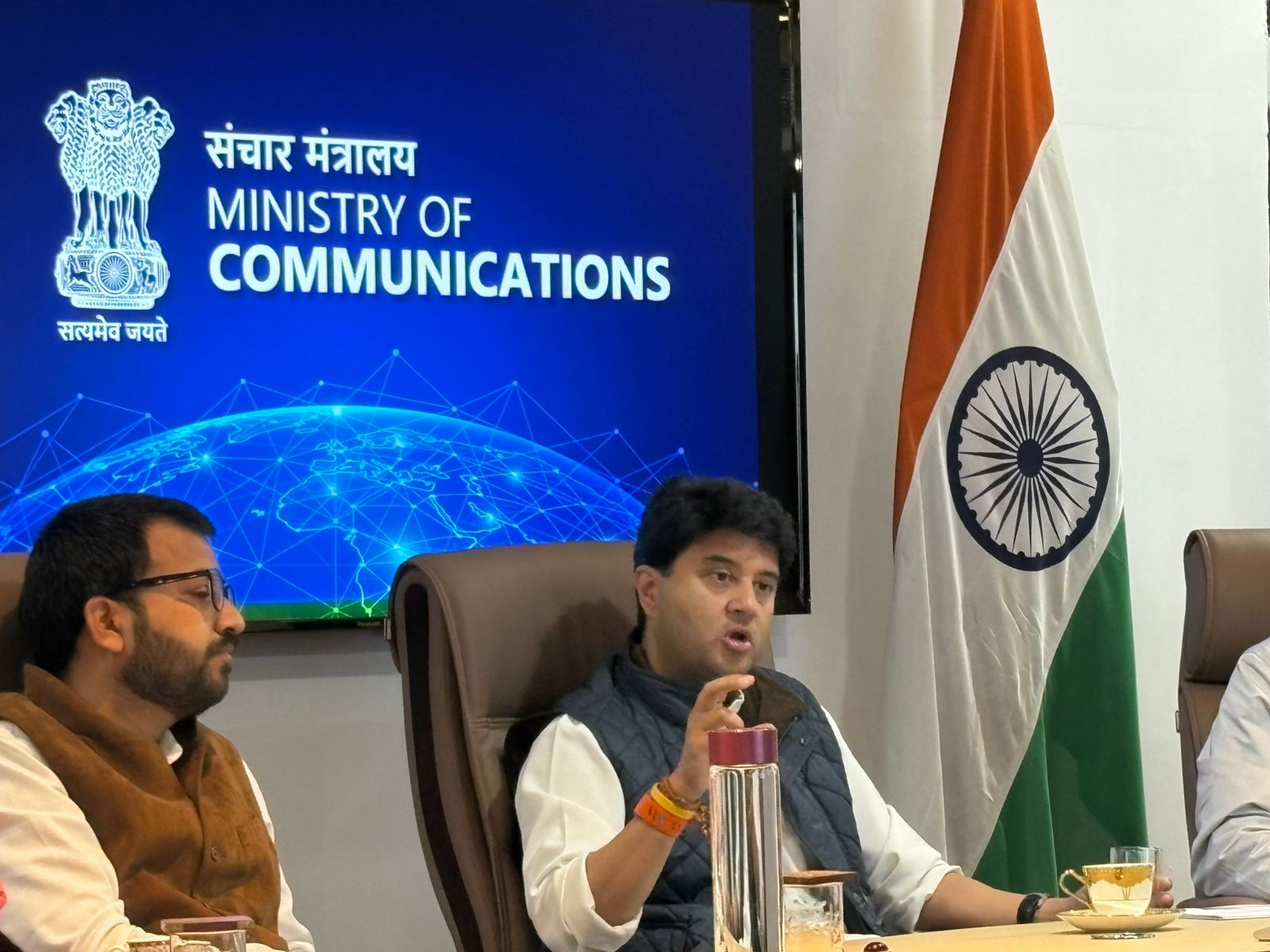
Union Communications Minister Jyotiraditya Scindia said the government is transforming India Post into a technology-driven and customer-centric service network. Addressing a press briefing at Sanchar Bhavan in New Delhi, he outlined key initiatives aimed at strengthening operational efficiency and financial sustainability.
Scindia revealed that during the first three quarters of the current financial year, departmental revenue increased from ₹9,385 crore to ₹10,211 crore, marking an 8.8% growth. So far, 5.97 crore parcels and 71.74 crore Speed Post articles have been booked.
Faster and Reliable Delivery
The Minister said parcel services are emerging as a major revenue driver. Advanced technology is being deployed to ensure faster sorting and delivery. India Post is working closely with major e-commerce platforms such as Amazon and Flipkart in metropolitan cities including Delhi, Mumbai, Bengaluru, Kolkata, Chennai and Hyderabad.
Pilot projects in these cities have achieved over 95% on-time delivery performance. Next-day delivery services are also being introduced in major urban centres.
Under Speed Post, a guaranteed 24-hour and 48-hour delivery framework has been implemented to strengthen reliability and customer confidence.
Export Expansion and International Reach
India Post has expanded its international footprint, with export business touching ₹303 crore so far this year. Goods are now being shipped from India to 135 countries.
To support small traders and artisans, more than 1,000 postal export centres are being set up nationwide, enabling smoother access to global markets.
Diversification into Financial and Telecom Services
The Department has entered into partnerships with the Bombay Stock Exchange (BSE) and the Association of Mutual Funds in India (AMFI) to offer mutual fund services. Collaboration with BSNL is underway to expand telecom-related services.
More than 13,352 post offices are providing Aadhaar registration and updation services, with 30.8 lakh verifications completed. Additionally, 14.45 crore transactions have been carried out through post offices, along with 0.45 crore passport-related services.
Deposits in the Post Office Savings Bank have reached ₹21.77 lakh crore as of October 31, 2025, following simplified identity verification through mobile and Aadhaar-based authentication.
Digital Push and Global Best Practices
Currently, only 9% of operations are conducted online, but the target is to increase this to 70% by 2028–29. Paper-based procedures are being phased out and redundant processes eliminated.
Scindia said India Post has studied best practices from global postal systems such as France’s La Poste, the UK’s Royal Mail and Japan Post. Modern sorting systems and updated machinery are being introduced accordingly.
Special training programmes for Gramin Dak Sevaks were organised in Kevadia, Bengaluru, Kolhapur and Guntur, with over 8,000 participants. The Minister described rural postal workers as the backbone of the department.
100 Modern Post Offices by March 2026
A key milestone in the reform roadmap is the modernisation of 100 post offices into upgraded service centres by March 2026. These centres will feature improved seating arrangements, internet facilities and contemporary infrastructure. New post offices are also being established in leading educational institutions.
Scindia emphasised that strengthening India Post is a government priority. He expressed confidence that technology integration, diversification of services and strategic partnerships will enhance revenue, reduce expenditure and eventually move the department toward profitability while playing a larger role in India’s development journey.
