

Poonam Sharma
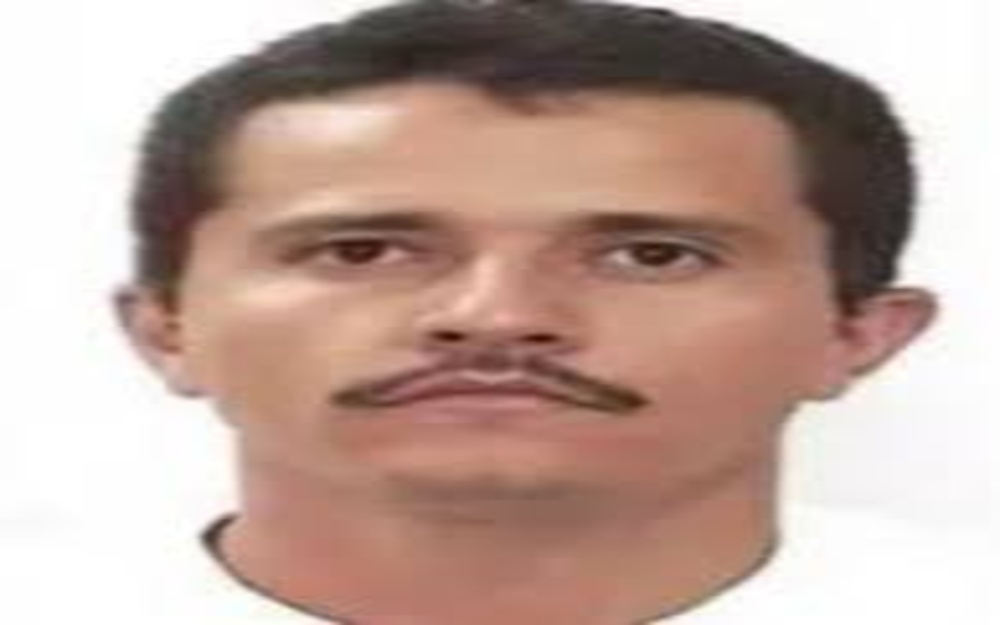
The killing of Jalisco New Generation Cartel chief Nemesio Oseguera Cervantes, better known as “El Mencho,” is more than just the dramatic end of one of Mexico’s most wanted men. It represents a symbolic moment in a much larger story — the transformation of the global drug business itself.
For years, El Mencho stood as the face of a new generation of cartel leadership: decentralized, tech-savvy, hyper-violent and deeply embedded in international supply chains. Unlike the old guard of drug lords who relied heavily on smuggling plant-based narcotics like cocaine and heroin, his network thrived in the synthetic drug economy — particularly fentanyl and methamphetamine. These substances don’t require vast coca fields or opium poppies. They depend on chemical precursors, laboratories, logistics, and global distribution networks. In other words, the modern drug trade looks less like a jungle empire and more like a shadow corporation.
His death, reportedly following a Mexican military operation in Jalisco, triggered immediate violent reprisals — roadblocks, burning vehicles, and urban panic. That reaction underscores a persistent truth: removing a kingpin does not instantly dismantle a cartel. Mexico has tried this “kingpin strategy” before. When leaders of the Sinaloa Cartel, including Joaquín Guzmán, were captured, fragmentation followed. Smaller factions splintered off, fighting for territory. Violence surged before it stabilized.What makes this moment different is the global context.
A Drug Market In Transition
The international drug market is undergoing structural change. Three major shifts stand out:
1. The Rise of Synthetic Drugs:
Fentanyl has reshaped the economics of narcotics. It is cheaper to produce, easier to transport, and exponentially more potent than heroin. Cartels no longer rely solely on traditional trafficking corridors from South America. Instead, supply chains stretch across continents — with precursor chemicals often sourced from Asia, assembled in Mexico, and distributed primarily into the United States.
This shift means leadership decapitation does not eliminate infrastructure. Laboratories can be rebuilt. Chemists can be recruited. Recipes can be shared digitally. The barriers to entry are lower than ever.
2.Cartels As Hybrid Enterprises:
Groups like the Jalisco cartel diversified aggressively. Beyond drugs, they moved into fuel theft, extortion, human trafficking, and illegal mining. The modern cartel resembles a criminal conglomerate. Even if narcotics profits fluctuate, alternative revenue streams sustain operations.
This diversification also complicates enforcement. Governments may disrupt drug pipelines but still struggle to contain localized criminal economies that entrench cartels in communities.
Geopolitical Pressure And Cross-Border Politics:
The United States had placed a $15 million bounty on El Mencho and designated his cartel a foreign terrorist organization. That designation reflects growing frustration in Washington over fentanyl’s devastating toll. But it also signals a strategic evolution: drug trafficking is increasingly treated not just as crime, but as a national security threat.
Mexico, meanwhile, walks a tightrope. Military crackdowns win international praise but risk domestic instability. President Claudia Sheinbaum has previously criticized overreliance on the kingpin approach, arguing it often fuels short-term violence. El Mencho’s killing tests that balance between visible enforcement and long-term strategy.
3.Will This Weaken The Cartel?
In the short term, power vacuums create uncertainty. The Jalisco cartel is known for its aggressive tactics, technological adaptation — including weaponized drones — and disciplined internal structure. It may already have succession plans in place. Historically, cartels anticipate leadership losses and groom replacements quietly.
However, the psychological impact matters. El Mencho cultivated an aura of invincibility. He evaded capture for years, even as authorities closed in. His removal sends a message: no one is untouchable. For mid-level operatives, that changes risk calculations.
Yet the deeper issue remains demand. As long as North American and European markets sustain multi-billion-dollar appetites for synthetic drugs, supply will reorganize. Routes may shift. Leadership may rotate. But the business model persists.
A Broader Reckoning
The global drug trade is no longer confined to remote plantations or border crossings. It is embedded in chemical supply chains, cryptocurrency transactions, encrypted messaging apps, and transnational finance. Enforcement alone cannot address an industry that adapts as quickly as legitimate global markets do.
El Mencho’s death may mark the end of a particularly violent chapter. But it also highlights the limitations of headline-grabbing victories. The real transformation underway is structural — from plant-based cartels to synthetic networks, from hierarchical empires to modular criminal ecosystems.
If governments fail to adapt to that evolution — combining intelligence cooperation, financial disruption, precursor chemical regulation, and demand reduction — the next kingpin is likely already waiting in the wings.
The war on drugs, once framed around capturing notorious individuals, is increasingly a contest against a system. And systems do not fall as easily as men.
