

GG News Bureau
New Delhi 20th february : A heated diplomatic row has erupted between French President Emmanuel Macron and Italian Prime Minister Giorgia Meloni following the murder of 23-year-old far-right activist Quentin Deranque in Lyon. The incident, which saw Deranque beaten to death during a far-right protest, has sent shockwaves through France’s political landscape and sparked a war of words across Europe.
Meloni, a staunch conservative, took to social media on Wednesday, condemning the attack by “groups linked to left-wing extremism” and describing it as “a wound for all of Europe.” Macron, speaking to reporters during a trip to India, responded sharply, asserting that world leaders should “stay in their own lane” when commenting on domestic affairs.
“I’m always struck by how people who are nationalists, who don’t want to be bothered in their own country, are always the first ones to comment on what’s happening in other countries,” Macron said. When asked if he was referring to Meloni, he replied bluntly: “You got that right.”
Meloni quickly responded, insisting that Macron had misinterpreted her statement. In an interview with Italian channel Sky TG24, she said: “I’m sorry that Macron experienced it as interference,” emphasizing that her comments were intended to highlight the broader European implications of political violence.
Details of the Lyon Incident
The fatal attack occurred on February 12 during a far-right demonstration in Lyon. Prosecutors announced that seven individuals, including an assistant to France Unbowed (LFI) lawmaker Raphael Arnault, now face murder charges. In total, 11 suspects were arrested in connection with the attack.
Lyon prosecutor Thierry Dran confirmed that Jacques-Elie Favrot, the LFI lawmaker’s assistant, is charged with complicity through instigation and has been placed in pre-trial detention. Favrot and the other accused deny all charges.
The death of Deranque has ignited nationwide debates and heightened tensions between far-right and far-left groups, particularly as France prepares for municipal elections in March and the 2027 presidential race. Opinion polls suggest that far-right candidates are currently leading, with Macron approaching the end of his second and final term.
Macron and Meloni: A History of Tensions
The clash between Macron and Meloni adds another layer to a long-standing political tension between the two leaders. Macron, a pro-European centrist, and Meloni, an ally of United States President Donald Trump, have previously disagreed on issues ranging from Ukraine to trade policies and European Union governance.
In her Sky TG24 interview, Meloni referenced Italy’s turbulent “Years of Lead” between 1969 and 1980, when left-wing extremist group Red Brigades carried out a series of attacks. Several former Red Brigades members fled to France during that period, creating a lingering diplomatic tension between Paris and Rome.
“The ruling classes must [reflect] on how to combat a climate that could take us back a few decades, a history that Italy knows very well and that France knows very well, having given political asylum to the cream of the Red Brigades,” Meloni said, drawing a historical parallel to current political violence.
Broader Implications
The incident underscores the growing polarization in French politics, as far-left and far-right factions clash both on the streets and in the media. Analysts suggest that these tensions could influence voter sentiment in upcoming elections, shaping the future trajectory of French political life.
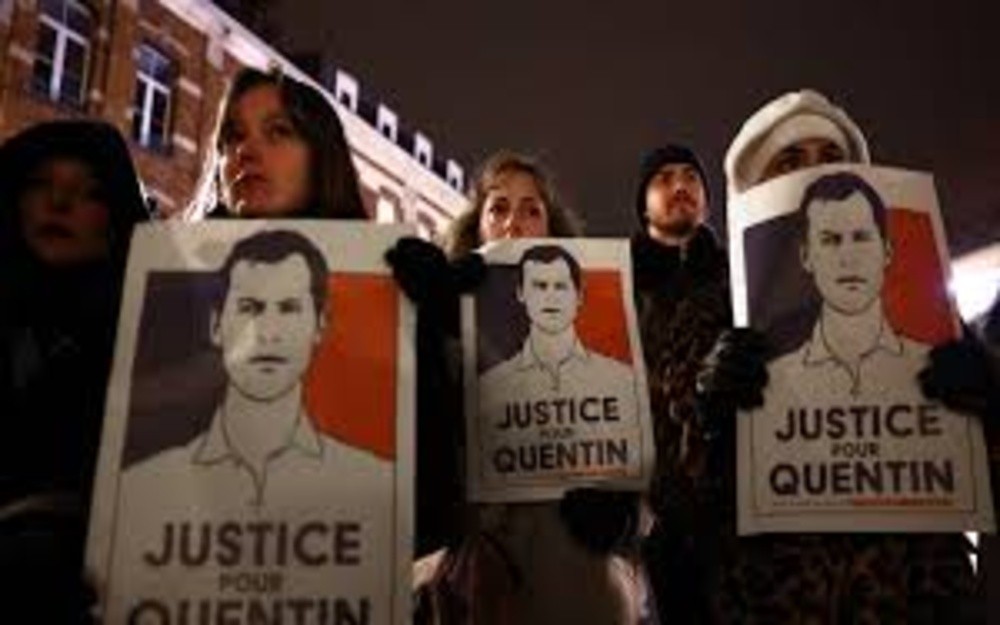
Deranque’s killing has also sparked demonstrations in Paris and Lyon, with hundreds rallying to demand justice. The violence raises pressing questions about political radicalization, the role of extremist groups, and how European nations navigate domestic issues while maintaining diplomatic decorum.
As France looks toward its 2027 presidential elections, the fallout from Deranque’s death is likely to remain a focal point for debates on law, order, and the rising influence of far-right movements. Meanwhile, Macron and Meloni’s exchange serves as a reminder that domestic tragedies can quickly evolve into international political flashpoints.
