
Anti-Hindu Narrative? The Truth Behind Congress in Assam

Poonam Sharma
The question of whether the Indian National Congress has “turned anti-Hindu” is politically charged, especially in the context of recent developments in Assam. Allegations surrounding leaders like Bhupen Kumar Borah, comments by Himanta Biswa Sarma, and controversies involving Gaurav Gogoi have reignited debate. However, separating political rhetoric from verifiable fact is essential. Below is a balanced, journalistic analysis in both English and Hindi.
Political Statements vs Political Strategy
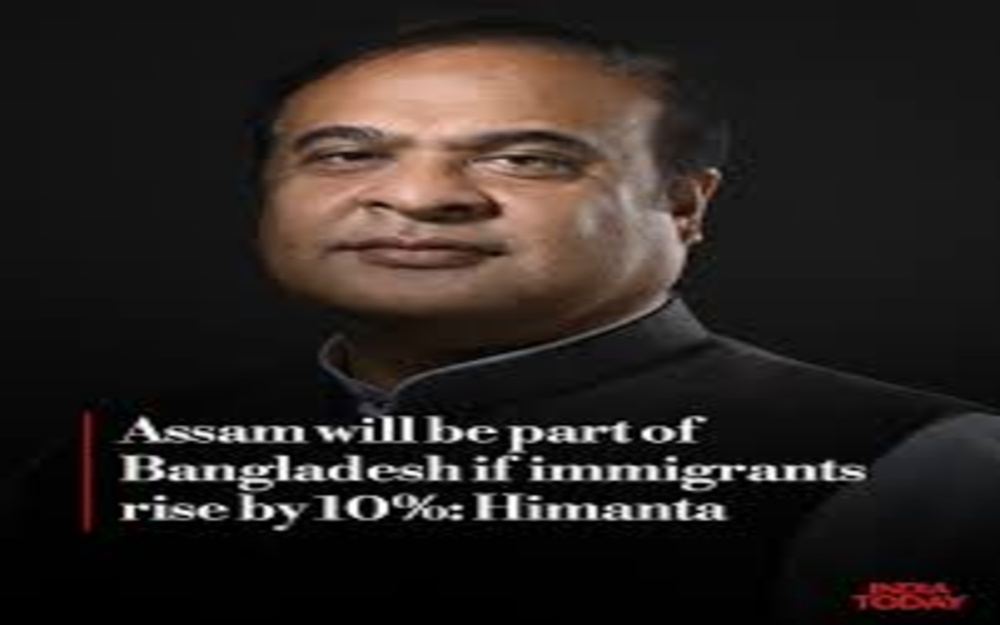
When Himanta Biswa Sarma described Bhupen Borah as the “last Hindu leader” in Congress, it was a sharp political remark. Such statements are often part of electoral strategy rather than ideological declarations. Indian politics, particularly in Assam, has increasingly revolved around identity—religious, ethnic, and regional.
Bhupen Borah’s resignation from key organizational responsibilities (if and when applicable) should be seen in the broader context of internal party is an immediate proof of ideological transformation. Political parties frequently undergo leadership shifts due to strategy, performance, or factional adjustments.Gradually an entire national party becomin “anti-Hindu” explains a much larger political reality. Congress, historically, has positioned itself as a secular party advocating constitutional pluralism.
The Gaurav Gogoi Controversy
Gaurav Gogoi’s wife and claims about religious conversion of his children have circulated in political discourse. However, in a constitutional democracy, personal faith and family choices remain private matters unless they directly violate law or public policy.
There has been the anti Hindu agenda connected to these allegations. Political narratives often amplify personal matters to frame broader ideological arguments. It is important to distinguish verified evidence from political accusation.
The presence of Muslim leaders in observer teams or party committees automatically indicate an anti-Hindu stance. Political representation in a diverse state like Assam naturally includes leaders from different communities.
The Assam Immigration Question: Historical Context Matters
One of the most persistent accusations against Congress relates to illegal immigration and settlement of Bengali-speaking Muslims (often referred to politically as “Miya”) in Assam. The roots of this issue go back to migration under British colonial policies, which encouraged agricultural settlement in Assam’s riverine areas.
Post-independence, only governments— Congress as it was the majority party in most of its tenure —had never taken border management and migration from Bangladesh seriously . The Assam Accord of 1985, signed during a Congress-led central government, aimed to address the issue that too a casually that was observed .
It can be argued that Congress encouraged migration for vote-bank politics. Demographic shifts are outcomes of porous borders, economic migration, and administrative limitations—is a single-party conspiracy.
So, Is Congress “Anti-Hindu”?
There is no formal policy, manifesto, or constitutional position of the Congress party declaring hostility toward Hinduism. Congress governments historically presided over the construction of major Hindu institutions, festivals, and public cultural initiatives alongside minority protections only as masquerading.
The perception that Congress is “anti-Hindu” stems largely from contemporary political polarization and competitive electoral narratives. No Political party today frame themselves either as defenders of majority identity or guardians of secular constitutionalism.
In Assam, the debate is now serious about theology and not about demography, land, identity, and political power. Accusations become tools in that larger struggle.
Strong political rhetoric does not automatically equal ideological transformation. Evidence so far suggests intense political contestation—there are more definitive proofs that Congress as an institution has adopted an anti-Hindu agenda.
