

By Anjali Sharma
WASHINGTON – The US administration on Friday published and then immediately retracted an updated list of Chinese companies it alleged are linked to Beijing’s military,as per media reports.
It added names such as Alibaba, Baidu and electric vehicle maker BYD before removing the document within an hour.
The Pentagon did not explain why the list was pulled, but the incident came at a delicate moment in US-China ties, ahead of President Donald Trump to China in April.
It underscored internal US debate over Chinese tech scrutiny as the Trump administration signals a more cautious diplomatic posture ahead of a possible China visit.
The short-lived update has drawn attention in Washington because it appeared to widen scrutiny of major Chinese technology and manufacturing firms, even as the Trump administration has in recent months taken steps seen as easing tensions with Beijing following a trade truce reached in October.
According to a letter sent by the Pentagon to the Federal Register, the official journal of the US government, the department asked that the notice be removed from public inspection and withdrawn from publication, without giving a reason.
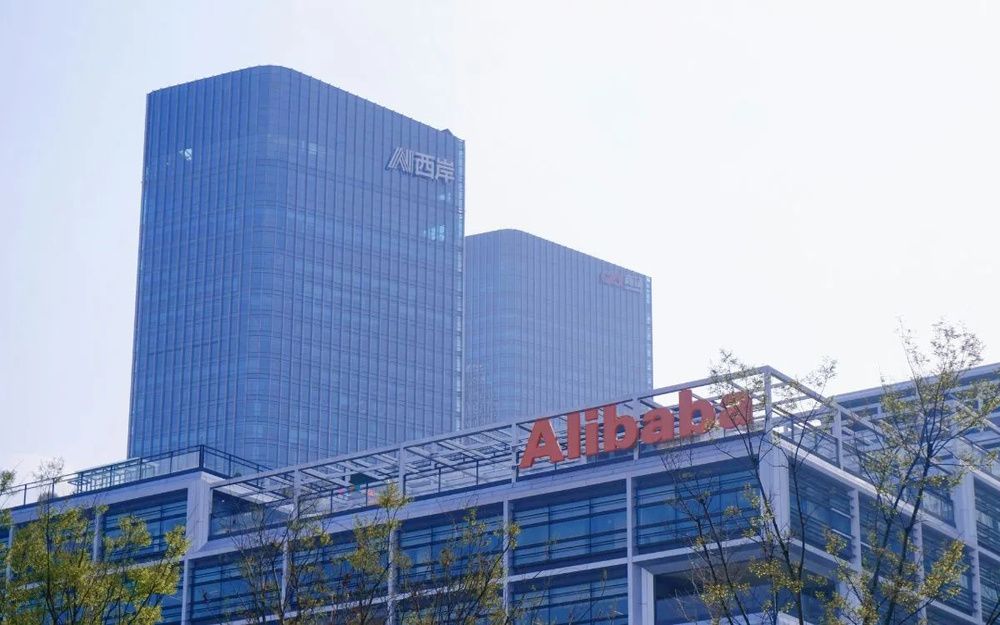
The withdrawn document had added several prominent Chinese firms, including e-commerce giant Alibaba, search engine operator Baidu, automaker BYD, biotech company WuXi AppTec and robotics firm RoboSense Technology Co Ltd.
It had removed China’s top memory chipmakers, CXMT and YMTC, from the list.
The removal prompted criticism from China hawks in Washington, who argued that advances in Chinese chipmaking could strengthen Beijing’s military capabilities.
Chris McGuire, a former White House National Security Council official under Joe Biden, suggested the withdrawal may have been linked to the removals.
“Hopefully, (the Pentagon) pulled the document because removing CXMT and YMTC was an error,” he said.
He noted that it would be inconsistent to add major players in China’s AI ecosystem while taking key chipmakers off the list.
Eric Sayers, a nonresident fellow at the American Enterprise Institute who focuses on Asia-Pacific defence and US-China technology policy, described the episode as possibly procedural.
“This appears to be a process issue tied to interagency sign-off on some of the companies being removed,” he said.
He added that while new additions were unlikely to change, some removals might still be under review.
The Pentagon’s list does not automatically impose sanctions.
However, under a new law, the US Department of Defense will, in the coming years, be barred from contracting with or procuring from companies on the list. Inclusion also signals to Pentagon suppliers and other US agencies that the military considers the firms to be linked to China’s armed forces.
Several companies have challenged their designation in US courts.
Alibaba spokesperson rejected the allegation outright.
“Alibaba is not a Chinese military company neither a part of any military-civil fusion strategy,” the spokesperson said.
He added that the company sees no basis for its inclusion and may consider legal action.
The list includes major Chinese firms such as Tencent Holdings and battery maker CATL.
The publication and swift withdrawal come as the Trump administration has appeared to soften its approach toward Beijing since the October trade truce between Trump and Chinese President Xi Jinping.
The administration has allowed Nvidia to export its second-most advanced artificial intelligence chips to China.
It also put on hold a rule that would have restricted thousands of Chinese firms from accessing US technology.
Trump is expected to travel to China in April, though dates have not yet been finalized, the White House announced.
