
Centre Clears 154-km NH-160A Expansion
154-km stretch from Ghoti to Palghar to be widened under EPC mode

- Cabinet approves ₹3,320.38 crore highway project
- 154.6-km NH-160A stretch to be upgraded
- Project to ease congestion around Nashik industrial belt
- Expected to boost logistics, tribal connectivity, and jobs
GG News Bureau
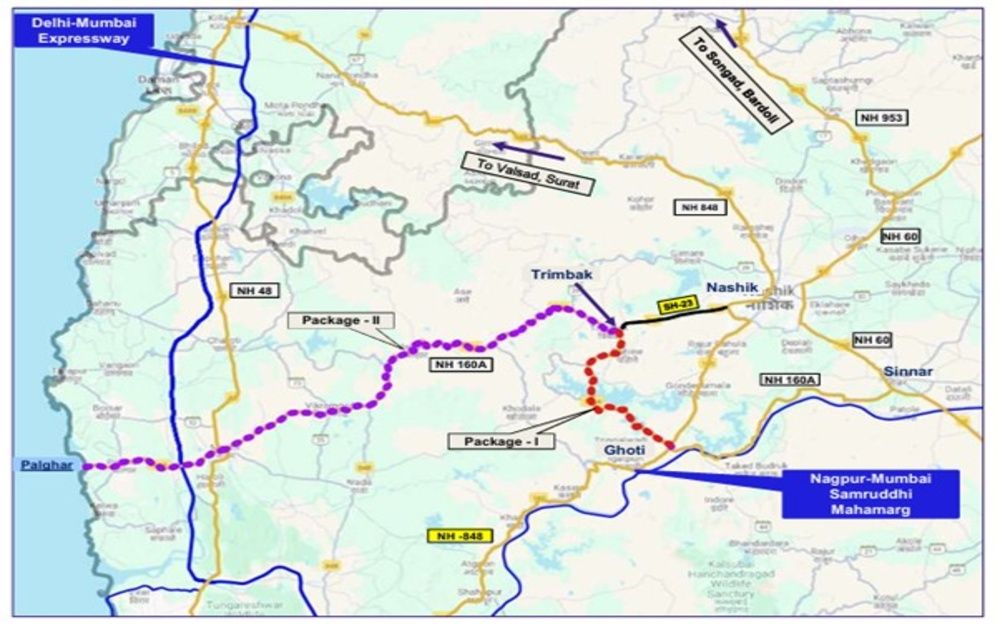
New Delhi, 14th Feb: The Cabinet Committee on Economic Affairs has approved the rehabilitation and upgradation of the Ghoti–Trimbak (Mokhada)–Jawhar–Manor–Palghar section of National Highway-160A in Maharashtra at a cost of ₹3,320.38 crore.
The project, to be implemented in Engineering, Procurement and Construction (EPC) mode, will cover a total length of 154.635 km.
Officials said the region west of Nashik, including the Ambad and Satpur industrial areas, generates heavy freight traffic. At present, most of this traffic passes through Nashik city via NH-848, adding pressure on urban roads already operating close to capacity.
The upgraded NH-160A will provide an alternative route from these industrial clusters through Trimbak, helping bypass the city and reduce congestion. Traffic from Mumbai and the southern side is expected to use the Samruddhi Expressway via the Igatpuri interchange and then connect to NH-160A.
Projections indicate that daily traffic on the corridor will exceed 10,000 passenger car units (PCUs) by 2028, justifying four-lane development in certain sections.
The stretch from Trimbak towards Manor and Palghar will connect NH-160A to the Delhi–Mumbai Expressway, NH-48, the western coastal belt, and tribal areas of Palghar district. While some sections currently carry about 4,500 PCUs, urban stretches between Manor and Palghar witness around 12,000 PCUs and will be upgraded to four lanes.
The project aligns with the PM GatiShakti framework and will connect six economic nodes, one social node, and eight logistics nodes in Maharashtra, improving the country’s logistics performance.
Officials said the project will improve traffic flow, reduce travel time and vehicle operating costs, and strengthen infrastructure in tribal regions. It is also expected to generate about 19.98 lakh person-days of direct employment and 24.86 lakh person-days of indirect employment.
