
India’s Nuclear Capacity to Triple by 2032: Jitendra Singh
Union Minister says India targets 22 GW by 2031–32, 100 GW by 2047

- Nuclear capacity to rise from 8.7 GW to 22 GW by 2031–32
- Kudankulam Units 3–6 on track, no delays expected
- Jaitapur talks progressing for six 1,600 MW reactors
- Govt stresses self-reliance and “safety first” doctrine
GG News Bureau
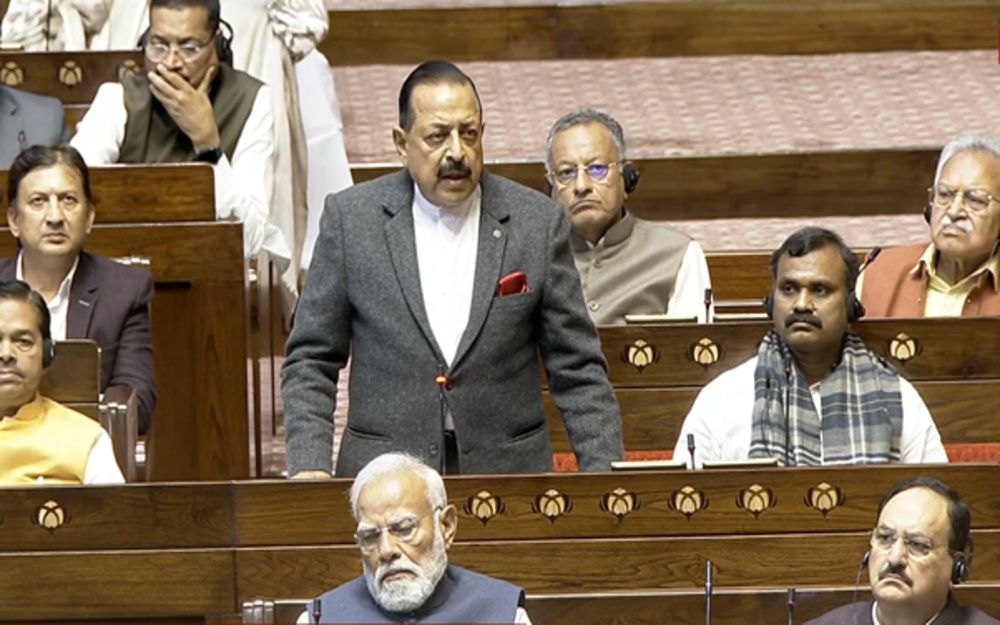
New Delhi, 12th Feb: Union Minister of State for Atomic Energy Dr. Jitendra Singh on Thursday told the Rajya Sabha that India’s nuclear energy programme is entering a decisive expansion phase, with installed capacity set to nearly triple by 2031–32.
He said the country’s nuclear capacity, which stood at 4,780 MW in 2014, has risen to 8,780 MW and is projected to reach 22,380 MW by 2031–32. The roadmap targets 47 GW by 2037, 67 GW by 2042, and 100 GW by 2047.
Replying to supplementary questions from members including R. Girirajan, Jairam Ramesh, Ram Gopal Yadav, and M. Thambidurai, the minister said the expansion is being driven by policy reforms, private sector participation, and long-term capacity planning. He added that geopolitical developments would not derail ongoing projects.
On the Kudankulam Nuclear Power Plant, Singh said Units 3 and 4 are targeted for completion by 2026–27, while Units 5 and 6 are scheduled by 2030. He said there was no reason to expect disruptions due to changes in global political equations.
Tracing the project’s timeline, the minister noted that Kudankulam was conceived in 1988, construction began in 2002, and the first unit became operational in December 2014. The first two units were operationalised within the last decade under a structured implementation framework, he said.
Addressing concerns about local development, Singh said the Nuclear Power Corporation of India Limited carries out corporate social responsibility and rehabilitation activities around all nuclear facilities. He informed the House that ₹168 crore had been spent on CSR initiatives in the current financial year across projects, with funds directed towards infrastructure, healthcare, education, and skill development.
On the proposed Jaitapur Nuclear Power Project, Singh said negotiations for six 1,600 MW reactors were progressing. He said the technical framework was in place, while some commercial aspects were still under discussion in coordination with relevant ministries.
Responding to questions on uranium supply, the minister said India had strengthened its energy security and was not solely dependent on external sources. He added that policy measures, including duty exemptions on nuclear plant equipment imports till 2035, were aimed at accelerating domestic capacity.
He also clarified that electricity generated from nuclear plants is distributed under the Gadgil formula, with 50% allocated to the host state, 35% to neighbouring states, and 15% to the central grid.
Reiterating safety as the top priority, Singh said India’s nuclear programme follows the principle of “Safety First, Production Next.” He dismissed concerns about centralized spent fuel storage at Kudankulam, stating that each reactor manages its own fuel cycle.
The minister said the government has set clear timelines for nuclear expansion, positioning atomic energy as a key pillar of India’s long-term energy transition.
