
National Security Row in Assam: Gaurav Gogoi, Wife’s Pakistan Link

Poonam Sharma
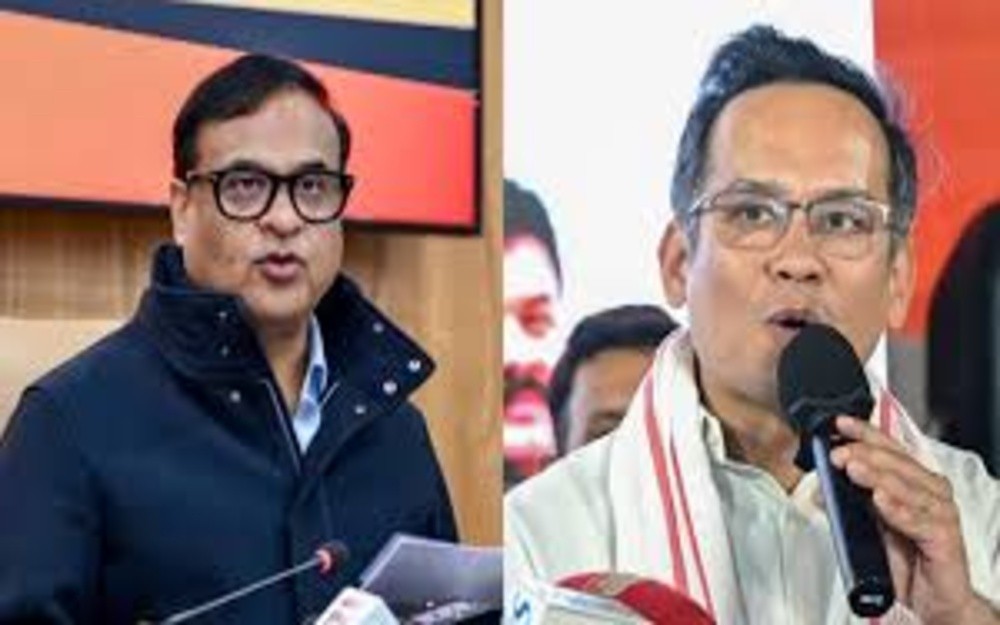
The political temperature in Assam has suddenly spiked after Chief Minister Himanta Biswa Sarma levelled explosive allegations against Congress MP Gaurav Gogoi and his wife, dragging the debate straight into the high-stakes territory of national security. These are not routine political barbs. The charges—alleged links with a Pakistani national, possible collection of sensitive information, breaches of security protocols, and questionable financial transactions—strike at the heart of loyalty to the nation, institutional trust, and democratic ethics. When such claims surface, they demand not emotion or partisanship, but cold scrutiny grounded in law, evidence, and constitutional process.
At the centre of the storm is an uncomfortable question:
if the allegations carry even a fraction of truth, can the loyalty of a sitting Member of Parliament be taken for granted? In democracies, elected representatives are custodians of public trust. Any credible suspicion of foreign links—especially with a hostile or adversarial nation—inevitably raises alarms. National security is not a campaign slogan; it is a hard reality shaped by intelligence protocols, confidentiality obligations, and the duty of public office holders to avoid even the appearance of compromise.
What has amplified the controversy is the shadow cast on Gogoi’s wife. The Chief Minister’s claims suggest suspicious links with a Pakistani citizen and an alleged “pass-through” financial mechanism, implying money routed through intermediaries. This is where the narrative turns sensational—and deeply troubling. Why should the spouse of a senior Indian lawmaker have associations that trigger national security concerns? Were there professional, academic, or social engagements that crossed sensitive lines? If there were financial flows, what was their source, purpose, and disclosure status? These are not gossip-worthy questions; they are matters that demand documentary proof, banking trails, contractual records, and verification by competent agencies.
Security protocol violations add another layer of gravity.
Allegations of unauthorized visits or movements without requisite clearances are not procedural nitpicks. Protocols exist to safeguard officials, sensitive locations, and classified information. If any such breaches occurred, the public deserves clarity: which protocol was violated, on what dates, with whose authorization missing, and what risk assessment was ignored? Vague accusations erode credibility; precise facts strengthen the case for accountability.
Yet, there is a line that must not be crossed. National security cannot become a theatre of political spectacle. The submission of an SIT report to the Ministry of Home Affairs is procedurally appropriate, but the credibility of the process hinges on independence, transparency, and the possibility of judicial scrutiny. Leaks, selective disclosures, or rhetorical escalation can contaminate investigations. The standard of proof in security-related allegations is necessarily high. “Possibility” or “apprehension” is not enough; evidence must be verifiable and withstand legal challenge.
Gogoi’s dismissal of the charges as baseless and politically motivated is predictable in a polarized climate. But rebuttal by rhetoric alone is insufficient when the questions strike at national loyalty. The most effective response would be full transparency: documentation, timelines, financial disclosures, and cooperation with investigators. Silence or deflection feeds suspicion; openness defuses it. In an age of misinformation, the burden of restoring trust lies with facts, not fury.
The political implications are profound. If proven, the allegations would represent a catastrophic breach of public trust and a grave national security concern. Security agencies must operate free from political pressure, and political leaders must resist trial by press conference.
The larger lesson is sobering.
Democracies thrive on dissent and competition, but they survive on trust in institutions. Dragging national security into partisan combat risks normalizing suspicion as a political tool. The public deserves answers, but it also deserves fairness. Until evidence is tested by due process, presumption of innocence must stand. At the same time, those in public life—and their immediate families—carry a higher duty of caution. Associations that invite suspicion are not merely personal choices; they have public consequences.
This controversy, therefore, is not just about Gaurav Gogoi or his wife. It is about how India handles allegations at the intersection of politics and security. Will institutions lead with evidence and law, or will narratives race ahead of facts? The answer will determine whether this episode becomes a turning point for accountability—or a cautionary tale of how sensationalism can overshadow justice
