
Only an Organised, Virtuous Society Can Transform Nation: Mohan Bhagwat
RSS chief outlines social unity, discipline and cultural values as keys to national change

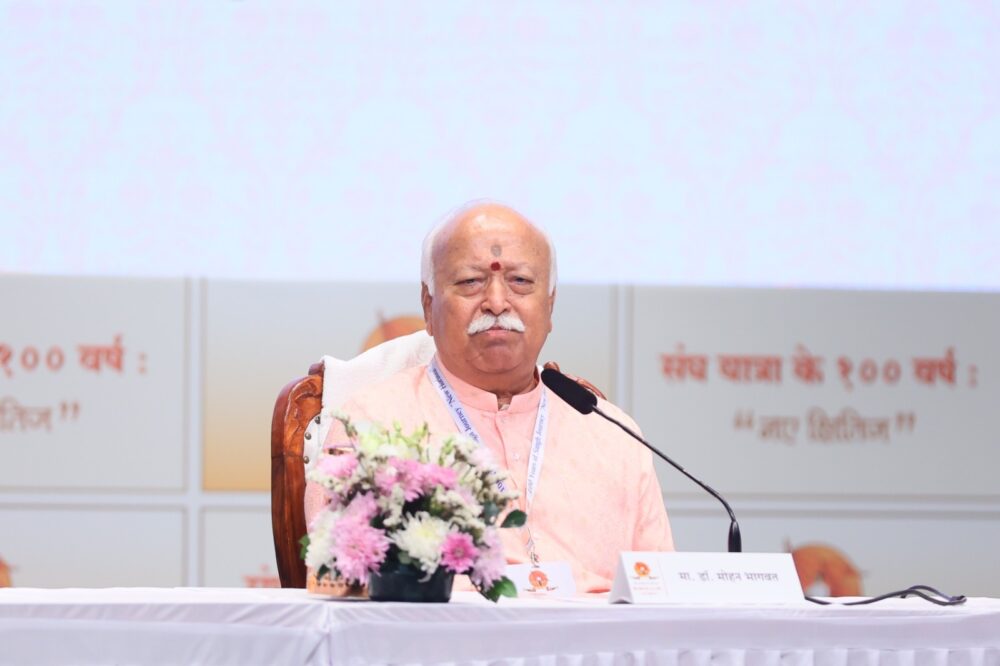
- Bhagwat says society must be organised and virtuous for real transformation
- Emphasises RSS works for nation, not for power or political competition
- Calls for social harmony, environmental responsibility and civic duties
- Highlights “Panch Parivartan” agenda for societal change
GG News Bureau
Mumbai, 8th Feb: Rashtriya Swayamsevak Sangh chief Mohan Bhagwat said that meaningful national transformation is possible only when society becomes organised and virtuous, stressing that social strength is the foundation of lasting change.
Addressing a centenary lecture series in Mumbai, Bhagwat said, “Only when society becomes organised and virtuous will change come in the country.” He added that leadership, policies, parties, governments and ideologies were all supportive factors, but the ultimate owner of these institutions is society itself, which must remain aware and responsible.
Speaking at the two-day dialogue programme titled “100 Years of the RSS Journey: New Horizons” at the Nehru Centre in Worli, Bhagwat reviewed the organisation’s evolution since its founding in 1925 and its role in nation-building.
He clarified that the RSS should not be judged by its external activities alone. “Volunteers conduct drills, but it is not a paramilitary organisation. They use sticks, but it is not a traditional akhada. They sing songs, but it is not a music school. Volunteers are also in politics, but it is not a political party,” he said, adding that the organisation could be understood only through direct experience of its activities.
Bhagwat stressed that the RSS functions for the nation and not in opposition to anyone. “The organisation does not seek power or fame,” he said.
Explaining the context of the RSS’s founding, he said its founder, Dr. K.B. Hedgewar, realised that India’s repeated subjugation was due to internal weaknesses such as lack of unity, discipline and character. The RSS was established to build a disciplined, organised and virtuous society capable of sustaining freedom.
He also emphasised cultural values, saying India’s nature is rooted in Sanatan traditions. He suggested that the term “panth-nirapekshata” (neutrality among faiths) was more appropriate than “secularism,” and said India should aspire to be a “Vishwaguru” by uniting the world rather than becoming a global superpower through force.
In the second session, Bhagwat outlined the organisation’s social agenda, urging volunteers and citizens to contribute to nation-building through daily discipline and selfless service. He said individuals could connect with the RSS by participating in community-oriented work according to their interests and capacities.
He also advocated self-reliance in consumption, urging people to consider domestic employment and economic impact while making purchasing decisions.
Highlighting the “Panch Parivartan” or five-point transformation agenda, Bhagwat called for emphasis on social harmony, environmental responsibility, family values, self-awareness, and constitutional civic duties in everyday life.
The event was attended by over 900 dignitaries from various sectors, including industry, films, academia, science, media and social organisations, as part of the centenary outreach activities of the RSS.
