
Budget 2026 Roadmap for Viksit Bharat 2047: MoS Harsh Malhotra
MoS highlights expressways, high-speed rail and infrastructure push as key growth engines

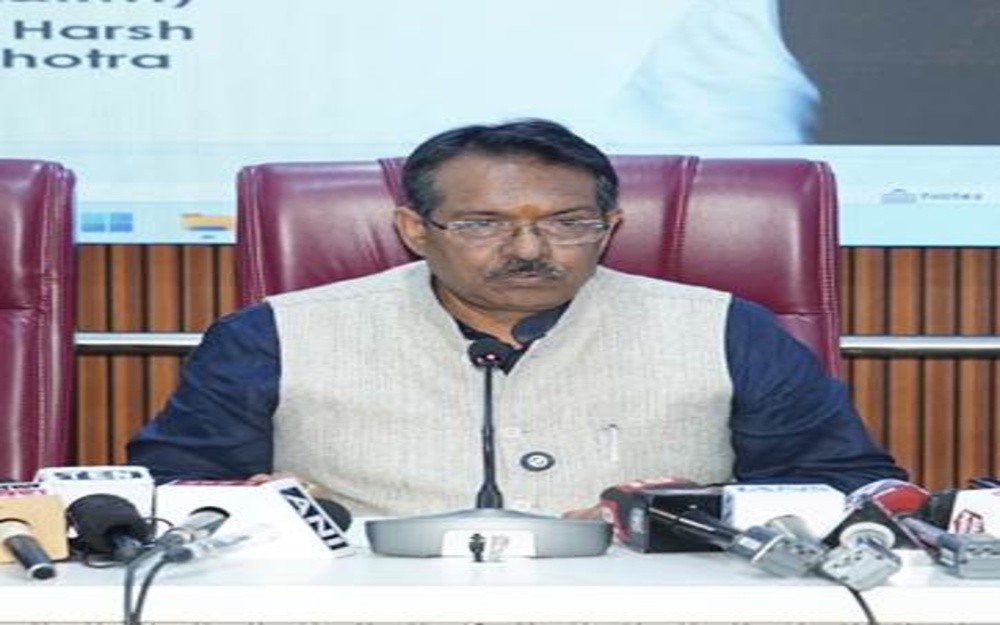
- Minister calls Budget 2026 a roadmap for developed India by 2047
- Infrastructure push with ₹3 lakh crore for roads and high-speed rail corridors
- Delhi–Mumbai Expressway to cut travel time from 33 hours to 12 hours
- Focus on skilling, AI, healthcare and women-led development
GG News Bureau
New Delhi, 6th Feb: Harsh Malhotra on Thursday described the Union Budget 2026–27 as a roadmap for achieving the vision of Viksit Bharat by 2047, highlighting major investments in infrastructure, high-speed rail and expressways as key growth drivers.
Addressing the media, the Minister of State for Corporate Affairs and Road Transport and Highways said the budget, presented from the newly inaugurated Kartavya Bhawan, marks a milestone in India’s development journey. He called it a “Budget for 140 crore Indians” that balances growth with welfare, innovation with inclusivity, and ambition with fiscal prudence.
The minister said the budget is aligned with Prime Minister Narendra Modi’s vision for a developed India and praised Finance Minister Nirmala Sitharaman for presenting her ninth consecutive budget, which he said reflects policy continuity and stability.
Malhotra highlighted three guiding priorities of the budget—enhancing productivity and competitiveness, accelerating skill development, and ensuring equitable participation across communities and sectors.
He noted that the overall budget size has tripled over the past decade while fiscal discipline has been maintained. Capital expenditure, he said, has increased sixfold since 2014, driving infrastructure expansion, job creation and long-term economic productivity.
Pointing to macroeconomic indicators, the minister said exports have reached USD 825 billion, gross NPAs in the banking sector have declined sharply, and foreign direct investment continues to rise, reflecting global confidence in India’s economy. He also cited the growth of mobile manufacturing units and single-window clearance systems as evidence of improved ease of doing business.
On education and skilling, Malhotra said the budget proposes five university townships along industrial corridors and modular courses to equip youth, traders and professionals with future-ready skills, particularly in artificial intelligence.
Healthcare has received a record allocation of around ₹1 lakh crore, including ₹10,000 crore for the Biopharma Shakti initiative, training of one lakh allied health professionals, and new integrated medical hubs. He also highlighted continued expansion of schemes such as Ayushman Bharat.
Calling infrastructure the backbone of the budget, the minister said nearly ₹3 lakh crore has been allocated for roads and seven high-speed rail corridors are planned across the country. He cited projects such as the Delhi–Varanasi rail corridor and redevelopment of 1,000 railway stations under the Amrit Bharat initiative.
Malhotra said the Delhi–Mumbai Expressway, scheduled for completion by 2027, will reduce travel time from 33 hours to about 12 hours, improving logistics efficiency and economic integration.
He also outlined a comprehensive Delhi decongestion plan, including expressway extensions, new road tunnels and improved connectivity between the capital and surrounding regions. The budget includes allocations for railway infrastructure, pollution control, natural calamities and urban services in the capital.
The minister said the government is also focusing on environmental sustainability, including the removal of major landfill sites and the use of processed waste in road construction projects.
Describing the budget as an “architectural blueprint” for a developed India, Malhotra said sustained reforms, strategic investments and inclusive policies will accelerate the country’s journey toward the 2047 goal.
