
India, Canada reaffirm energy partnership at India Energy Week 2026
Joint Statement signed to boost clean and conventional energy ties between India, Canada

-
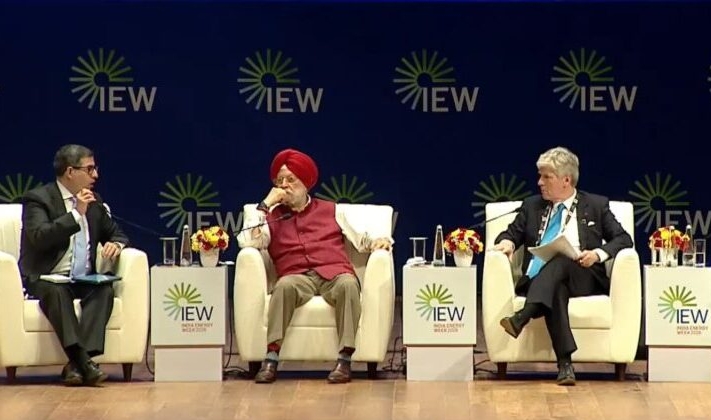
Joint Statement signed on the sidelines of India Energy Week 2026 in Goa
-
India–Canada Ministerial Energy Dialogue formally relaunched
-
Focus on LNG, LPG, crude oil trade and clean energy collaboration
-
Shared emphasis on energy security, investment and climate goals
GG News Bureau
Goa, January 28: India and Canada on Tuesday signed a Joint Statement on Energy Cooperation on the sidelines of India Energy Week (IEW) 2026 in Goa, reaffirming their commitment to strengthen collaboration across conventional and clean energy sectors.
Ministerial-level engagement
The Joint Statement was signed following a bilateral meeting between Union Minister for Petroleum and Natural Gas Hardeep Singh Puri and Canada’s Minister of Energy and Natural Resources Timothy Hodgson. The meeting marked the first high-level participation of a Canadian Cabinet Minister at India Energy Week.
During the discussions, both sides announced the relaunch of the India–Canada Ministerial Energy Dialogue, underlining the importance of energy security and diversified supply chains for economic stability and long-term growth.
Backed by Prime Ministerial direction
The renewed engagement follows directions from the Prime Ministers of India and Canada during their interaction on the sidelines of the G7 Summit in June 2025 at Kananaskis, Canada. At the summit, the two leaders had stressed the need to restart senior ministerial and working-level engagements between the two countries.
Expanding energy trade and investment
Recognising the complementary nature of their energy sectors, India and Canada identified significant opportunities for cooperation. Canada reiterated its ambition to emerge as a global energy leader in both clean and conventional energy, highlighting expanding LNG projects, increased crude oil exports to Asia through the Trans Mountain Expansion pipeline, and growing LPG exports from its west coast.
India, the world’s third-largest oil consumer, fourth-largest LNG importer and a major global refining hub, is expected to account for more than one-third of global energy demand growth over the next two decades.
Both sides agreed to deepen bilateral energy trade, including the supply of Canadian LNG, LPG and crude oil to India, as well as exports of refined petroleum products from India to Canada. The Ministers also emphasised joint commercial and investment partnerships, pointing to Canada’s faster energy project approvals and India’s ongoing energy sector reforms, offering investment opportunities worth nearly USD 500 billion across the value chain.
Clean energy and climate cooperation
The Joint Statement also highlighted shared climate objectives, including reducing emissions from conventional energy systems through carbon capture, utilisation and storage technologies. Areas identified for collaboration include renewable energy, hydrogen, biofuels, sustainable aviation fuel, battery storage, critical minerals, electricity systems, energy supply chain resilience and the use of artificial intelligence in the energy sector.
The Ministers reaffirmed their commitment to continued government-to-government dialogue through the Ministerial Energy Dialogue, stronger business-to-business cooperation, and engagement through bilateral and multilateral mechanisms to support global climate goals.
