
When Symbolism Matters: Rahul Gandhi’s Missed Moment at Rashtrapati Bhavan

Poonam Sharma
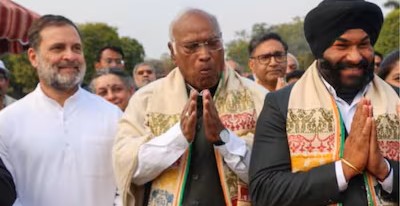
At Rashtrapati Bhavan’s ‘At Home Reception’ themed around India’s North-East, symbolism was not a side note—it was the point. Guests were welcomed with traditional North-Eastern patkas, a gesture meant to honour a region that has long struggled for visibility and respect in the national imagination. The Prime Minister wore it. Foreign diplomats wore it. European Union leaders wore it. Almost everyone present understood the quiet dignity of the moment.
Almost everyone—except Rahul Gandhi.
According to reports, the Congress leader chose not to wear the patka, despite being requested twice by President Droupadi Murmu herself. Photographs show him holding the cloth in his hand, not draping it over his shoulders. In a room filled with protocol, symbolism, and mutual respect, that single act stood out sharply—and not in a good way.
A Question of Respect, Not Compulsion
No one is arguing that wearing a patka is a legal obligation. It isn’t. But public life is not governed only by what is mandatory; it is shaped by what is appropriate, gracious, and respectful. When the President of India—particularly a President who comes from a historically marginalised background—personally requests a guest to participate in a cultural gesture, refusal is not a neutral act.
Rahul Gandhi is not a private citizen wandering into a social gathering. He is the Leader of the Opposition, someone who routinely speaks about inclusion, diversity, and respect for India’s many identities. In that context, declining a simple cultural symbol does not read as personal choice—it reads as indifference.
What message does it send when an opposition leader, who often claims moral high ground, cannot perform a harmless act of courtesy for the sake of collective harmony? Wearing the patka would not have diluted his ideology, compromised his politics, or harmed his principles. It would have cost him nothing. And yet, he chose not to.
The North-East Deserves More Than Lip Service
The North-East has historically felt distant from the corridors of power in Delhi. Cultural invisibility, political neglect, and casual stereotyping have been persistent wounds. Events like this reception are designed precisely to counter that—to say, you matter, your culture matters, and it belongs at the heart of the Republic.
When a senior national leader refuses to participate in that gesture, it risks reinforcing the very alienation that leaders across parties claim they want to undo. Intent may be debated, but impact cannot be ignored. For many watching, especially from the North-East, the image of Gandhi holding the patka rather than wearing it may feel dismissive, even hurtful.
Respecting a culture does not always require speeches or manifestos. Sometimes it is as simple as wearing a piece of cloth offered in goodwill. If foreign diplomats—representing entirely different cultures—could understand and honour that sentiment, it is fair to ask why an Indian leader could not.
Defying the President Sets a Poor Precedent
Equally troubling is the reported refusal after President Droupadi Murmu’s personal request. The President’s office is not partisan; it represents the unity and dignity of the nation. Disregarding such a request, especially in a public and ceremonial setting, sets an unfortunate precedent.
Opposition politics thrives on dissent, but dissent does not require discourtesy. One can oppose the government without undermining the spirit of shared national respect. Rahul Gandhi’s action blurs that line and risks appearing less like principled resistance and more like performative stubbornness.
Leadership is often judged not by grand speeches but by small moments. This was one such moment—quiet, symbolic, and deeply visible. By choosing defiance over grace, Rahul Gandhi missed an opportunity to demonstrate the inclusive politics he often advocates.
In the end, wearing the patka would not have been submission. It would have been sensitivity. And sensitivity, especially toward the North-East and the President of India, is not too much to ask from someone who seeks to lead the nation.
