
Questions, Confusion, and Controversy: Who Is Dr Asma Begum

Poonam Sharma
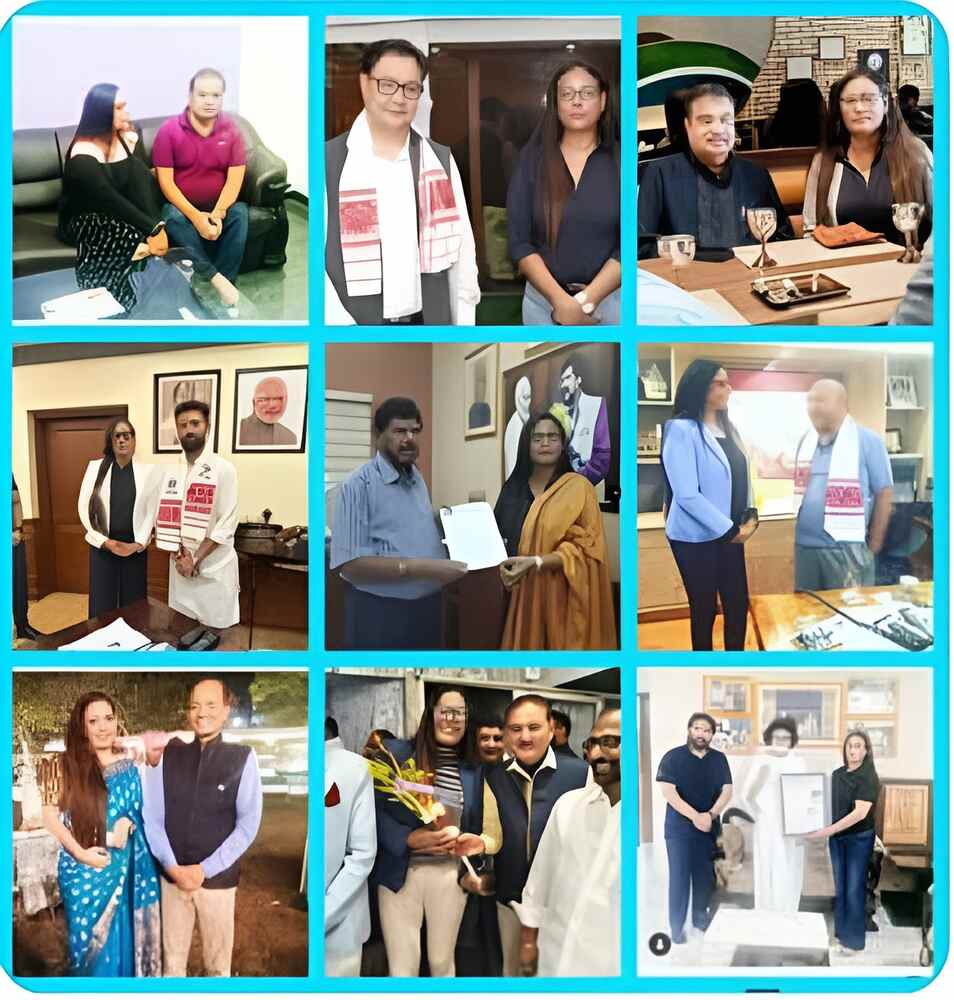
In recent days, a set of photographs circulating widely on social media has triggered intense confusion, speculation, and political debate. Many viewers are asking a basic but serious question: Are these images genuine, or were they created or amplified using AI with the intention of defaming a political party, particularly the BJP? The uncertainty itself has become part of the controversy.
At the centre of this storm is a name few outside political and activist circles had heard before—Dr Asma Begum, an Assamese-origin doctor who was reportedly arrested in Delhi. Almost overnight, she has become the subject of heated discussions, conspiracy theories, and sharp political commentary. The confusion is real, and so are the questions.
Who exactly is Dr Asma Begum? What does she do? Why has she suddenly become so prominent?
For many who have seen the circulating photo album, the reaction is visceral. The images raise eyebrows, spark anger, and provoke disbelief. In local slang, critics have labelled her as “upper-level material,” a phrase loaded with implications of influence, access, and power far beyond what an ordinary professional would possess.
What adds fuel to the fire is her alleged political proximity. Dr Begum is widely described as being close to Union Minister Ramdas Athawale, an NDA ally and a known political figure from Maharashtra. That connection alone has prompted uncomfortable questions. How did a doctor from Assam come to be associated so closely with a senior leader from Maharashtra? And what role, if any, does she play within his party’s political structure?
Critics argue that this relationship is not casual. They claim it reflects deep ties, sustained access, and an unusual level of trust. For them, this is not about personal friendships—it is about power networks.
Another layer of controversy revolves around Dr Begum’s alleged international exposure. Observers point to her lifestyle and movements in Delhi, describing her as an “international player.” According to these claims, she has maintained links with foreign embassies and has been using a vehicle registered under the name of a foreign diplomatic mission since 2024. If true, this is no small detail. Diplomatic vehicles are not easily accessible, and such privileges usually come with official roles or sensitive affiliations.
Naturally, this raises the most important question of all: What exactly is her work?
Is she acting in a professional, diplomatic, advisory, or intermediary capacity? Or is something else at play?
What further complicates matters is the nature of the photographs themselves. Many people struggle to reconcile the image being projected—of a globally connected, politically linked individual—with the content and presentation seen in those photos. The mismatch has led to speculation that something is being hidden, selectively shown, or deliberately distorted.
The idea is simple—visible signs usually point to deeper, unseen realities. According to critics, Dr Begum is not an isolated case. They believe her story is part of a larger pattern, where invoking pressure or “spells” could reveal more such figures embedded within the system.
There is also a strong political undercurrent to the outrage. Some voices argue that years of appeasement politics, unchecked welfare schemes, and indiscriminate distribution of scholarships have created a class of individuals who are now powerful enough to influence or even capture institutional systems. The warning is stark: today it is one controversial figure, tomorrow it could be many.
The tone of this debate is not celebratory—it is anxious. The refrain heard again and again is that wrong policies combined with flawed vision inevitably lead to damaging consequences. Whether those consequences are political, social, or institutional remains to be seen, but the fear is that the nation will ultimately pay the price.
At this stage, facts, speculation, and political emotion are deeply intertwined. What is urgently needed is clarity—verified information, transparent explanations, and accountability. Without that, rumours will continue to thrive, AI-generated doubts will multiply, and public trust will erode further.
Until then, Dr Asma Begum remains less a person and more a symbol—of confusion, controversy, and a system struggling to answer uncomfortable questions.
