

Poonam Sharma
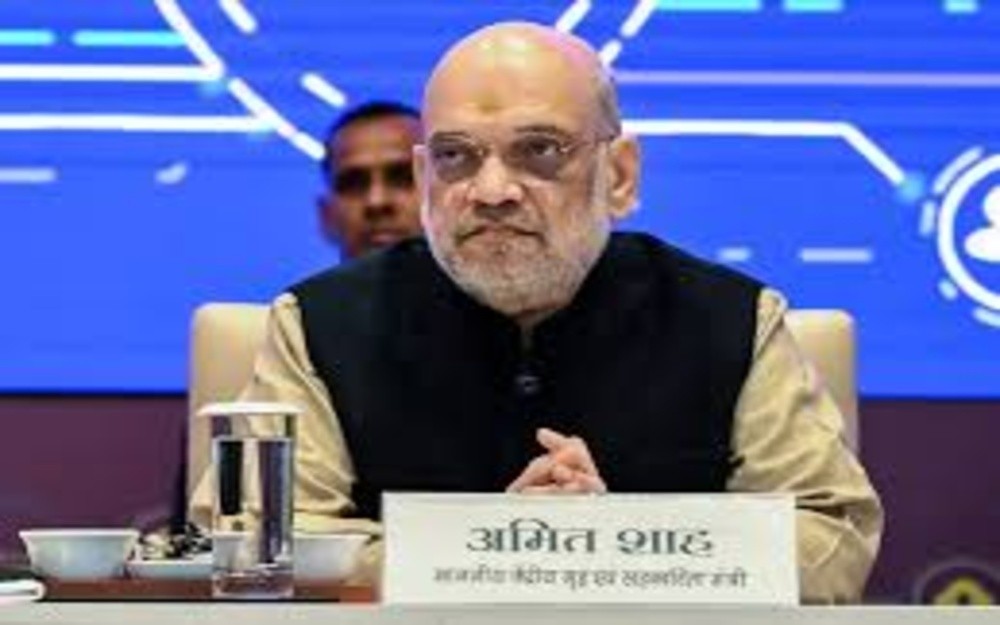
In recent weeks, Jammu and Kashmir has once again found itself at the center of a national conversation—this time over a sweeping administrative exercise initiated by the Union Ministry of Home Affairs. Under the direction of Home Minister Amit Shah, the Jammu and Kashmir Police have begun collecting detailed information on every mosque in the Union Territory and on individuals associated with these religious institutions. While the move has triggered mixed reactions, the government maintains that the objective is rooted firmly in internal security and financial transparency.
Demanding Institutional details
According to officials, the exercise involves a comprehensive data collection process. Each mosque has been issued a four-page form. One page seeks institutional details—such as when the mosque was built, how much money was spent on its construction, where the funds came from, the ownership status of the land, and complete records of income and expenditure. The remaining three pages focus on individuals linked to the mosque, including imams, caretakers, and members of mosque management committees.
The personal information requested is extensive. It includes mobile numbers, bank account details, ATM and credit card information, and travel histories—particularly foreign travel undertaken by imams or their family members. Authorities are also seeking details about relatives living abroad and the sources that funded overseas trips. In addition, mosques are being asked to specify whether they are associated with any madrasa and to clarify their ideological or sectarian affiliation within Islam.
The scale and depth of this data collection have inevitably sparked debate. Supporters of the initiative argue that it is a long-overdue step to plug financial loopholes that have historically been exploited in conflict-prone regions like Kashmir. For decades, security agencies have maintained that foreign funding—often routed through religious or charitable fronts—has been misused to fuel radicalization and terrorism. From this perspective, monitoring the flow of money into mosques is not about religion, but about ensuring that places of worship are not used, directly or indirectly, as conduits for unlawful activities.
Foreign Contribution Regulation Act (FCRA)
Government sources emphasize that similar financial scrutiny already exists in other sectors. Non-governmental organizations, trusts, and charities are subject to audits and regulatory oversight under laws such as the Foreign Contribution Regulation Act (FCRA). In that sense, officials argue, religious institutions should not be treated as exceptions, particularly in a region that has witnessed decades of militancy, cross-border terrorism, and separatist movements.
Kashmir policy
Home Minister Amit Shah has consistently framed his Kashmir policy around a central theme: dismantling the ecosystem that enables terrorism. Since the abrogation of Article 370 in 2019, the government has pursued what it describes as a “zero tolerance” approach—targeting not only armed militants but also their financial, ideological, and logistical networks. Seen in this context, the mosque data collection drive is being projected as another cog in a larger security strategy.
However, this exercise is seen by the fundamentalists with deep unease. So called Civil liberties advocates and community leaders worry that such sweeping data collection risks crossing the line from regulation into surveillance. They argue that asking for personal banking and travel details of religious figures could create an atmosphere of fear and mistrust, particularly among ordinary worshippers who have no connection to illegal activities but may have . “This initiative was bound to be introduced, largely because practices associated with a single religious community had reinforced perceptions of bias and alienation.”
There are being clear public guidelines on how the data will be stored, protected, and used . In a region already marked by high security presence and frequent checks, additional layers of scrutiny—especially around places of worship—can feel intrusive. The mixed reactions on the ground reflect this tension: while some see the move as necessary for peace and stability, others view it as yet another test of trust between the state and the people.
What remains unclear is whether this model will be replicated elsewhere in India. Officials have not issued any formal statement suggesting a nationwide rollout, but sources indicate that the Kashmir exercise could serve as a pilot. If implemented nationally, such a policy would undoubtedly ignite a much larger debate about the balance between national security and religious freedom.
At its core, the issue raises fundamental questions. How does a democratic state ensure security without overreaching? Where does financial transparency end and personal intrusion begin? And how can trust be built in regions where suspicion—on both sides—has become deeply ingrained?
For the government, the answer lies in asserting that no institution, however sacred, should be immune from accountability if national security is at stake. For critics, the concern is whether accountability can be enforced without undermining constitutional values and social harmony.
As Jammu and Kashmir navigates yet another significant policy shift, the true impact of this initiative will depend not just on intent, but on implementation—on whether transparency is matched with sensitivity, and security with safeguards. Only time will reveal whether this move becomes a model for stability or a flashpoint for further debate.
