
Iran anti-govt. protests goes on, internet blackout, ‘death penalty’ threats, US warns intervention

By Anjali Sharma
WASHINGTON – According to media reports on Saturday Iran has remained under a complete internet shutdown since Thursday as the government threatened protesters with “enemy of God” charge, which carries the death penalty in Iran.
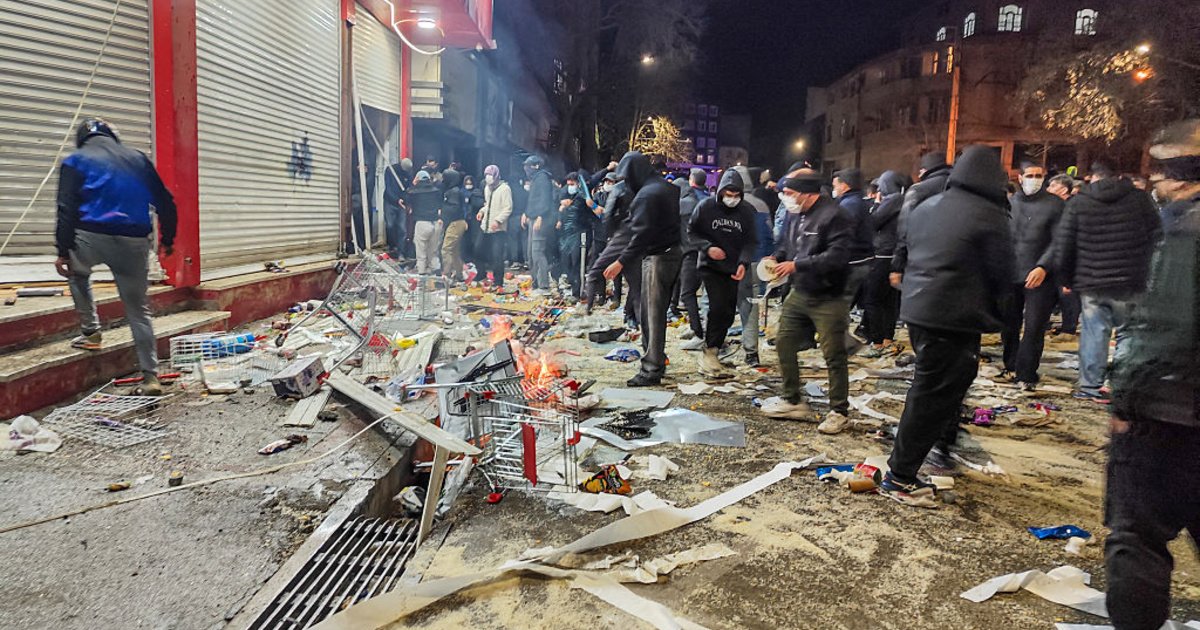
The anti-government protests in Iran began on December 28 which have intensified as demonstrations were held across several cities, prompting Iranian authorities to issue a “death penalty” warning to the protesters.
Iran remains under a complete internet shutdown in a desperate bid by the Iranian regime to control the flow of information.
According to some human rights groups, at least 72 people have been killed and more than 2,300 detained since the demonstrations began on December 28.
Some security personnel are also believed to have been killed as clashes erupted between the protesters and security forces in some areas.
The immediate protests trigger was a failing economy.
Iran faces stringent sanctions from the US and European Union and that has crippled the country’s economy.
The 12-day war with Israel in June last year made the situation even worse as Tehran suffered significant financial losses.
Iran’s currency plunged against the US dollar and with inflation rising, traders hit the streets against the Khamenei regime on December 28.
The university students also joined them as the protests spread rapidly across the country.
The protest against the currency decline and rising inflation turned into an uprising against the Ayatollah Ali Khamenei-led regime.
They had spread to over 100 locations in 22 of the 31 provinces. And they have only grown ever since.
According to Human Rights Activists News Agency, 512 locations nationwide across 180 cities in 31 provinces have witnessed demonstrations till Saturday.
The internet services remain suspended in Iran some videos of the protests have managed to come out.
In these videos, protesters are seen chanting slogans like “Death to the dictator” and “Iranians, raise your voice and shout out for your rights.”
Thousands of protesters were seen marching through Tehran, with women, who have long faced repression in the country, also joined the demonstrations.
A photograph that has gone viral on social media shows a woman lighting a cigarette using a burning poster of Iran’s Supreme Leader, Ayatollah Ali Khamenei.
Iranian forces have been accused of firing at protesters.
Hospitals in Iranian cities are overwhelmed with the injured.
The security forces also allegedly raided some hospitals where protesters were undergoing treatment.
Initially, the Iranian government’s response to the protests was measured as it acknowledged the “legitimate demands” of the protesters.
The regime began to threaten the protesters and intensified its crackdown on demonstrators.
Mohammad Movahedi Azad, Iran’s prosecutor general, said that protesters would face strict legal action “without leniency, mercy or appeasement.”
He warned that “all criminals” involved in rioting will be considered an “enemy of God”, a charge that carries the death penalty in Iran.
Iranian Supreme Leader Khamenei said that the protesters were “ruining their own streets” in a bid to please US President Donald Trump.
“Because he (Trump) said that he would come to their aid. He should pay attention to the state of his own country instead,” he said in an address to his supporters that was aired by Iranian state media.
Iranian Revolutionary Guards said that they are committed to protecting “the achievements of the Islamic Revolution and maintaining the security of society.”
US have warned that it will intervene if the Iranian regime kills protesters.
President Trump said “It looks to me that the people are taking over certain cities that nobody thought were really possible just a few weeks ago.”
He added, “I tell the Iranian leaders you better not start shooting because we’ll start shooting too.”
US Secretary of State Marco Rubio said that the United States “supports the brave people of Iran.”
India has issued an advisory asked its nationals to avoid non-essential travel to Iran in view of the protests.
“In view of recent developments, Indian nationals are advised to avoid non-essential travel to the Islamic Republic of Iran until further notice,” the advisory said.
It said that those already in the Islamic nation have been asked to exercise due caution and avoid visiting areas of protests and closely monitor news as well as the website and social media handles of the Indian embassy.
