
CR Patil Reviews Innovative Faecal Sludge Management Models
Jal Shakti Minister lauds community-led sanitation initiatives, calls for scalable rural FSM solutions.

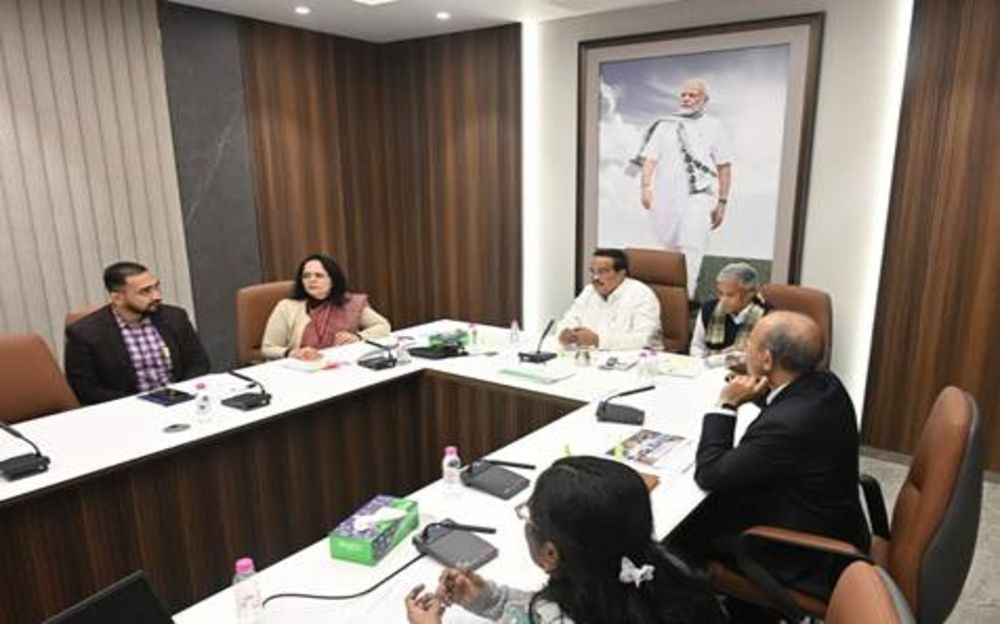
- Virtual interaction held with States and UTs on rural FSM models
- Community-led and SHG-driven sanitation solutions highlighted
- Focus on sustainability, livelihoods and inclusive sanitation
- Minister stresses FSM as key to Sampoorna Swachhata
GG News Bureau
New Delhi, 7th Jan: The Ministry of Jal Shakti organised a virtual interaction with States and Union Territories on January 6 to review innovative Faecal Sludge Management (FSM) models being implemented under the Swachh Bharat Mission (Grameen).
The meeting was chaired by Union Jal Shakti Minister C. R. Patil, along with Minister of State V. Somanna, Secretary Ashok K. K. Meena and Joint Secretary and Mission Director SBM(G) Aishvarya Singh. District collectors, Zilla Panchayat CEOs, SHG members, Panchayat representatives and senior officials from participating States and UTs joined the interaction.
The objective was to promote cross-learning, highlight scalable FSM practices and reinforce the importance of managing the entire sanitation value chain beyond toilet construction. States including Gujarat, Sikkim, Madhya Pradesh, Karnataka, Odisha, Ladakh and Tripura showcased models focusing on in-situ treatment, community participation, SHG-led operations, urban–rural linkages and reuse of treated wastewater.
A notable model from Odisha’s Khordha district showcased a transgender-led Self-Help Group managing a Faecal Sludge Treatment Plant (FSTP), creating dignified livelihood opportunities while ensuring inclusive sanitation services. Other innovations included twin-pit toilets in Gujarat’s Dang district, retrofitting single-pit toilets in Sikkim’s Mangan district, India’s first rural FSTP in Indore district of Madhya Pradesh, cluster-based FSTPs in Karnataka’s Dakshina Kannada, ecosan toilets in Ladakh’s Leh district, and mobile bio-toilets in Tripura’s Gomati district.
Interacting with community members, Patil lauded the initiatives for combining cleanliness with livelihood generation and stressed that FSM is vital for public health, environmental protection and achieving Sampoorna Swachhata. He underlined the importance of community participation, SHG involvement and adoption of need-based technologies to ensure sustainability and scalability.
The Ministry reiterated its commitment to providing technical support, capacity building and promotion of innovative FSM models to strengthen rural sanitation across the country.
