
UNICEF warns child dies in extreme malnutrition, hunger conditions in Gaza

By Anjali Sharma
UNITED NATIONS – UNICEF on Wednesday has announced a 6th child has died in Gaza this month as the people continue to endure dire living conditions linked to freezing rains and the Israel-Hamas war.
The development came as aid agencies urged Israeli authorities to reconsider revoking the licences of dozens of humanitarian partners that provide assistance across the devastated enclave from 1 January.
UNICEF in a statement identified the latest victim as 7 year-old Ata Mai; he drowned on 27 December during “severe flooding” in an improvised camp for internally displaced people in Sudaniyeh, northwest Gaza City.
UNICEF Edouard Beigbeder, Regional Director for the Middle East and North Africa said that he is the latest child in Gaza to succumb after “extreme winter conditions and lack of safe shelters”.
“Teams visiting displacement camps reported appalling conditions that no child should endure, with many tents blown away or collapsing entirely,” he said.
Information indicated that Ata had been living in a camp of some 40 tents when he went missing one afternoon. Despite search and rescue efforts supported by heavy machinery, his body was only recovered hours later.
UNICEF noted that Ata’s siblings “are all 10 years old…the family had already endured the loss of their mother during the war.
UNICEF is currently supporting the family with essential aid, including blankets, tarpaulins, and psychosocial support, while assessing their broader needs”.
Mr. Beigbeder said in addition to Ata Mai, at least five other children have lost their lives this month “after being exposed to such harsh conditions”.
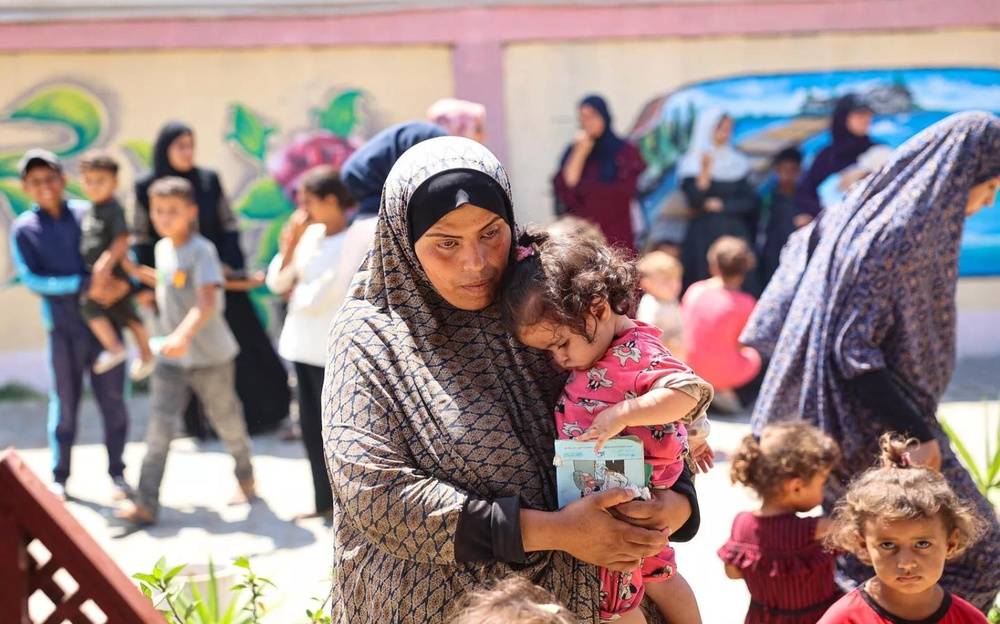
Across Gaza, shelter needs are acute, with more than 1.9 million people displaced and only limited shelter supplies entering the enclave.
The internally displaced families who have been sheltering in worn-out tents or makeshift shelters have faced prolonged rains, strong winds and freezing temperatures.
Aid teams have flagged the dangers for underfed youngsters and other vulnerable Gazans whose tents have been flooded time and again.
UN aid coordination office, OCHA, confirmed flash flooding caused by new rainstorms, “affecting people living in low-lying areas, coastal zones and those sheltering in substandard structures and tents”.
“Seawater has once again inundated tents housing displaced families, including in the Al Mawasi area of Khan Younis, rendering many shelters uninhabitable,” the update noted.
The rains have forced many families often previously uprooted by the war to move to higher ground after their belongings were soaked.
Heavy winds have made matters worse, destroying or severely damaging numerous tents and makeshift shelters, OCHA said.
According to the agency update shelter solutions remain elusive and since early December, 18 residential buildings “have completely collapsed, resulting in significant human and material losses”.
Over 110 additional buildings have sustained dangerous partial damage, posing an immediate threat to thousands of residents in and around them.
“This tragedy underscores the extreme vulnerability of children in Gaza’s hardest-hit areas, where the near-total destruction of homes and water and sewage infrastructure has left families exposed to the elements,” UNICEF said.
The development comes after a week of heavy rainfall, strong winds and freezing temperatures that have affected around 100,000 families.
The rain and colder conditions forecast, the situation is expected to worsen.
UNICEF provides critical support to thousands of affected families. This vital work includes: installing temporary water pipelines, distributing hygiene items, tarpaulins, blankets and dignity kits, ensuring access to latrines working to clean and reopen sewage pipelines, clear stormwater inlets and protect tents from flooding.
UNICEF warned that heavy rains are making the situation worse by driving up fuel needs for sewage pumping and storm water drainage.
Water levels at the Sheikh Radwan lagoon have risen from 1.8 to 2.2 metres, requiring 7,000 litres of fuel per day to prevent overflow.
UN agencies and partners warned that from 1 January, a reported 37 international aid organizations risk losing their licences to operate in Gaza under Israel’s new registration system, potentially forcing a large-scale suspension of humanitarian operations.
“If INGOs are forced to stop operations, one in three health facilities in Gaza will close,” UN and partners in the Occupied Palestinian Territory said this month.
In a joint statement, they insisted that the new INGO registration system “fundamentally jeopardizes the continuation of humanitarian operations throughout the OPT”.
The new system “relies on vague, arbitrary, and highly politicized criteria and imposes requirements that humanitarian organizations cannot meet without violating international legal obligations or compromising core humanitarian principles”, the aid agencies stated.
Unless Israel reconsiders, dozens of INGOs face deregistration by Wednesday 31 December 2025, followed by the forced closure of operations within 60 days.
UN High Commissioner for Human Rights, Volker Türk, also expressed deep concerns over the move, called Israel’s suspension of aid agencies from Gaza “outrageous.”
“This is the latest in a pattern of unlawful restrictions on humanitarian access,” Mr. Türk said.
He cited Israel’s ban on UNRWA and broader constraints on UN agencies, Israeli and Palestinian NGOs.
“Such arbitrary suspensions make an already intolerable situation even worse for the people of Gaza,” he said.
He urged States with influence to “take urgent steps and insist that Israel immediately allows aid to get into Gaza unhindered.”
Mr. Türk reminded Israeli authorities of their obligations under international law to ensure the essential supplies of daily life in Gaza, including by allowing and facilitating humanitarian relief.
