
Digvijaya’s Dissent Shakes Congress, Puts Rahul in Spotlight
Senior leader’s public call for reforms exposes inner cracks, hands BJP fresh ammo

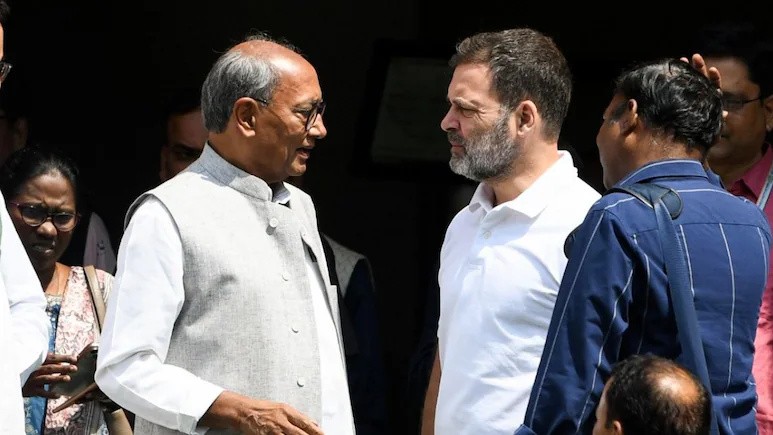
- Digvijaya Singh flags need for decentralised reforms within Congress
- Public remarks embarrass party ahead of crucial CWC meet
- BJP seizes opportunity to question internal democracy in Congress
- Leadership succession and organisational control emerge as core concerns
GG News Bureau
New Delhi, 27th Dec: The Congress found itself in an awkward spotlight once again after senior leader and Rajya Sabha MP Digvijaya Singh publicly questioned the party’s internal functioning and called for urgent organisational reforms, directly tagging Leader of the Opposition Rahul Gandhi and remarking that he is “not easy to convince.”
Singh’s statement, coming just ahead of a crucial Congress Working Committee (CWC) meeting, not only embarrassed the party leadership but also provided fresh ammunition to the Bharatiya Janata Party (BJP), which has repeatedly accused the Congress of lacking internal democracy.
In a strongly worded post, Singh acknowledged Rahul Gandhi’s grasp on socio-economic issues but urged him to turn his focus inward. He stressed the need for pragmatic and decentralised functioning within the Congress, arguing that organisational reforms were as essential for the party as electoral reforms are for national institutions.
The timing of the remarks proved politically sensitive, as senior Congress leaders were gathering to discuss the government’s move to rename the MGNREGA employment scheme. Singh’s intervention reignited simmering discontent within the party, especially as other leaders, including Shashi Tharoor, have earlier voiced discomfort with the party’s functioning.
The controversy deepened further when Singh shared an old photograph of Prime Minister Narendra Modi sitting on the floor near BJP veteran LK Advani, praising the Sangh-BJP ecosystem for nurturing grassroots workers into top leadership roles. Although he later clarified that his praise was limited to organisational strength and that he remains a critic of the BJP and RSS, the optics unsettled the Congress leadership.
Congress sources said the party would draw lessons from its own history and not from rival organisations. However, Singh’s remarks have opened a wider debate on structural stagnation within the party, particularly after a series of electoral setbacks.
Behind the scenes, Singh has reportedly flagged that many state presidents fail to form functional committees, weakening decentralisation and grassroots decision-making. His unease is also linked to emerging leadership equations in Madhya Pradesh, where leaders perceived to be outside his influence now hold key positions.
Sources further indicate that uncertainty surrounding his Rajya Sabha tenure, which is set to end early next year, may have added to the tension. With names like Kamal Nath and Meenakshi Natarajan being seen as frontrunners for his seat, Singh’s future within parliamentary politics appears uncertain.
Beyond personal equations, broader questions are being raised within the Congress over organisational roles, including KC Venugopal’s continuation as General Secretary (Organisation), and growing calls to expand Priyanka Gandhi Vadra’s responsibilities within the party structure.
As internal contradictions become increasingly public, Digvijaya Singh’s candid intervention has sharpened focus on the Congress’ long-standing challenge—balancing leadership authority with decentralised organisational renewal.
