

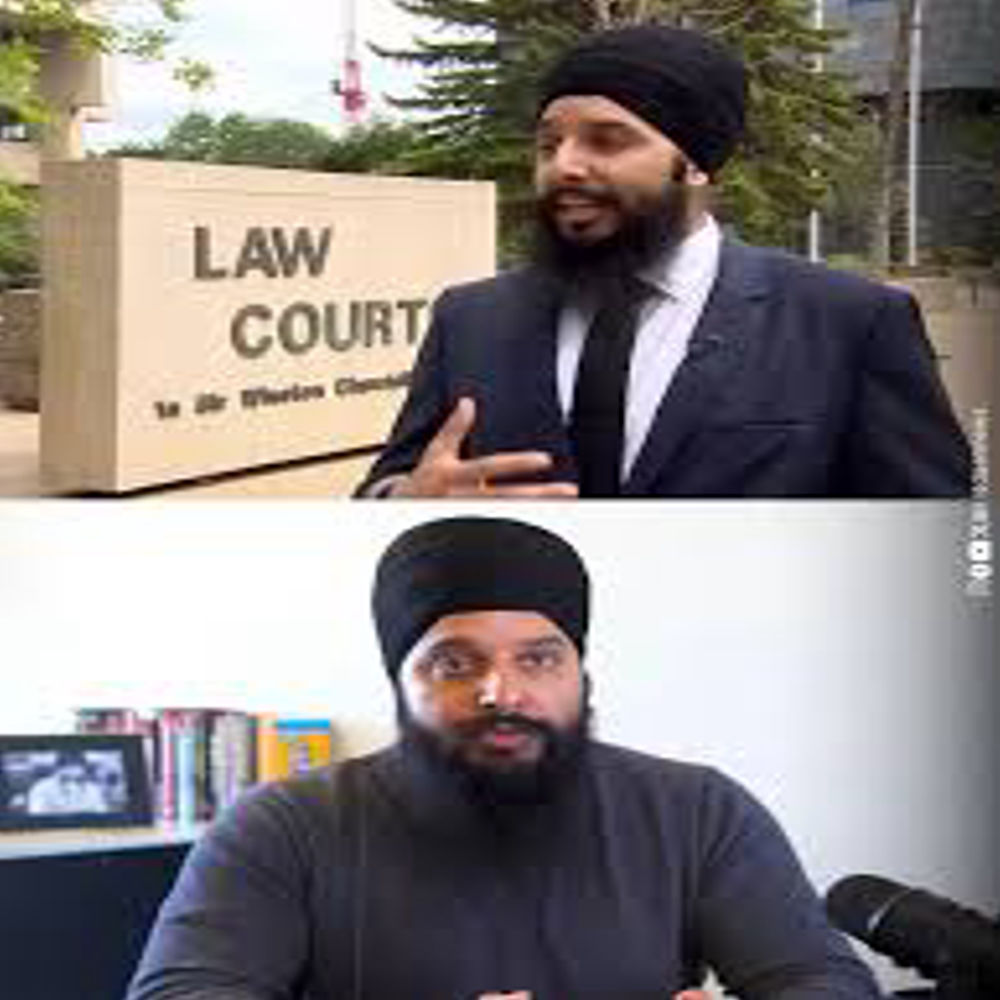
Poonam Sharma
A Landmark Ruling with Far-Reaching Consequences
The recent Supreme Court ruling in Canada that struck down the mandatory oath of allegiance to the British Crown for lawyers marks a watershed moment in the country’s constitutional, legal, and cultural evolution. Triggered by a principled challenge from Prabhjot Singh Wirring, a Sikh lawyer of Indian origin, the judgment goes far beyond an individual grievance. It exposes deep tensions between inherited colonial structures and Canada’s modern commitment to pluralism, religious freedom, and reconciliation with Indigenous peoples.
The Colonial Roots of the Crown Oath
For centuries, allegiance to the Crown has been a symbolic cornerstone of Canada’s legal and political institutions. Rooted in British constitutional tradition, the oath was intended to affirm loyalty to the sovereign as the embodiment of the state. However, in a contemporary multicultural democracy like Canada, such symbolism increasingly appears misaligned with lived realities.
Faith, Conscience, and the Sikh Objection
Wirring’s refusal to swear allegiance was not an act of defiance against the state, but a conscientious objection grounded in Sikh theology. As an Amritdhari Sikh, he argued that his ultimate allegiance lay with Akal Purakh, the eternal divine principle, making any competing oath spiritually impermissible. His challenge forced the judiciary to confront the limits of ceremonial loyalty in a rights-based constitutional order.
Redefining Loyalty in a Democratic State
The Supreme Court’s acceptance of this argument represents a significant recalibration of how the law understands loyalty, citizenship, and professional duty. Crucially, the ruling does not weaken the authority of the legal system or the rule of law. Instead, it draws a clear distinction between constitutional obedience to democratic institutions and symbolic fealty to a monarch. By declaring the oath requirement constitutionally defective, the Court affirmed that professional competence and ethical responsibility do not require ritualized allegiance to a hereditary sovereign.
Strengthening Substantive Religious Freedom
One of the most important implications of this decision lies in its impact on religious freedom. Canada’s Charter of Rights and Freedoms guarantees freedom of conscience and religion, yet symbolic requirements like the oath had persisted largely unchallenged. The ruling signals that religious accommodation must go beyond surface-level inclusion—such as permitting religious attire—and extend to deeply held theological commitments that may conflict with state rituals. In this sense, the judgment strengthens substantive, rather than cosmetic, multiculturalism.
Implications for Indigenous Reconciliation
Equally significant is the ruling’s relevance for Indigenous reconciliation. As highlighted by the British Columbia Civil Liberties Association, the oath of allegiance has long been problematic for Indigenous lawyers whose communities experienced the Crown not as a neutral constitutional symbol, but as a colonial authority responsible for dispossession and broken treaties. By dismantling this requirement, the Court acknowledged that colonial legacies embedded in legal rituals can obstruct equitable participation in the justice system.
Re-Examining Canada’s Ties to the Monarchy
The decision also raises broader questions about Canada’s ongoing relationship with the British monarchy. While Canada remains a constitutional monarchy, public attachment to the Crown has weakened, particularly among younger generations and immigrant communities. This ruling may embolden future challenges to Crown-centric practices, encouraging a gradual and peaceful distancing from colonial symbolism without demanding abrupt constitutional change.
Courts as Mediators Between Tradition and Modernity
From a comparative perspective, the case places Canada among liberal democracies reassessing inherited traditions in light of diversity and human rights. It demonstrates how constitutional courts can serve as mediators between history and modernity—preserving institutional continuity while removing exclusionary practices. The judgment does not erase history; it contextualizes it, ensuring tradition does not override constitutional equality.
Unity Through Inclusion, Not Symbolism
Critics may argue that removing the oath dilutes national unity or weakens civic identity. However, this view assumes unity must be enforced through uniform symbolism rather than shared democratic values. The Court’s ruling suggests the opposite: genuine unity emerges when institutions are flexible enough to include citizens of diverse beliefs without demanding ideological conformity.
A Precedent for Inclusive Constitutionalism
Ultimately, the Wirring case illustrates how individual conscience can catalyze systemic reform. It reaffirms that loyalty to a democratic state is measured by commitment to law, justice, and ethical responsibility—not by ceremonial allegiance to historical power structures. In doing so, the ruling strengthens rather than undermines Canada’s constitutional fabric.
In an era when plural societies increasingly grapple with identity, faith, and state authority, this decision stands as a powerful reminder that inclusive constitutionalism is not a threat to democracy—it is its natural evolution.
