
UNSC unanimously extends mandate of African Union support mission in Somalia

By Anjali Sharma
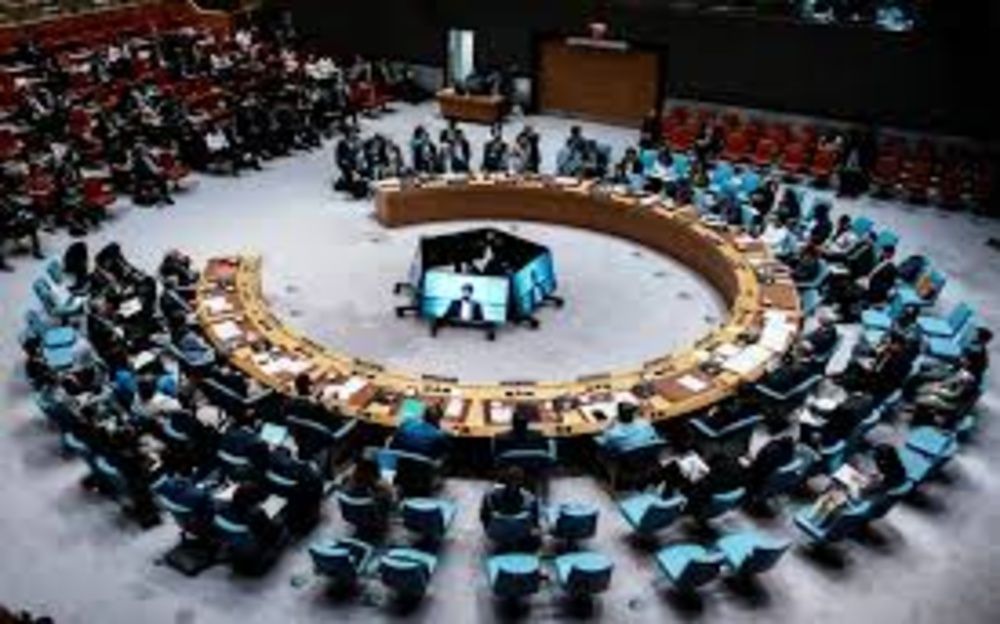
UNITED NATIONS –UN Security Council on Tuesday voted on a draft resolution 2809 (2025) on the African Union Support and Stabilization Mission in Somalia and unanimously extended the mandate.
African Union support mission in Somalia supports Somali authorities in stabilization efforts and the fight against armed groups.
The Council members briefed on Iran and the implementation of resolution 2231, which endorsed the 2015 nuclear deal, known as the Joint Comprehensive Plan of Action.
Council Members also met for an emergency meeting requested by Venezuela on the tensions flared up between Caracas and Washington D.C.
Rosemary DiCarlo, Under-Secretary-General for Political and Peacebuilding Affairs said “Despite intensified diplomatic efforts in the second half of 2025, there was no agreement on the way forward regarding the Iran nuclear programme”.
She said that France, Germany and the United Kingdom known as the “E3 States notified the Council of their intention to trigger the snap back mechanism of resolution 2231 (2015).
They attributed their decision to what they described as “significant non-performance” by Iran on its commitments under the Joint Comprehensive Plan of Action.
She stressed that as the Council did not adopt a resolution to continue the termination of measures within 30 days of the “E3” letter, she said the existing sanctions on Iran were reapplied on 27 September 2025, entailed the reinstatement the website of the 1737 Sanctions Committee and the corresponding sanctions list.
Some members asserted the process was procedurally and legally flawed, she added.
US envoy to the UN said that “This Council is and should remain seized of the non-proliferation issue, especially with respect to the Islamic Republic of Iran,”.
He noted that as demonstrated by the issuance of the Secretary-General’s report on resolution 2231 (2015), with the exception of paragraphs 7, 8 and 16-20, it is clear that “this resolution and its related practical arrangements remain in effect”.
US representative added that pursuant to the snap back process, the Council decided to reinstate resolutions 1696 (2006), 1737 (2006), 1747 (2007), 1803 (2008), 1835 (2008) and 1929 (2010).
These texts are narrowly scoped to address a nuclear programme that seeks to operate out of view of the international community, he insisted.
French ambassador welcomed that “no member of this Council formally objected to the presentation” of the Secretary-General’s report on resolution 2231 (2015).
He said that “The lack of implementation by Iran of its international obligations related to its nuclear programme constitute a grave threat to international peace and security.”
International Atomic Energy Agency has lacked access to the most sensitive sites of the nuclear programme on Iran’s territory, and has “no way” to verify the status of the 450 kilos of 60 per cent high enriched uranium.
He said if brought to military enrichment levels, “that stockpile would be of a sufficient quantity to produce 10 nuclear explosive devices”.
Iran is the only nuclear-weapon State enriching to these levels, he added.
British delegate urged Tehran to urgently lift its restrictions and fully cooperate with the IAEA.
“The United Kingdom remains committed to a diplomatic solution,” he stressed, calling on Iran to engage in direct talks with the United States and noting that future sanctions relief remains possible if Iran takes “concrete, verifiable, and durable steps” to address international concerns.
Russia envoy Nebenzia expressed regret that the Council presidency did not “find the courage to impartially uphold your obligation not to act at the behest of those who insisted on holding a Security Council meeting on a non-existent agenda item”.
He categorically rejected and condemned such actions, which violate agreements previously reached.
Ambassador said “the JCPOA Committee does not exist anymore; therefore, the EU is not the coordinator anymore and therefore should not be allowed to brief the UN Security Council”.
The Council President also did not attempt to conduct an informal expert meeting of the Security Council “in the 2231 format”, revealed that it was aware of the “fallacious” arguments about continuing the actions of resolution 2231 (2015), he concluded.
German Ambassador to the UN said that the Council has to agree on a Chair of the 1737 Sanctions Committee,” insisted so that the Panel of Experts can start working as soon as possible.
“Their independent assessments are vital for transparency and effective monitoring,” he said.
The reinstated Council resolutions are a “tool to encourage constructive engagement”, he added, “It is and remains in all of our interest that Iran does not obtain a nuclear weapon.”
The European Union representative spoke in its capacity as observer, said there should be “no doubt” as to the validity of invoking the snapback mechanism.
She stressed “the snapback of sanctions and nuclear restrictions must not be the end of diplomacy quite the opposite”.
EU envoy called on Iran to provide the IAEA with updated and verifiable declarations on the quantity and whereabouts of nuclear material and related activities.
Iranian envoy said that resolution 2231 (2025) expired on 18 October 2025, and thus “ceased to have any legal effect or operative mandate.”
He noted that there is “no mandate for the Secretary-General to submit any report and no mandate for the Council to hold discussions on it”.
Iranian ambassador said that today, the Council is witnessing “a calculated distortion” of resolution 2231 (2015), the “deliberate dissemination of disinformation” about Iran’s nuclear programme and a cynical abuse the chamber for narrow political interests.
He blamed the current situation on the United States’ unilateral withdrawal from the Joint Comprehensive Plan of Action.
