

Poonam Sharma
Right now, India and Pakistan are once again pouring petrol on the water issue. What happened overnight was extremely intense—many developments took place. At the same time, the issue in Bangladesh that social media and independent media had been highlighting has now been confirmed. Usman Haddi’s own brother has given a very big statement, confirming many suspicions.
First of all, It is a very serious and credible claim—that the people who killed Usman were none other than Yunus’s own gunmen, because Yunus wanted to eliminate all his political opponents. His brother’s statement has now strengthened this claim. This is not sudden news; such reports had been surfacing publicly for quite some time.
The second very interesting point is that that what is happening in Bangladesh and Pakistan is being operated from the same control point. The ISI’s movement in Bangladesh has clearly intensified.
Now coming to Pakistan: on the border with India, Pakistan has deployed anti-drone systems and ground detection systems. At least 35 anti-infiltration or ground surveillance units have been installed. About eight brigades have been positioned, particularly in areas like Rawalakot, Kotli, and surrounding regions. Strong intelligence inputs suggest that over the last two to three months, all defense procurements in Islamabad have been put on an emergency fast-track basis. Weapons and systems are being urgently procured from China, Turkey, and wherever possible.
The big question is—are they scared of an Indian operation like “Operation Sindoor,” or are they trying to activate a second front through Bangladesh? The idea could be to entangle India somewhere else and then quickly create a situation on the western front.
Because earlier, Pakistan narrowly escaped a crisis due to what they themselves called “nature’s intervention.” Statements from Asim Munir and others followed. Another amusing yet alarming claim came from Pakistan: they said that 90% of the defense products used during recent India-Pakistan tensions were domestically developed. They even claim they export weapons to foreign armies.
This is important because over the last 3–6 months, Pakistan has repeatedly created situations that help Asim Munir consolidate power. One cannot rule out the possibility that he may push for a military misadventure or create confusion to divert attention, especially when Pakistan is facing massive internal protests, economic collapse, and political instability.
To avoid a strong Indian response, Bangladesh is being used as a major distraction. This creates a situation where India has to carefully calculate every move. Many wars are designed in a way where a country is dragged in slowly, gains nothing, but bears heavy costs—Ukraine is a classic example. Russia was strategically trapped so that it would be tied down in one front while pressure could be managed elsewhere.
Pakistan today is essentially a front-facing actor; the real operators are elsewhere. China, Turkey, and Western interests are deeply involved. Pakistan itself has very limited capability. Bangladesh’s air defense and missile systems are mostly imported and not technically compatible at scale.
That is precisely why India focuses on indigenous defense production—because system compatibility, integration, and operational reliability matter. This was evident even in discussions around Rafale and post–Operation Sindoor defense standardization.
As far as the so-called Pakistan–Bangladesh defense pact is concerned, there is nothing exclusive in it. Two economically bankrupt countries signing a defense agreement raises the question—what exactly will they supply to each other? Missiles? Technology? Pakistan itself is dependent on aid.
The real involvement in Bangladesh is not Pakistan’s, but that of the US, China, and Turkey. Pakistan is largely being used as a distraction. Intelligence cooperation between Pakistan and Bangladesh already existed; nothing substantially new has emerged.
Bangladesh today is in a compromised state. When governments lose legitimacy, institutions become centers of power, and invisible forces begin to operate. Bangladesh’s intelligence, military, and governance structures are all under external influence. Less than 60% of people voted for the current leadership, and the rest are being politically managed or suppressed.
This is a dangerous mindset. Pakistan and Bangladesh may try to create border tensions to shift India’s focus. History shows that Pakistan has repeatedly attempted such misadventures—in 1948, 1965, and beyond—often encouraged by external funding.
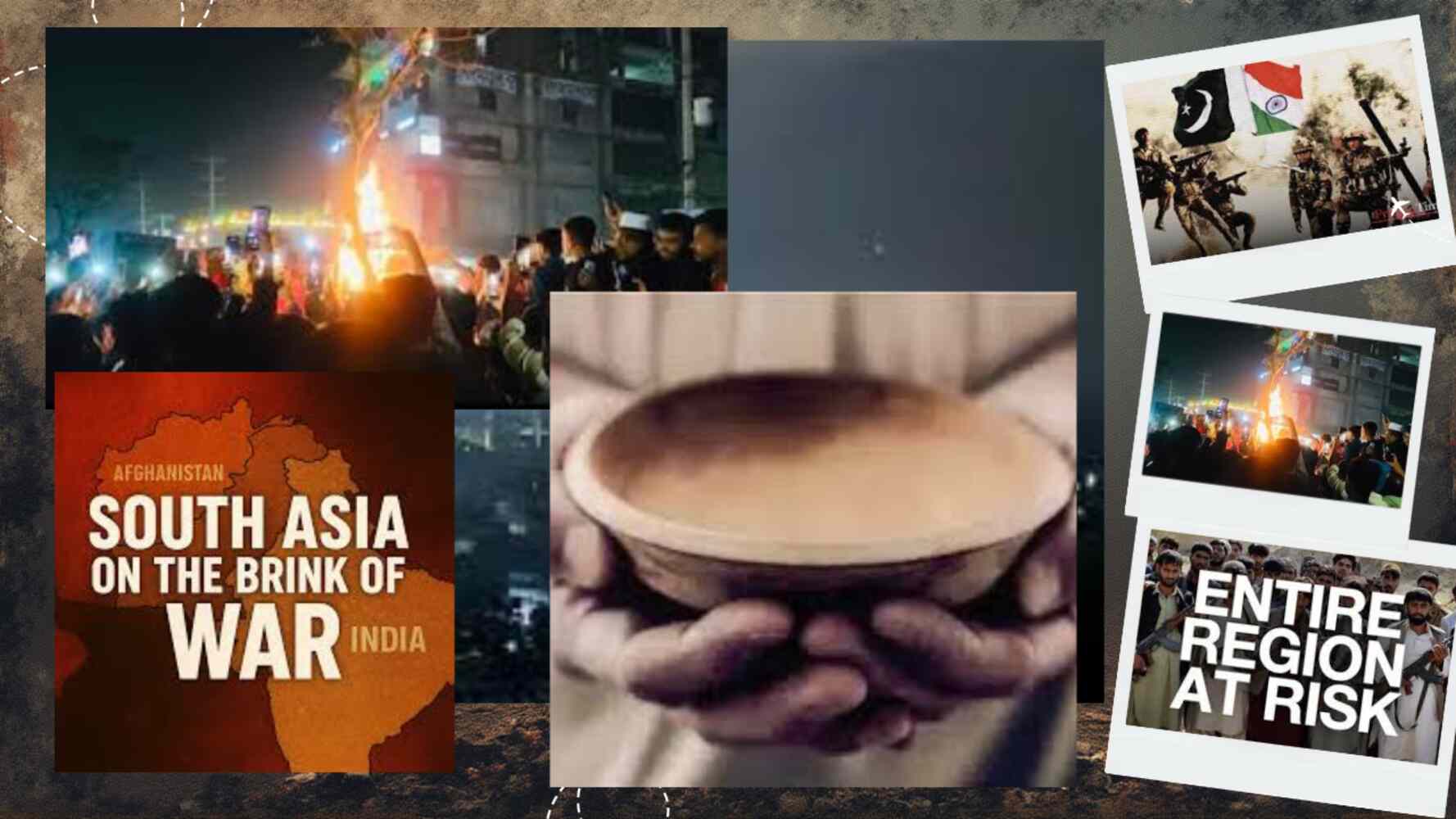
An important detail: leaders of the new student-backed National Services Party in Bangladesh have been given protection—but only Yunus seems to be receiving real security. Meanwhile, Yunus has again come to India with a begging bowl, asking for rice.
This is the irony—they abuse India, depend on India for food and aid, and yet provoke hostility. What terms should be used for such behavior? I request viewers to write in the comment box.
A retired Lieutenant General recently used very strong words on a show, and though they sounded harsh, behind them are thousands of destroyed lives over the past year. It is time to find a solution.
India sacrificed enormously during Bangladesh’s liberation. In the 1970s, people paid extra taxes—even movie tickets had additional charges—to raise funds to help Bangladesh. India lost over 3,000 soldiers to secure their freedom. This history must be remembered.
What kind of “brotherhood” is this, when the same country mistreats women, minorities, and then turns against the very nation that feeds it? India sends rice, aid, and assistance—yet is met with hostility.
Finally, Bangladesh’s own financial advisor has admitted that they want to improve ties with India because they need food. Mob lynchings, public intimidation, and radicalization are increasing there.
The bottom line is this: even today, a significant section of Bangladeshi society holds a mindset shaped by external ideological groups, particularly those aligned with Pakistan. Pakistan itself is the biggest example of what happens when a country spends all its energy on hostility instead of development.
India has paid a heavy price—economically, politically, and humanely. The younger generation must be reminded of these sacrifices.
