

Poonam Sharma
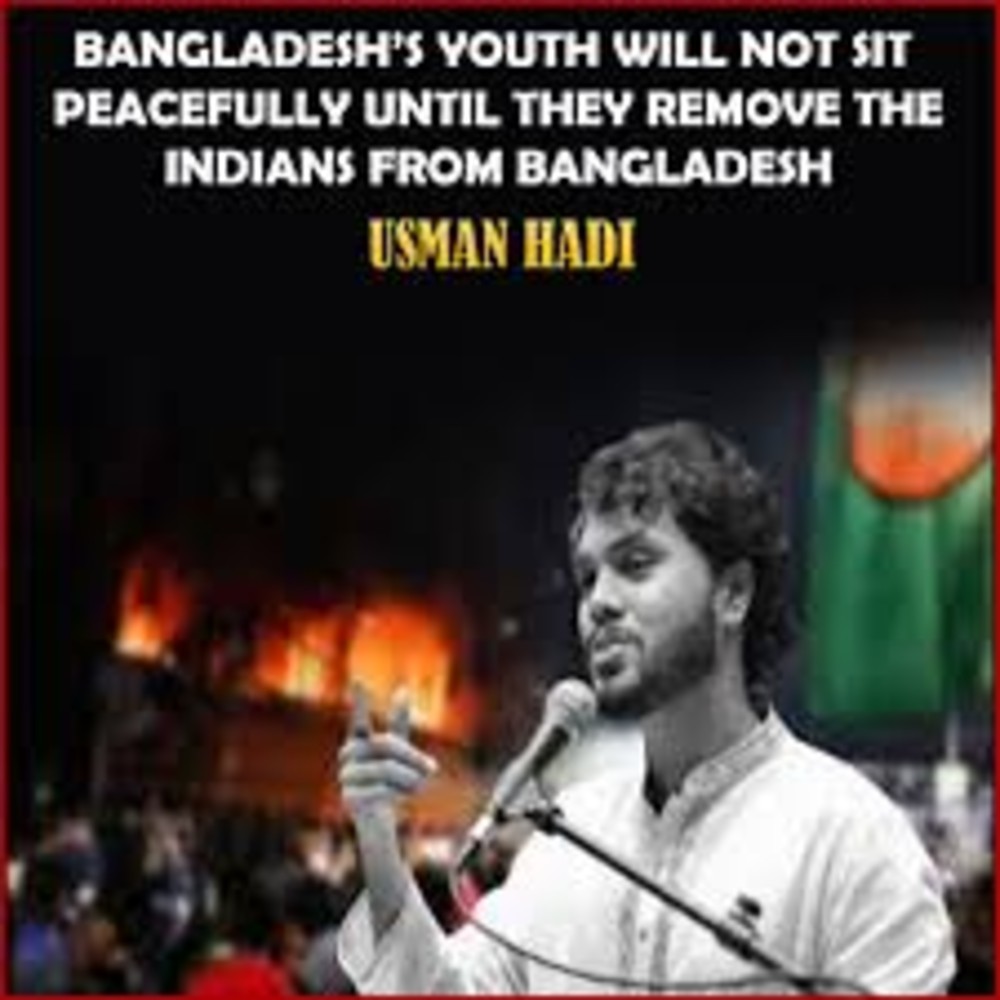
Bangladesh today finds itself trapped in a familiar but dangerous cycle—violence followed by outrage, outrage followed by political mobilisation, and mobilisation dissolving into factional chaos. The killing of Usman Hadi was not merely another incident; it became a trigger for what supporters termed an “Inqilab” (revolution). But as days passed, the uprising revealed deeper structural failures—of investigation, governance, and moral authority all as if a planned by the Yunus Gang .
What began as a demand for justice is now increasingly marked by confusion, contradictory narratives, and power struggles within protest groups themselves.
From Protest to Proliferation of Factions
One of the most striking features of the current unrest is the splintering of the movement into multiple factions. There is no single command, no unified leadership, and no agreed roadmap. Different groups are making different—and often conflicting—demands:
resignation of police officials,
removal of internal security advisers,
dismantling of investigative agencies,
and even transferring investigations to unofficial or activist groups.
This fragmentation has weakened the original force of the protest. Instead of a unified call for accountability, the streets echo with competing slogans, personal ambitions, and financial interests. Even participants within the movement privately admit that money, influence, and visibility have begun to shape participation.
The 24-Hour Ultimatum That Changed Nothing
A critical moment came when protest leaders issued a 24-hour warning to the government, demanding concrete action in the Usman Hadi case. That deadline has long expired. Yet, there has been no decisive breakthrough, no credible arrest, and no transparent update from authorities.
This silence has amplified public anger—but it has also exposed a paradox. The louder the demands become, the less clarity exists about what exactly is being demanded, and by whom. In such an atmosphere, justice risks becoming collateral damage.
Conflicting Narratives Around the Killing
Equally troubling are the shifting stories surrounding Usman Hadi’s death. Initial claims portrayed him as an innocent victim shot while sitting at a tea stall. Later, local accounts and police questioning suggested he may have been present in an area associated with drug abuse and criminal activity.
These contradictions do not automatically absolve perpetrators—but they matter. In any constitutional democracy, facts must precede outrage, not the other way around. Instead, selective details were amplified, inconvenient facts sidelined, and emotionally charged narratives weaponised for mobilisation.
This pattern has eroded public trust—not only in the state but also in protest leaders who appear unwilling to submit their claims to scrutiny.
Social Media, YouTube, and the Economy of Sensation
Fueling the confusion is the role of Bangladeshi social media and YouTube channels, many of which have turned the crisis into spectacle. Allegations, mockery, dramatic music, and half-verified “exclusive leaks” dominate the digital space.
The incentive structure is clear: outrage equals views, views equal revenue. But this has consequences. The victim’s dignity is compromised, public perception is distorted, and investigative processes are pressured by viral misinformation rather than evidence.
In effect, justice is being crowdsourced—not through reason, but through algorithms.
A Collapse of Confidence in Institutions
Perhaps the gravest implication of the unrest is the open rejection of state investigative institutions. Protest leaders have publicly questioned the competence of the Detective Branch, mocked law enforcement, and demanded that official agencies be dissolved if they fail to deliver results within arbitrary deadlines.
Names of senior officials, including internal security advisers, are being shouted from protest stages with calls for resignation. This reflects not just anger, but a deeper institutional legitimacy crisis.
Historically, Bangladesh’s constitution vests investigation and prosecution firmly within state institutions to prevent mob justice. When crowds begin dictating investigative authority, the line between democracy and anarchy blurs dangerously.
The India Factor: Deflection or Strategy?
Another recurring theme in recent rhetoric is the attempt to drag India into the discourse—either as an alleged shelter for suspects or as a geopolitical threat. Analysts see this as a familiar tactic: externalising blame to mask internal failures.
Statements implying that India can be “warned” or “taught a lesson” betray more theatrical bravado than strategic realism. More importantly, such rhetoric diverts attention from Bangladesh’s own administrative and investigative shortcomings.
History shows that invoking external enemies has often been used to consolidate domestic power when governance falters.
Political Promises and the Weight of Words
Adding to the volatility were recent public statements by senior political figures, including remarks that promised relentless pursuit of “truth” and hinted at shielding certain narratives from scrutiny. Such statements, delivered in emotionally charged settings, have further politicised the case.
In constitutional terms, this is dangerous. When political leadership appears to pre-judge outcomes or align with specific activist groups, it undermines the principle of neutral justice and emboldens street pressure over legal process.
Between Justice and Breakdown
Bangladesh is at a crossroads. The Usman Hadi case could have been an opportunity to reaffirm the rule of law through transparent investigation and accountability. Instead, it risks becoming another chapter in a long history of justice drowned by noise, factionalism, and performative outrage.
A society cannot sustain itself on permanent agitation. Nor can constitutional order survive when investigations are decided by crowds, deadlines by threats, and truth by trending hashtags.
What Bangladesh needs now is not louder slogans, but quieter rigor: credible evidence, institutional accountability, and restraint—from both the state and the street. Without that, today’s “inqilab” may end not in justice, but in deeper fragmentation.
