
Judicial Delays and Public Trust: Why Justice Feels Out of Reach for Common Indians

By Harshita Rai
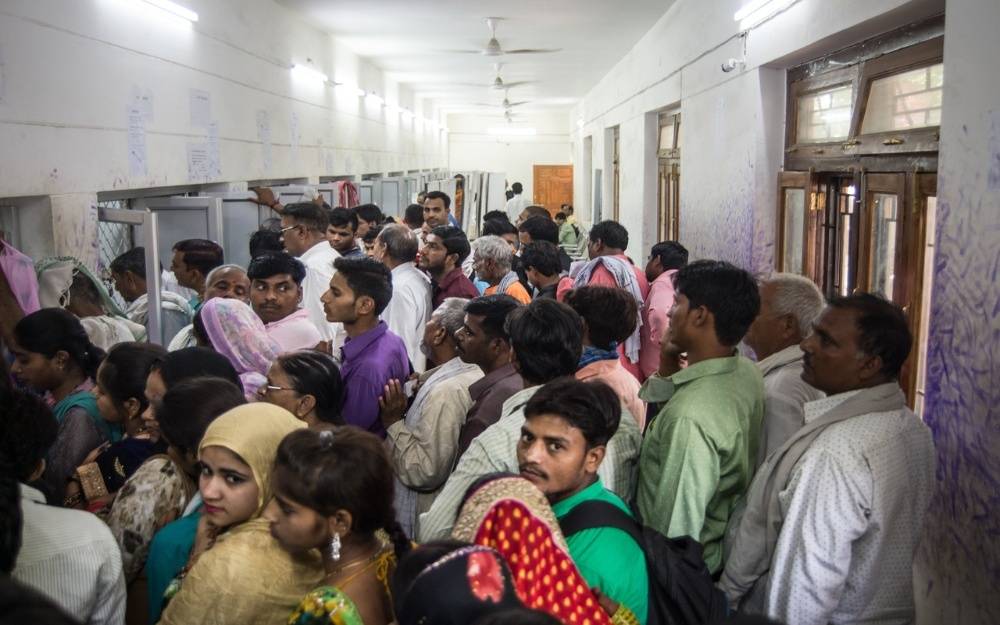
For many Indians, the idea of justice is not defeated in principle—it is defeated by time. A case filed with hope slowly turns into years of waiting, repeated adjournments, and mounting costs. Somewhere along the way, faith in the system begins to thin.
The numbers explain why frustration runs so deep. Data from the National Judicial Data Grid shows that more than five crore cases are pending across Indian courts today. Nearly nine out of ten cases are stuck in district and subordinate courts, where ordinary citizens—farmers, workers, small traders, women seeking maintenance—first seek relief. Around one crore cases have been pending for over five years, and some have dragged on for decades.
For people involved, these are not statistics. They are stalled lives.
When Delay Becomes Punishment
Nowhere is this more visible than in India’s prisons. According to NCRB data, over 75 per cent of inmates are undertrial prisoners—people not yet convicted of any crime. Many are accused of minor offences but spend years behind bars simply because their cases do not move. In such situations, the process itself becomes the punishment.
Outside prisons, the impact is quieter but equally damaging. Property disputes freeze livelihoods. Labour cases delay wages. Matrimonial and maintenance cases trap families in emotional and financial uncertainty. For many litigants, each court date means lost wages, travel expenses, and legal fees—often with no sense of when it will end.
Why the System Moves So Slowly
The reasons are well known, yet stubbornly unresolved. India has about 21 judges per million people, far below what multiple Law Commission reports have recommended. Vacancies remain high—nearly one-third of High Court posts are unfilled, while lower courts operate under constant pressure. Courtrooms are few, staff is stretched, and files still move slower than lives do.
Digital reforms and virtual hearings have helped in parts, especially after the pandemic. But technology cannot compensate for missing judges, inadequate infrastructure, or complex procedures that favour delay over resolution.
Speed for Some, Waiting for Most
Public anger sharpens when people see uneven urgency. Fast-track courts exist, but their reach is limited. Some cases—especially those that draw media attention—move quickly, while routine matters wait endlessly. This contrast has created a widespread belief that speed depends less on law and more on visibility or influence.
Even senior judges have acknowledged the crisis. The Supreme Court itself has repeatedly warned that prolonged delays weaken faith in the justice system. Yet reforms remain slow, often caught between executive inertia and institutional caution.
Small Relief, Big Problem
Lok Adalats and mediation centres have resolved crores of cases, offering quicker, less adversarial solutions. For many, they provide welcome relief. But they work best for limited categories of disputes. They cannot replace a judicial system that is expected to handle complex civil and criminal cases with efficiency and fairness.
Trust on the Line
India’s judiciary still commands respect. People approach courts believing that justice will eventually be done. But “eventually” is becoming an increasingly fragile promise. When outcomes take years, trust erodes—not dramatically, but steadily.
The danger is not immediate collapse, but quiet withdrawal. Citizens stop expecting timely justice. Some give up. Some settle unfairly. Some look for shortcuts. None of this strengthens democracy.
The Real Question
Judicial delay is not just an administrative failure; it is a test of democratic credibility. Filling vacancies, simplifying procedures, improving court infrastructure, and making accountability routine—not exceptional—are no longer optional.
For the common Indian, justice should not be a test of patience or endurance. Until the system recognises that time itself is a form of justice, the distance between courts and citizens will continue to grow—slowly, but at a cost India can no longer afford.
