
Bangladesh : Islamist Violence, Yunus–Jamaat Nexus Anti-India Propaganda Pushing to Collapse

Poonam Sharma
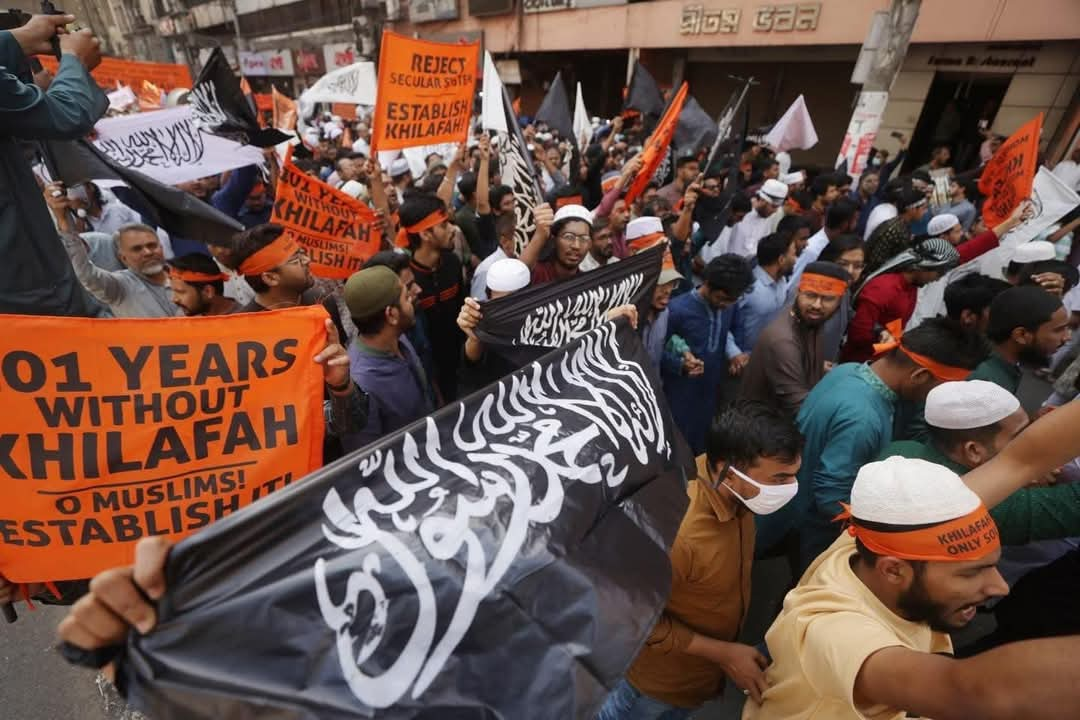
Bangladesh is no longer merely witnessing sporadic unrest. What is unfolding today looks dangerously close to a designed breakdown—one that combines Islamist street power, political vacuum, targeted violence against minorities, and a strategic attempt to delay democratic accountability.
The brutal killing of Hindu activist Dipu Chandra Das has become a flashpoint. It was not an isolated crime but part of a larger pattern that Bangladesh’s interim rulers seem either unwilling—or unable—to confront. Following the murder, New Delhi dropped its usual diplomatic restraint. India’s message to Dhaka was unusually blunt: words will no longer suffice. Arrest the perpetrators, jail them immediately, and restore law and order—especially where minorities are concerned.
India also categorically rejected a narrative being circulated by sections of Bangladeshi media claiming that “Indian agents” were involved in the security of Hindu neighbourhoods. New Delhi called the claim misleading propaganda, meant to deflect attention from the state’s own failures.
A Calculated Silence, Then a Shift
For months, India maintained strategic silence, hoping Bangladesh would stabilise internally. That patience is wearing thin. What happens in Bangladesh does not remain within its borders—especially when Islamist networks with historical links to Pakistan’s intelligence ecosystem are resurfacing.
The danger is not abstract. Northeast India has already begun reacting. Protests erupted in Silchar, Guwahati, parts of Bihar, Varanasi, and are now inching toward Delhi. These are not party-driven demonstrations but organic expressions of anxiety. The message from the streets is simple: inaction today will mean crisis tomorrow.
What’s striking is that this anger is no longer confined to India alone.
Nepal Breaks the Silence
In a rare regional response, Hindu groups in Nepal—arguably the world’s last Hindu-majority nation—have openly condemned the violence in Bangladesh. Calls to block Bangladeshi visas and isolate Dhaka diplomatically are growing louder in Kathmandu.
This matters. When even traditionally quiet neighbours begin to speak up, it signals that Bangladesh’s crisis has crossed a threshold.
The Yunus–Jamaat Equation
At the centre of this turmoil stands Muhammad Yunus, now heading Bangladesh’s interim setup—ironically without any electoral mandate or governance experience. His proximity to Western deep-state networks has long been discussed, but what is becoming increasingly evident is his tactical alignment with Jamaat-e-Islami.
The pattern is revealing:
Street violence escalates
Law enforcement retreats
Islamist funerals turn into mass mobilisations
Parliament buildings are breached
The narrative shifts from elections to “instability”
This is not coincidence. February 2026 elections loom large, and both Yunus and Jamaat know one thing clearly: a fair election will end their relevance.
Jamaat-e-Islami, weakened electorally but empowered on the streets, thrives in chaos. Yunus, lacking popular legitimacy, benefits from delay. Together, instability becomes strategy.
Weaponising the Streets
The funeral of Islamist youth leader Sharif Osman Hadis became a national spectacle. Instead of restraint, mobs stormed sensitive zones, including the parliamentary complex. Such acts are not merely symbolic—they are rehearsals.
Speeches made during these gatherings openly referenced historical dreams of dismantling India’s Northeast, reviving rhetoric eerily similar to pre-1971 propaganda. The message was unmistakable: Bangladesh’s radical elements want to rewrite the regional order.
For India, this rings alarm bells.
Why India Cannot Ignore This
India lost nearly 3,900 soldiers in 1971 to secure Bangladesh’s freedom. Today, reminders of that sacrifice echo in protests demanding a “1971 reminder” for those who have forgotten history.
New Delhi understands that a radicalised Bangladesh could quickly morph into Pakistan 2.0—a sanctuary for anti-India forces, destabilising the Siliguri Corridor and Northeast India.
This is why Indian military and intelligence postures have quietly shifted, even as diplomacy remains publicly measured.
Minorities as the First Victims
As always, minorities pay the earliest and heaviest price. Hindu women being paraded naked, lynched, or handed over by police to mobs are not just crimes—they are messages. Messages meant to instil fear, force migration, and alter demographics.
International law is clear: such acts warrant global scrutiny. Yet global outrage remains selective.
The Road Ahead
Bangladesh today stands at a crossroads. One path leads to elections, accountability, and stability. The other leads to prolonged interim rule, Islamist street veto, and regional chaos.
Muhammad Yunus and Jamaat-e-Islami appear to be betting on the latter.
India, Nepal, and the wider region are watching closely. This time, silence may no longer be an option.
Because what burns in Dhaka today could very well ignite South Asia tomorrow
