
President Murmu Assents to Viksit Bharat Rozgar Act
Statutory rural employment guarantee raised to 125 days; Panchayats get planning powers

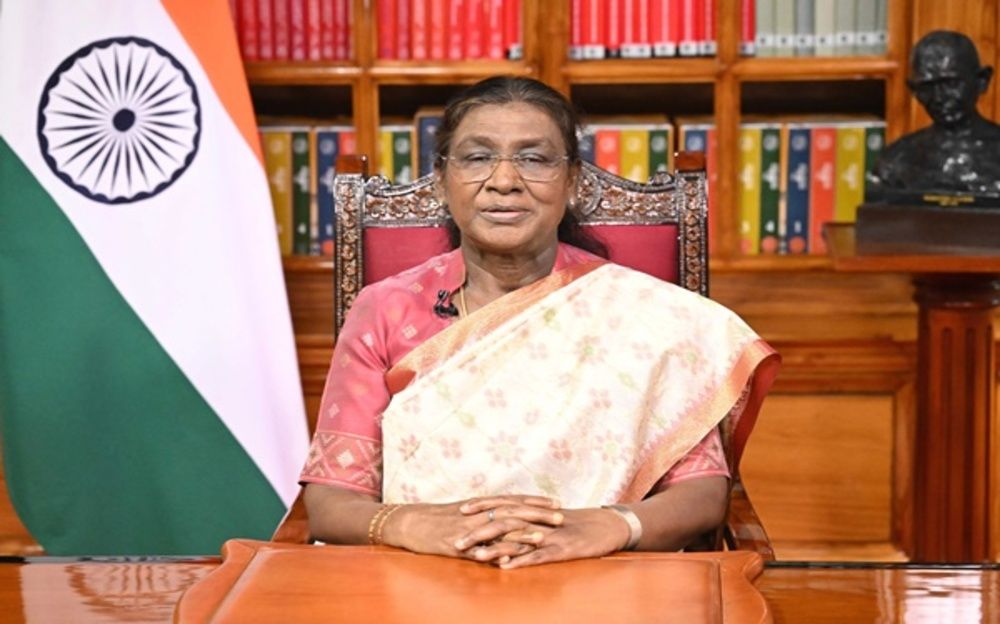
- President clears Viksit Bharat–Guarantee for Rozgar and Ajeevika Mission (Gramin) Act, 2025
- Statutory employment guarantee enhanced from 100 to 125 days
- Gram Sabha and Panchayats to drive decentralised planning
- Law aligned with Viksit Bharat@2047 vision
GG News Bureau
New Delhi, 21st Dec: President of India Droupadi Murmu has given assent to the Viksit Bharat—Guarantee for Rozgar and Ajeevika Mission (Gramin) (VB–G RAM G) Act, 2025, marking a major reform in India’s rural employment framework and replacing the Mahatma Gandhi National Rural Employment Guarantee Act (MGNREGA), 2005.
The new law enhances the statutory wage employment guarantee to 125 days per financial year for rural households, up from the earlier 100 days, significantly strengthening livelihood security, income stability and predictability of work. The Act is aligned with the national vision of Viksit Bharat@2047 and aims to reposition rural employment as a core instrument of empowerment and inclusive growth.
Passed earlier by Parliament, the Act seeks to transform rural employment from a standalone welfare measure into an integrated development mission anchored in empowerment, convergence and saturation-based delivery. It links wage employment with the creation of durable and productive rural assets, strengthening the foundation of a resilient and self-reliant Rural Bharat.
Key Provisions
Under the Act, rural households whose adult members volunteer for unskilled manual work are legally entitled to not less than 125 days of wage employment each year. To balance agricultural needs, States may notify an aggregated pause period of up to 60 days during peak sowing and harvesting seasons, without affecting the overall entitlement.
The law mandates weekly wage payments or payment within 15 days of work completion, with compensation payable in case of delays. It also restores unemployment allowance as a meaningful statutory safeguard if employment is not provided within the stipulated period.
Employment under the Act is aligned with the creation of durable public assets across priority sectors including water security, core rural infrastructure, livelihood-related works and climate resilience. All works will originate from Viksit Gram Panchayat Plans (VGPPs), prepared through participatory processes and approved by Gram Sabhas, ensuring decentralised planning with national-level convergence through platforms such as PM Gati Shakti.
Panchayats at the Core
The Act reinforces the role of Panchayats by vesting planning, implementation and monitoring powers at the local level. While national platforms provide coordination and visibility, decision-making authority remains with Gram Sabhas and Panchayats, preserving grassroots democracy.
Funding and Administration
Implemented as a Centrally Sponsored Scheme, the Act follows a 60:40 Centre–State cost-sharing formula, 90:10 for North Eastern and Himalayan States, and 100% central funding for Union Territories without legislatures. Administrative expenditure has been enhanced from 6% to 9% to strengthen staffing, training and field-level capacity.
Technology-enabled transparency through geo-tagging, dashboards and biometric authentication has been built in, alongside stronger social audits by Gram Sabhas to ensure inclusion and accountability.
Towards Rural Transformation
Officials said the Act represents a decisive renewal of India’s rural employment guarantee by expanding statutory entitlements, strengthening decentralised governance and embedding convergence-driven development. By integrating livelihood security with durable asset creation, the law seeks to promote sustainable rural growth and long-term prosperity, fully aligned with the vision of Viksit Bharat@2047.
