

By Anjali Sharma
UNITED NATIONS – IOM Chief of Mission in Sudan Mohamed Refaat,on Friday said that as fighting escalates in Sudan, “people are scared, people are fleeing their homes”, noted that over 50,000 people have been uprooted since late October in the Kordofans region alone.
“People in Sudan are not moving by choice, they are running just to find safety,” said Mohamed Refaat, IOM Chief of Mission in Sudan.
He was speaking from Port Sudan to journalists in Geneva, he urged all Member States and “everyone who can provide support” for Sudan’s people, to ensure their protection.
The latest reports from South Sudan indicated that the paramilitary Rapid Support Forces along with allies in the Sudan People’s Liberation Movement-North shelled residential buildings in Dilling, South Kordofan in the last 48 hours.
The RSF have been fighting with the Sudanese army since April 2023 after a breakdown in transition to civilian rule.
On 26 October, the paramilitary force overran El Fasher the regional capital of North Darfur after a 500-day siege, prompted mass displacement. Deep concerns persist for those believed to still be trapped inside the city who had to eat peanut shells and animal feed to survive the ordeal.
“Those displacements from Kordofan are not happening sporadically, they are happening because people are scared,” IOM’s Mr. Refaat said. He noted that people were now fleeing from Babanusa, Kadugli and El-Obeid.
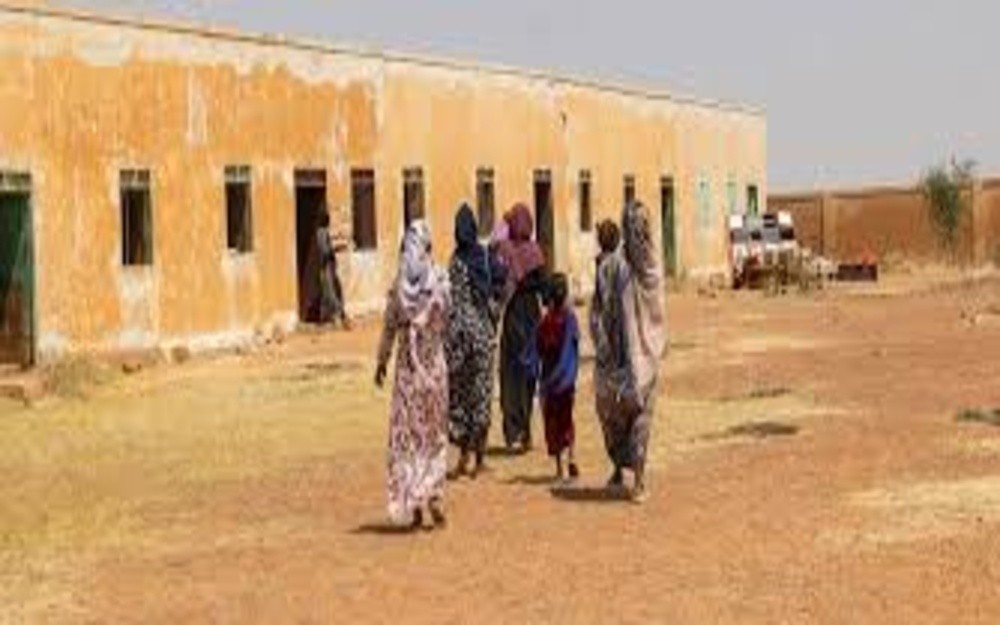
He highlighted deep concerns for vulnerable individuals on the move, noted that “only women and children” are arriving in White Nile and Gedaref to the east.
The deep insecurity and violence persist across Sudan, increasing protection risks for civilians and hampering safe humanitarian access.
There are growing concerns over the rapidly deteriorating situation in Kadugli, the capital city of South Kordofan state where six peacekeepers from Bangladesh were killed in drone attacks last Saturday.
UN blue helmets were at a logistics base in the city, deployed with the UN force in Abyei, the disputed region on the border with South Sudan.
“In the town of Kadugli, we estimate that there are around 90,000 to 100,000 people in this area who will be displaced if something happened if the fighting continued, if they get access to leaving the city,” Mr. Refaat said.
He added that El-Obeid – the capital of North Kordofan – appeared to be just “one or two steps from being the next city under attack…we estimate more than half a million are already going to be impacted.”
Top official noted that the UN agency’s displacement tracking matrix had recorded more than 109,000 people who had managed to flee the city and its surrounding villages since it fell in late October to the RSF.
“Many of them are still stuck in the neighbouring villages not able to move further because of logistics [and] security issues” he said, fuelling concerns for those trying to survive when the essentials for survival have been “completely obliterated”, UN aid teams warned one week ago.
IOM chief of mission explained that the agency had lost $83 million worth of resources this year alone. This has forced aid teams to reduce its footprint “massively”, Mr. Refaat explained.
“Because of those cuts, we have to choose which lives we can save and which support we have to stop. So, we would go crossing places where we know that people are absolutely in dire need, but we will leave them and not be able to help them because we have to prioritize those who are absolutely dying.”
