
Guterres urges calm over killing of protest leader trigger unrest in Bangladesh

By Anjali Sharma
UNITED NATIONS – UN chief Antonio Guterres on Friday has urged calm in Bangladesh after the killing of a prominent youth protest leader triggered fresh unrest, raised concerns about political violence and the safety of civic space as the country prepares for elections early next year.
UN Secretary-General António Guterres in a statement issued in New York condemned the killing of Sharif Osman Bin Hadi, a leading figure in last year’s protests, and called on the authorities to ensure accountability.
UN spokesperson Stéphane Dujarric said at a regular press briefing in New York that Mr. Guterres urged the authorities to conduct “a prompt, an impartial, a thorough and transparent investigation, in line with international human rights standards,” and called for restraint as Bangladesh heads toward parliamentary elections scheduled for February 2026,.
Mr. Guterres also appealed for calm, urging all sides to “refrain from violence, reduce tensions and exercise maximum restraint in order to preserve a peaceful electoral environment.”
UN High Commissioner for Human Rights Volker Türk, also voiced similar concerns who said he was “deeply troubled” by Mr. Hadi’s death after being shot last week.
“Retaliation and revenge will only deepen divisions and undermine the rights of all,” Mr. Türk said in a statement issued in Geneva, echoed calls for accountability for those responsible.
According to local media reports youth leader Hadi, 32, was shot by masked assailants on 12 December as he was leaving a mosque in Dhaka, according to media reports. He was airlifted to a hospital in Singapore for treatment, where he later died of his injuries.
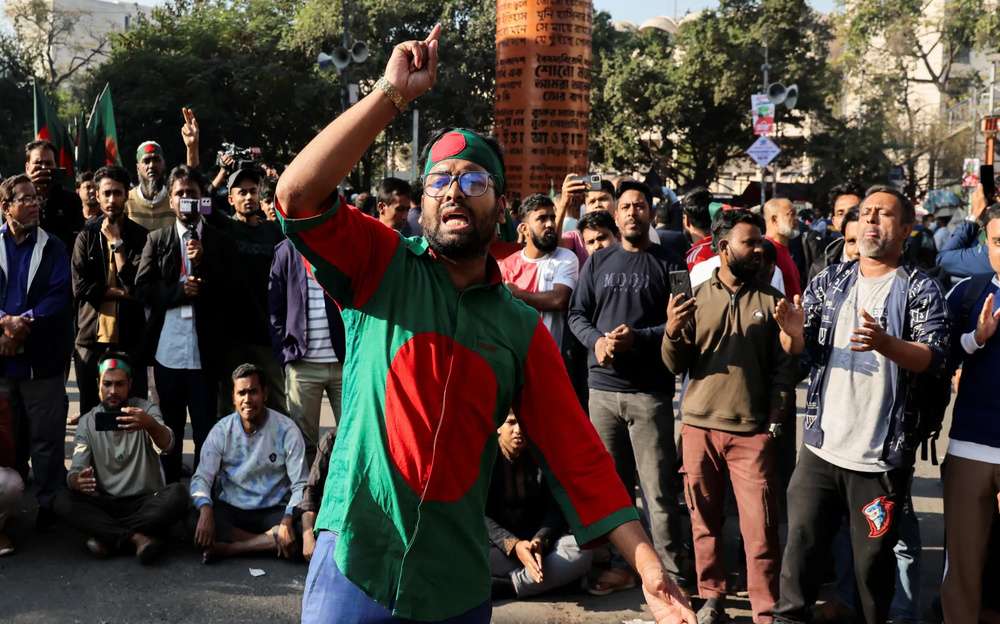
The announcement of his death on Thursday, the protests erupted in several parts of Bangladesh.
Media reports stated that thousands of demonstrators took to the streets in Dhaka with some buildings torched or vandalized.
Bangladesh authorities said that several properties, including buildings housing major newspapers, were set on fire, and journalists were reportedly assaulted during the unrest.
The unrest comes against the backdrop of a dramatic political shift last year. In July 2024, student-led protests initially demanding reforms to civil service job quotas were met with a violent crackdown by security forces and pro-government groups.
The quota system was later withdrawn, demonstrations widened into a nationwide movement called for then-Prime Minister Sheikh Hasina to step down and for accountability for the violent suppression of protests.
The situation had escalated sharply. Sheikh Hasina, who had ruled Bangladesh since 2009 after an earlier term from 1996 to 2001, fled the country on 5 August after mounting pressure.
UN-led investigation later found that up to 1,400 people including many children may have been killed during the unrest in July and August, with thousands more injured.
Mr. Hadi emerged as one of the most prominent youth leaders of the movement and, according to media reports, had planned to run for parliament in the February 2026 elections.
UN rights chief Volker Turk stressed it was vital to ensure an environment in which all individuals can participate safely and peacefully in public life, and freely express different views.
“I urge the authorities to uphold the rights to freedom of expression, peaceful assembly, and security of journalists at this critical time, and prevent further escalation of unrest,” Mr. Türk added.
