
Centre Pushes States for Rapid Air Quality Improvement in Delhi-NCR
Monthly ministerial reviews from January 2026; visible results sought within a week

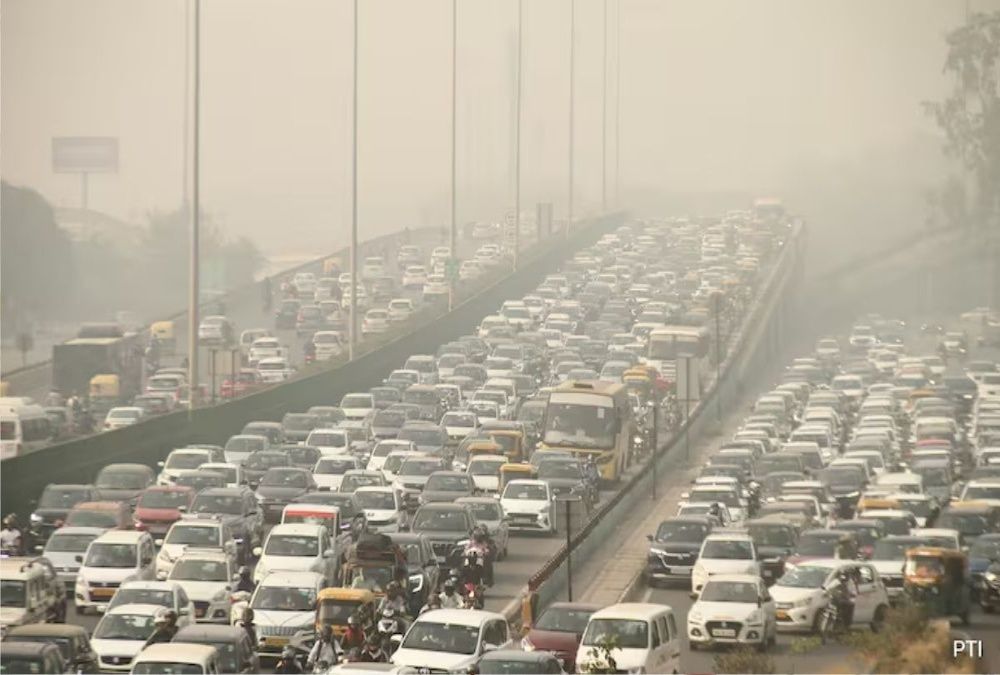
- Environment Minister chairs 4th high-level review on Delhi-NCR air pollution
- Monthly ministerial monitoring of state action plans from January 2026
- States directed to show visible air quality improvement within one week
- Strict action ordered on stubble burning, C&D waste, traffic congestion
GG News Bureau
New Delhi, 20th Dec: Union Minister for Environment, Forest and Climate Change Shri Bhupender Yadav on Friday chaired the fourth high-level review meeting on Delhi-NCR air pollution, directing states to ensure visible improvement in air quality within one week and announcing monthly ministerial reviews of state action plans from January 2026.
The meeting reviewed action plans submitted by the governments of NCT Delhi, Haryana and Uttar Pradesh, along with municipal bodies, to address the persistent poor air quality in the National Capital Region. Union Minister of State for Environment Shri Kirti Vardhan Singh was also present.
Expressing concern over the continuing pollution levels, Shri Yadav said all NCR cities’ action plans must be integrated state-wise and subjected to regular monitoring. He assured that inter-state coordination issues would be resolved through high-level meetings and implementation bottlenecks addressed promptly.
The minister stressed strict action against polluters while ensuring minimal inconvenience to the public. A follow-up review has been scheduled in 15 days to assess corrective measures taken by authorities.
Key directions included smooth traffic management at 62 congestion hotspots, promotion of EV and CNG buses by corporates, staggered office and commercial timings, and enhanced end-to-end public transport on high-traffic routes. Cities such as Gurugram, Faridabad, Ghaziabad and Noida were asked to fast-track Integrated Smart Traffic Management Systems (ITMS).
The minister also ordered intensified action against illegal and polluting industrial units, sealing of tyre-burning facilities, and mandatory installation of Online Continuous Emission Monitoring Systems (OCEMS) by December 31. Haryana was directed to strengthen crop residue management, expand paddy straw utilisation and promote pelletisation, CBG and ethanol plants to curb stubble burning.
Special focus was placed on dust control, mechanical road sweeping with GPS tracking, removal of construction and demolition waste, and enforcement of construction bans during high pollution periods. CAQM was advised not to permit demolition unless C&D waste collection centres are available within a 10-km radius.
Additional measures included removal of traffic encroachments within 10 days, pothole-free road maintenance, improved metro last-mile connectivity, and coordinated grievance redressal under CAQM supervision. The minister also set a target of planting 11 lakh saplings on World Environment Day 2026.
The meeting was attended by senior officials from MoEFCC, CAQM, CPCB, state governments, DMRC, NHAI, Delhi Police, municipal bodies and pollution control authorities.
