

By Harshita Rai
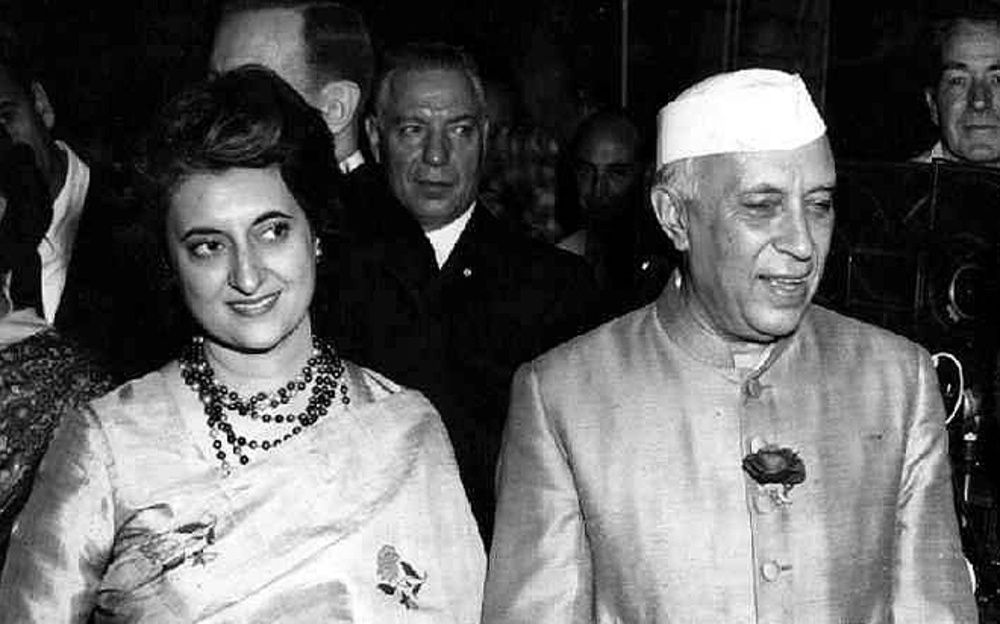
For decades, the Nehru–Gandhi family has occupied a near-mythical space in India’s political narrative. Wrapped in the language of sacrifice, freedom and legacy, its decisions have often escaped the hard scrutiny that any democratic polity must apply to those who wield power the longest. Yet history, when stripped of reverence, raises an uncomfortable question: did the Nehru family’s major decisions repeatedly place ideology, image or political survival above India’s long-term interests?
The record demands a serious re-examination.
Jawaharlal Nehru, independent India’s first Prime Minister, is often celebrated as the architect of modern India. But it was under his watch that India suffered one of its most humiliating strategic setbacks — the 1962 war with China. Nehru’s idealistic belief in Hindi-Chini bhai-bhai, coupled with diplomatic misjudgment and military unpreparedness, culminated in a crushing defeat that permanently altered India’s security outlook. The cost was not just lost territory or soldiers’ lives, but decades of strategic caution born out of avoidable failure.
Economically, Nehru’s preference for a heavily state-controlled model created what later economists would call the “Licence Raj.” While intended to ensure equity and self-reliance, it stifled entrepreneurship, discouraged innovation and trapped India in decades of low growth. The consequences were visible: poverty persisted, industry stagnated and India lagged behind nations that embraced competitive markets far earlier.
If Nehru’s failures were strategic and economic, Indira Gandhi’s failures were institutional and moral.
The Emergency imposed between 1975 and 1977 remains one of the darkest chapters in India’s democratic history. Fundamental rights were suspended, opposition leaders jailed, and the press gagged — all to preserve one leader’s hold on power. This was not governance under pressure; it was democracy sacrificed at the altar of personal authority.
Operation Blue Star in 1984 further deepened national wounds. Sending the Army into the Golden Temple complex may have addressed an immediate security threat, but the political handling of the crisis displayed a profound lack of foresight. The operation alienated large sections of the Sikh community and set off a chain of violence that culminated in Indira Gandhi’s assassination and the horrific anti-Sikh riots that followed.
Those riots, too, expose another disturbing truth. The failure of the state — and alleged complicity of ruling party leaders — in protecting citizens and delivering justice stands as a lasting indictment. Even decades later, delayed accountability reinforces the perception that power, not principle, dictated outcomes.
Rajiv Gandhi entered office promising clean governance and a break from the past. Instead, his tenure became synonymous with the Bofors scandal, which shattered public trust and exposed deep flaws in defence procurement and political accountability. The damage went beyond allegations of corruption; it eroded faith in institutions meant to safeguard national security.
Foreign policy decisions under Rajiv Gandhi also proved costly. The deployment of the Indian Peace Keeping Force in Sri Lanka was launched with grand diplomatic intent but without a clear exit strategy. Indian soldiers paid the price for political miscalculation, and India’s regional credibility suffered.
Equally contentious was the handling of the Shah Bano case. By legislating around a Supreme Court judgment to placate conservative vote banks, the government projected a troubling message — that electoral arithmetic could override constitutional values and women’s rights. The debate it triggered continues to polarise Indian politics even today.
Taken together, these episodes reveal a pattern that cannot be ignored. The Nehru–Gandhi family did not merely make mistakes — they governed without adequate accountability for the consequences of those mistakes. Their dominance over India’s political landscape ensured that errors were often defended, softened or forgotten, rather than confronted and corrected.
This is not an argument to erase history, but to confront it honestly. Democracies mature not by preserving political dynasties, but by questioning them. The reverence surrounding the Nehru family has too often acted as a shield against scrutiny — a luxury no ruling lineage should enjoy.
As India moves forward, the lesson is clear: legacy cannot substitute performance, and sacrifice cannot excuse failure. The nation owes it to itself to judge all leaders — past and present — not by surname or symbolism, but by outcomes, accountability and the real cost of their decisions on India’s destiny.
