
China Offers Help as Delhi Gasp at Hazardous AQI Levels
Chinese embassy contrasts AQI data, offers to share pollution-control lessons amid Delhi-NCR smog crisis

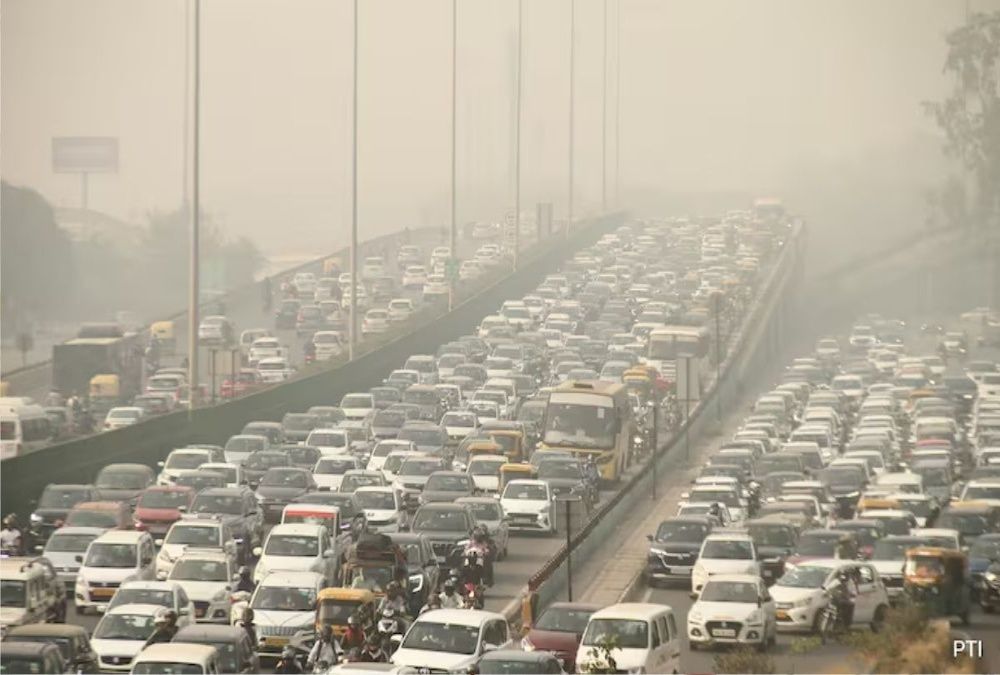
- Delhi AQI touched 437 as Beijing recorded moderate air quality levels
- Chinese embassy cites decade-long enforcement drive behind pollution gains
- Social media users react sharply, some seek China’s expertise for NCR
- Experts flag enforcement gaps as India’s biggest hurdle
GG News Bureau
Beijing, 17th Dec: As Delhi and large parts of northern India continue to reel under severe air pollution, the Chinese embassy on Tuesday highlighted Beijing’s relative success in curbing smog, drawing sharp public attention to the contrast in air quality between the two capitals.
With Delhi’s Air Quality Index touching 437 on Tuesday evening and remaining around 370 on Wednesday morning, Chinese embassy spokesperson Yu Jing posted comparative AQI screenshots on X. While Delhi-NCR recorded hazardous levels above 440, Beijing’s AQI stood at 68, categorised as moderate.
“Both China and India know the struggle with air pollution amid rapid urbanisation,” Yu said, attributing Beijing’s improvement to “China’s sustained efforts over the past decade.” She added that the embassy would share a series explaining how China tackled air pollution.
The post triggered wide reactions online. Several users welcomed the offer, with some urging India to learn from China’s experience. Others criticised Indian authorities for poor enforcement, while a few questioned selective AQI readings, pointing out that Beijing’s air quality can also spike.
China’s turnaround followed its 2013 declaration of a “war on pollution,” backed by strict enforcement, real-time monitoring, coal-to-gas transitions for heating, curbs on vehicle emissions, and limits on private car registrations. These measures led to a reported 64 per cent drop in PM2.5 levels between 2013 and 2023.
Delhi faces a similar mix of pollution sources—construction dust, vehicular emissions, industrial smoke, coal use and seasonal factors—but experts say inconsistent enforcement remains the weakest link. While India has rolled out measures such as vehicle scrappage policies, electric buses and episodic restrictions like odd-even schemes, compliance has often been uneven.
The recent relaxation of firecracker restrictions ahead of Diwali, despite court directives, has also drawn criticism. Even with a reported fall in farm fires, Delhi’s PM2.5 levels surged to nearly 100 times the World Health Organization’s recommended limit in October, underscoring the scale of the challenge.
