
44 Retired Judges Defend CJI Amid ‘Motivated Campaign’ Over Rohingya Hearing
Statement warns attacks on judiciary threaten independence, distort legal context

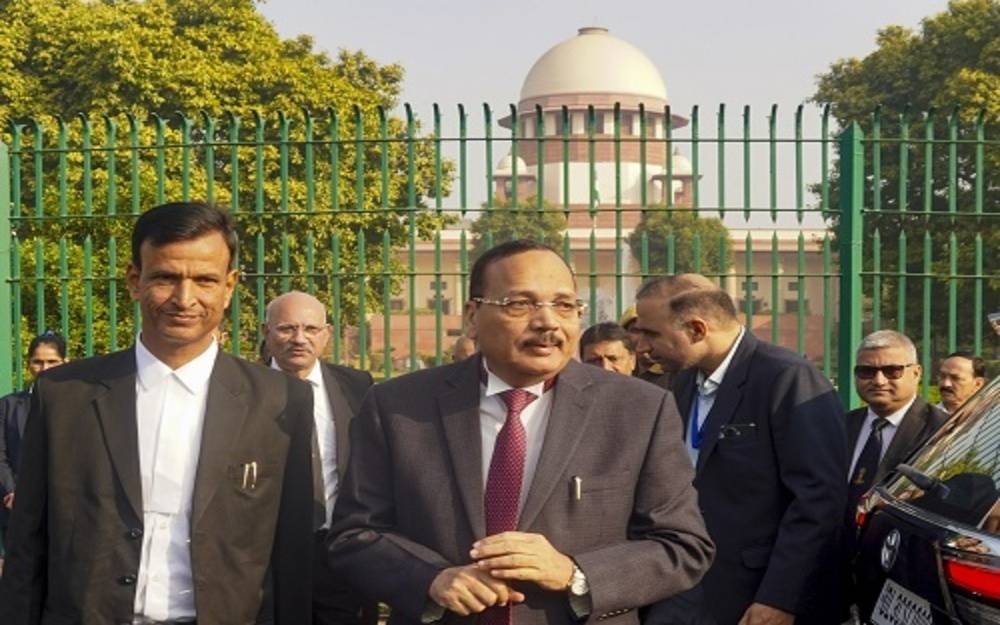
- Forty-four retired judges condemn “motivated campaign” targeting CJI over Rohingya case remarks.
- Judges say criticism misrepresents routine judicial questioning and undermines constitutional processes.
- Statement highlights omitted court context affirming protection from torture for all individuals.
- Retired judges caution that politicising legal queries endangers judicial independence.
GG News Bureau
New Delhi, 12th Dec: A group of 44 retired judges from the Supreme Court and various High Courts has issued a strong public statement defending Chief Justice of India D.Y. Chandrachud against what they describe as a “motivated campaign” targeting his recent remarks during a hearing involving Rohingya refugees.
In the statement, titled “Disparagement of the Supreme Court is Unacceptable,” the former judges condemned what they called unfair criticism and deliberate distortion of the judiciary’s intent. They warned that such attacks risk eroding judicial independence and undermining constitutional processes.
The controversy stems from observations made by the Chief Justice during a hearing, which were widely circulated and criticised in certain political and social quarters. The retired judges maintained that the CJI’s question—seeking clarity on the legal status being claimed for Rohingya refugees—was a standard and necessary legal inquiry.
“No judicial determination can proceed without addressing this foundational legal question,” the statement noted, stressing that critics had misrepresented a routine part of the judicial process as something politically motivated.
The judges highlighted two key aspects missing from much of the public criticism:
Context of the Bench’s Full Observations:
They underscored that the critics ignored a crucial portion of the hearing where the Bench clearly stated that no human being, whether an Indian citizen or a foreign national, can be subjected to torture, disappearance or inhuman treatment. This, they said, reflected the Court’s commitment to human dignity.
Clarification on Legal Framework:
The statement reiterated that India does not have a statutory refugee law and is not a signatory to the 1951 UN Refugee Convention or the 1967 Protocol. Therefore, questions posed by the Bench were meant to situate the case within the constitutional and statutory framework governing foreign nationals.
Beyond defending the specific instance, the retired judges delivered a broader warning that converting constitutionally grounded judicial scrutiny into allegations of bias poses a “serious threat” to the judiciary’s independence. They said fair critique is welcome, but “a campaign based on misrepresentation” is damaging to democratic institutions.
“If every probing question about nationality, migration or documentation is met with such attacks, the judiciary’s ability to fulfil its constitutional mandate would be severely undermined,” the judges cautioned.
Their collective intervention underscores mounting concern within the legal community about external narratives that may attempt to influence or pressure judicial proceedings. It also reasserts the principle that challenging legal reasoning is legitimate, but imputing motives to a judge’s factual or procedural query is not.
As debates around refugee rights, national security and judicial conduct continue, the retired judges’ statement reinforces the delicate balance the courts must maintain in sensitive matters—while defending their essential space for rigorous and impartial legal examination.
