
TMC’s New Chanakya Move? The Strategy Behind the Murshidabad Flashpoint
“A Brewing Storm in Murshidabad: The Political Chessboard Behind Rising Tensions Before the 2026 West Bengal Elections.”

Paromita Das
New Delhi, 11th December: The political landscape of West Bengal has often been described as a battlefield where ideology, identity, and electoral arithmetic collide with unfiltered intensity. But what is unfolding in Murshidabad—just a few kilometres from the Bharat-Bangladesh border—suggests something far more calculated and unsettling. The recent attempt to escalate communal sentiments under the pretext of laying the foundation stone for a “Babri Masjid” is not an isolated event. It is part of a carefully engineered political strategy that aims to reorganise vote blocks, manipulate public psychology, and prepare the ground for the 2026 Assembly elections.
What appears on the surface like a localised communal flare-up is, in reality, a sophisticated electoral gambit. It is less about religion and more about who will control Bengal’s most decisive vote banks in the years ahead.
A Foundation Stone Meant to Spark Fire, Not Faith
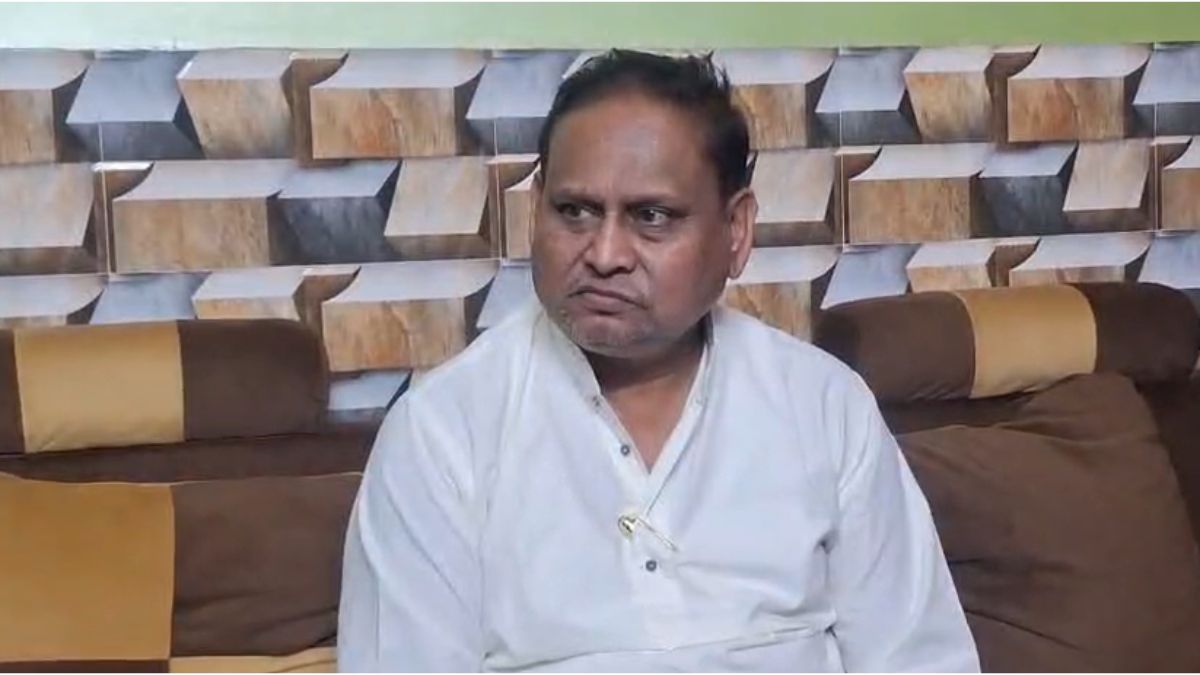
On the anniversary of the Babri Masjid demolition, TMC MLA Humayun Kabir attempted something unprecedented: he publicly declared that a new mosque would be built and named “Babri Masjid.” A massive crowd turned up—carrying bricks, money, and even visitors from Saudi Arabia. The symbolism was intentional and explosive. Kabir wasn’t building religious harmony; he was building a narrative.
Predictably, TMC expelled him. But here is where the story gets interesting. The same TMC that faced massive riots in Murshidabad after the Waqf Amendment issue earlier in 2025, and did little to control the situation until Central Forces intervened, suddenly decided to distance itself from Kabir. Why now? Why this event?
The answer lies in the shifting mathematics of Bengal’s electoral politics.
The Silent Exit of Illegal Immigrants and the Shifting Vote Banks
For decades, TMC has relied heavily on the consolidation of Muslim votes. In several constituencies—especially the 90 seats where 42% to 82% of the population is Muslim—this block has ensured almost guaranteed electoral victories.
But now, with illegal Bangladeshi immigrants increasingly leaving or being identified, demographic and political equations are changing. The Muslim vote, once tightly controlled, is showing signs of fragmentation. TMC realises that relying solely on one community may no longer secure power.
And thus begins the great shift.
To win 2026, TMC must do something it has never done before: reach out to Hindu voters. Not symbolically, but strategically.
Expelling Humayun Kabir plays directly into that script. By distancing themselves from an overtly provocative act, TMC signals to Hindu voters that it is stepping away from hardcore appeasement. It is not abandoning Muslim voters—they remain crucial—but it is creating an image of “rebalancing.”
This is Chanakya-style politics, not coincidence.
Humayun Kabir’s Threat: A New Party and a New Muslim Bloc
Kabir has now announced that he will launch his own party. He hinted at tying up with Owaisi’s AIMIM, just like the Bihar Seemanchal model where a separate Muslim political platform captured several seats.
If Kabir and AIMIM join forces, they could consolidate Muslim votes in dozens of constituencies—votes that previously went almost entirely to TMC.
TMC’s expulsion of Kabir now looks like a calculated move:
- Let Kabir capture and split Muslim votes.
- Let TMC position itself as more acceptable to Hindu voters.
- After elections, reunite as a coalition if numbers permit.
This is not Kabir’s strategy. This is TMC’s script.
A State Divided by Design
West Bengal has seen years of political violence, polarisation, and institutional erosion. Hindus in the state have repeatedly expressed concerns that remain unaddressed, ranging from selective appeasement to demographic anxieties. Now, when elections are approaching, TMC appears ready to theatrically “undo” some of that injustice—not out of remorse, but out of necessity.
The mosque-stone controversy is only the beginning. In the coming months, expect to see:
- Policies framed as “pro-Hindu balancing acts,”
- A softening of TMC’s overt minority posturing,
- Carefully curated communal flashpoints to test public sentiment,
- And parallel attempts to fragment the Muslim vote through breakaway leaders.
This isn’t accidental chaos—it is controlled turbulence.
A Political Game That Risks Tearing Society Apart
West Bengal has always been a politically charged state, but what is emerging now is deeply concerning. When parties manipulate religious vulnerabilities for vote engineering, society pays the real price. Creating tensions near an international border, invoking Babri Masjid symbolism, and mobilising crowds around emotionally loaded issues can destabilise the region in unpredictable ways.
Whether it is TMC, AIMIM, or splinter Muslim organisations, the attempt to organise votes through identity-driven provocations is dangerous. It treats communities not as citizens but as political assets. And while parties may calculate these moves for short-term gain, the long-term consequences could be disastrous—both socially and geopolitically.
West Bengal’s 2026 Elections Are Already Underway—But at What Cost?
Everything happening in Murshidabad today is part of a much bigger blueprint. TMC is recalibrating its political identity, Kabir is preparing to fracture vote banks, and AIMIM is waiting to expand its footprint. The BJP’s strong presence adds another layer of intensity to this unfolding contest.
But as parties battle to secure their futures, the people of West Bengal once again stand on the edge of a political storm not of their making. The next two years may define the state’s social harmony, its electoral integrity, and the future of its communal landscape.
A mosque foundation stone near the Bangladesh border may seem like a local event. It is not.
It is the first move on a very complex chessboard.
