
India–Russia Strategy and the Quiet Rewiring of the Global Order

Poonam Sharma
There are moments in geopolitics when silence is not emptiness—it is pressure building beneath the surface. Over the past few weeks, something similar has unfolded around India, Russia, the United States, and the global trade system. The world may see only routine diplomacy, but behind the curtain, a tectonic shift is in motion.
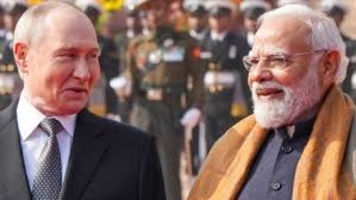
Russian President Vladimir Putin’s recent visit to India was not the usual photo-op, nor was it merely about defence platforms or energy supplies. It hinted at a far deeper transformation—one that challenges the foundations of global trade, maritime power and America’s long-standing dominance over international financial flows.
A Visit Beyond Arms: Reading Between the Lines
Many assumed Putin’s visit was about standard defence deals—missiles, aircraft, joint production.
But weapons agreements do not require the Russian President himself to fly in. These matters can be negotiated at ministerial levels. So why did Putin come now, and why with such confidentiality and strategic timing? The answer lies in a quiet but decisive shift:
India and Russia are preparing to build a parallel global trade architecture—beyond the reach of Western pressure.
This is not an announcement; this is a blueprint.
America’s Double Game—and Its Growing Frustration
Washington has played a double-edged game with India for months: First, it criticized India for buying too much Russian oil.Then it criticized India for cutting Russian oil purchases.Sanctioned Russian shipping, insurance, tankers and payment chains.And it attempted to disrupt India’s energy security through indirect pressure.This strategy was simple:
Break the India–Russia energy link, weaken Moscow, and pull New Delhi back into the Western fold. But far from breaking India, it pushed New Delhi into building a completely new system.
India’s Silent Response: Gradual Withdrawal from Dollar Dependence
For the first time since independence, India is openly challenging the most powerful pillar of American global dominance:
Dollar hegemony over trade.India and Russia have already initiated:Non-dollar payment settlements Local currency invoicing Bank-to-bank corridors outside of Western control Application of mixed currency trade baskets discreetly
This is not merely symbolic. This is economic sovereignty taking shape. Breaking Western Monopoly in Shipping, Insurance, and Maritime Control The world economy runs on three invisible engines: Ships Insurance, marine Dollar-denominated settlements .All three have traditionally been controlled by the West—especially British P&I clubs, US-aligned shipping registries, and dollar-settled freight insurance. If you control shipping insurance, then you would control world trade. If you control the dollar pipeline, you control the countries. India has understood that. The India–Russia plan now seeks to replace all three.
India is expanding its own tanker fleet, developing sovereign marine insurance frameworks, and coordinating with Russia and Iran on routes where Western sanctions hold no power. For the first time, the maritime chokehold of the West is being structurally challenged.
INSTC: The Route That Could Re-Draw World Trade
At the heart of this shift lies the International North–South Transport Corridor (INSTC): India → Iran (Bandar Abbas) → Caspian Sea → Russia It shortens the 40-day journey down to 18-20 days and avoids:
The Suez Canal
western-controlled sea lanes
US naval monitoring zones
Dollar-driven shipping payments
This corridor is more than a trade shortcut. It was a strategic escape hatch from Western economic dominance. For the first time, a major Asian trade artery will move outside American influence. Why the West is Apprehensive
This new India–Russia–Iran alignment threatens several pillars of Western power: Dilution of dollar dominance over the globe Loss of control over sea trade Decline of the Suez–Europe shipping route ,The rise of Asian corridors beyond NATO’s visibility India: The Emergent Independent, Rule-Shaping Power In Washington and Brussels, this is seen not as a bilateral arrangement—but as a parallel world order quietly taking shape.
India’s Great Leap: A Self-Sufficient Oceanic and Trading System India has started to:
Build its own tanker fleets
Offer its own marine insurance
Develop its own non-dollar payment chain
Utilize alternative shipping routes
Secure energy flows with Russia, Iran, and Central Asia
This is a turning point in the strategic identity of India. For the first time in modern history, India is not merely participating in the global system— It is designing a new one.
Conclusion: The Storm Behind the Silence
The world may not fully understand it yet, but the India–Russia talks have launched a movement that could reshape global power balances.
A silent storm is rising: The dollar’s monopoly is weakening ,Western maritime dominance is meeting resistance. India is flexing unprecedented autonomy. New trade corridors are creating a post-Western economic map. Behind all this, the message is clear: India is no longer just a large market—it is becoming a global power capable of reshaping the world’s economic architecture.
