
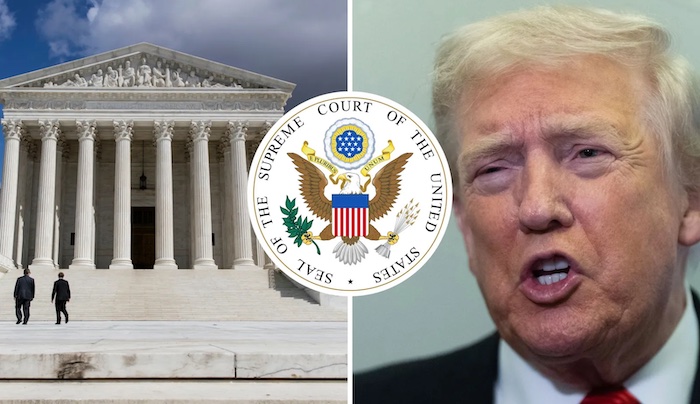
US Supreme Court agreed to decide legality of Trump order to end birthright citizenship

By Anjali Sharma
WASHINGTON – The US Supreme Court on Saturday agreed to decide the legality of President Donald Trump’s executive order that seeks to end birthright citizenship, which has been treated as settled law for more than a century.
Trump signed an executive order directing federal agencies to halt recognition of citizenship for children born after February 19, if neither parent is a US citizen nor a permanent resident, media reported.
His administration has argued that the constitution does not grant citizenship to the children of “temporary visitors or illegal aliens,” because such parents are supposedly not “subject to the jurisdiction” of the United States in the constitutional sense, media reports stated.
Multiple lawsuits were filed challenging it soon after the executive order was issued. Several federal judges have temporarily blocked the order.
The Supreme Court held that federal district courts lack authority to issue broad nationwide or universal injunctions blocking the implementation of the executive order on June 27, in a 6-3 ruling.
US Supreme Court is choosing to address the controversy head-on by taking up the appeal on Friday.
Trump administration argued that children of noncitizens are not “subject to the jurisdiction” of the United States and therefore not entitled to automatic citizenship.
24 Republican-led states and 27 GOP lawmakers, including Senator Ted Cruz and Lindsey Graham, have urged the court to uphold the policy.
This is one of the multiple challenges to Trump’s immigration policies in which the Supreme Court has been asked to intervene.
