
HM Amit Shah Unveils Bio-CNG, Fertilizer and Powder Plants in Gujarat
Minister outlines White Revolution 2.0 vision; says circular economy will raise dairy farmers’ income by 20%

GG News Bureau
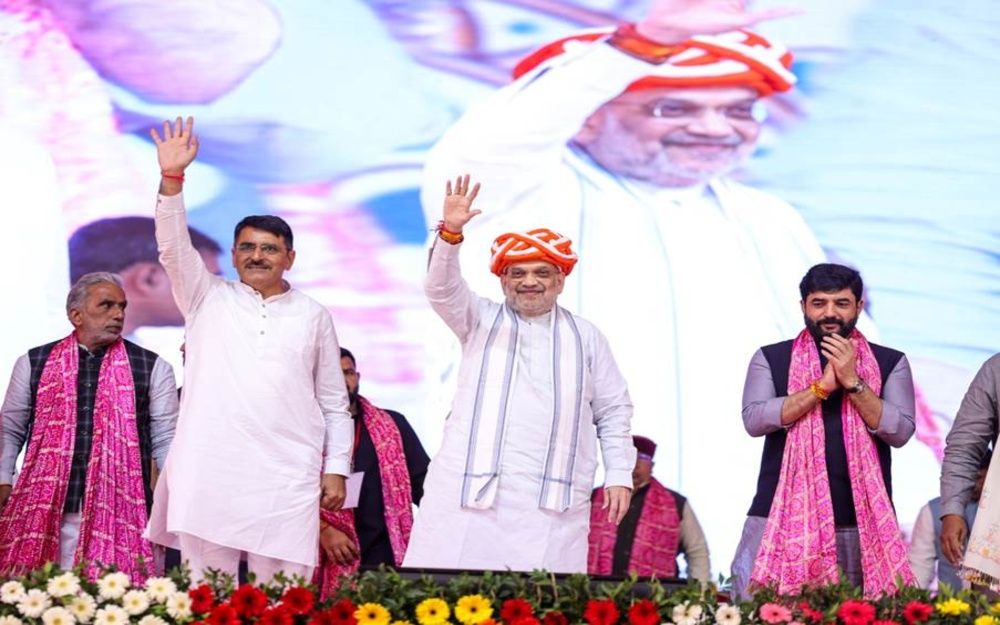
Ahmedabad, 6th Dec: Union Home Minister and Minister of Cooperation Amit Shah on Saturday inaugurated the newly constructed Bio-CNG and fertilizer plant of Banas Dairy and laid the foundation stone of a 150-ton powder plant in Gujarat’s Vav-Tharad district. The event was attended by Gujarat Assembly Speaker Shankar Chaudhary, Union Ministers of State for Cooperation Krishan Pal Gurjar and Murlidhar Mohol, Cooperation Secretary Dr Ashish Kumar Bhutani and other dignitaries.
Addressing the gathering, Shah said that Prime Minister Narendra Modi has set ambitious goals for White Revolution 2.0, driven by four major pillars — the National Gokul Mission, Animal Husbandry Infrastructure Development Fund, the revamped National Dairy Plan and the National Animal Disease Control Programme. He expressed confidence that these initiatives will transform India’s dairy sector in the coming years.
Shah highlighted the remarkable rise of Banas Dairy, which now records a turnover of ₹24,000 crore. He credited the women of Banaskantha for this achievement, stating that the dairy’s success is built on their hard work and transparent cooperative systems that transfer payments directly to their bank accounts. He noted that women and farmers of the region had built, “in the blink of an eye, a company so large that it would make major corporates sweat.”
The Minister said that the Bio-CNG plant pioneered by Banas Dairy would become a model for cooperatives across India. The shift towards a circular economy — converting dung into organic fertilizers, biogas and electricity — would, he said, raise dairy farmers’ income by more than 20 per cent without increasing milk production.
Shah recalled how water scarcity once limited farmers to a single crop annually, but irrigation projects under the Sujalam-Sufalam scheme and diversion of surplus river water have enabled farmers to grow three or more crops a year. He announced that two universities have been tasked with documenting the region’s transformation through water conservation.
He also paid tribute to Dr B.R. Ambedkar on Mahaparinirvan Diwas, saying the Constitution has empowered Dalits, the poor, tribals and backward communities to live with dignity. Shah also referenced the concluding events of the Sardar Patel birth anniversary padyatra, noting that cooperative principles were rooted in Patel’s vision.
The Minister said Banas Dairy has become Asia’s largest milk producer and is now expanding into high-value dairy manufacturing. He added that new products with strong global demand would soon be introduced, enabling farmers to earn significantly higher profits.
Shah said the government’s plan includes producing animal feed within cooperatives so that profits flow directly to women farmers. He noted that new national-level cooperatives for seeds, organics and agri-exports, as well as three multi-state dairy cooperatives, will cover everything from cheese and baby food to cold storages and edible oil packaging, ensuring profits return to livestock farmers.
He emphasised that Banaskantha will be the centre of India’s detailed planning for a circular dairy economy and expressed confidence that the model would succeed nationwide.
Shah added that micro-ATMs installed at village milk cooperatives would soon facilitate financial services, further empowering rural households. He reiterated that with major reforms and cooperative-driven innovation, White Revolution 2.0 would achieve its goals and bring prosperity to millions of dairy farmers across the country.
