
‘IMAT Success Strengthens Gaganyaan Mission’: Dr Jitendra Singh
ISRO’s extreme-condition parachute test keeps India’s first human spaceflight on track for 2027

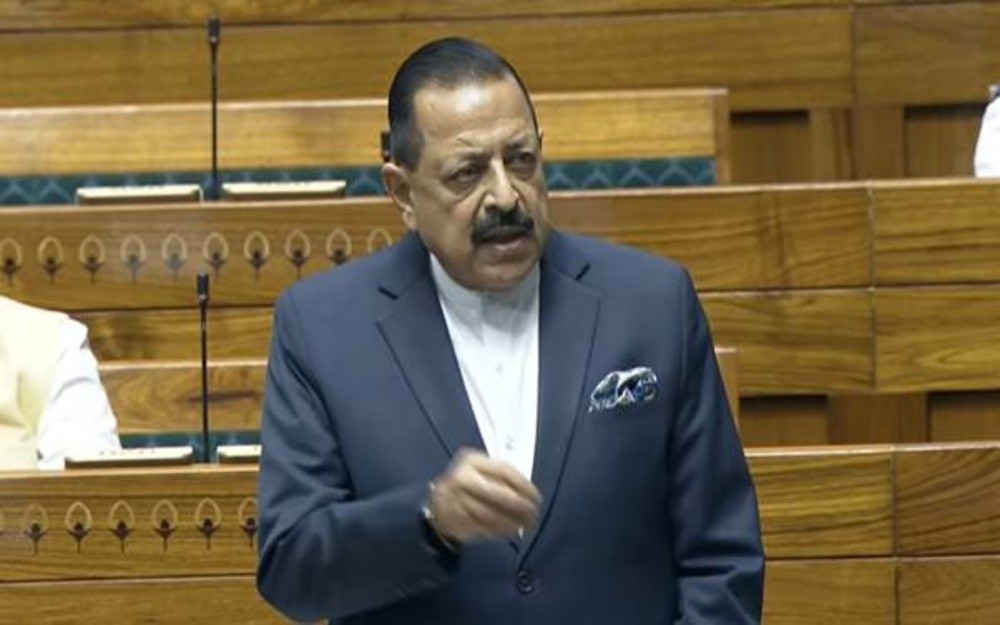
- Dr Jitendra Singh says IMAT marks a key step in Gaganyaan’s mission-readiness.
- Test validated Crew Module parachute system under extreme descent conditions.
- Findings to be integrated into astronaut emergency and survival training.
- Government reiterates crewed mission target of Q1 2027.
GG News Bureau
New Delhi, 3rd Dec: Union Minister of State for Science & Technology and MoS PMO, Dr Jitendra Singh, informed Parliament on Wednesday that the Integrated Main Parachute Airdrop Test (IMAT) conducted by ISRO has advanced the mission-readiness roadmap for India’s first human spaceflight programme, Gaganyaan.
He said the IMAT is a crucial part of the qualification campaign for the Crew Module’s parachute-based deceleration system, one of the most critical human-rating components of the mission. The latest test recreated an extreme descent scenario through a deliberate delay in the disreefing sequence between two main parachutes, subjecting the system to high asymmetric loads. The test validated both structural stability and load-bearing performance under these stressed conditions.
Dr Singh noted that the successful demonstration strengthens the human-rating process and supports the Government’s goal of launching the first crewed Gaganyaan mission by the first quarter of 2027.
Responding to queries in the Lok Sabha, he said all parachute system tests undergo independent oversight through the Design Review Team, Independent Assessment Committee and the National Advisory Panel for Human Rating & Certification. These forums ensure rigorous technical scrutiny and review of all test outcomes.
On matters of transparency, Dr Singh said ISRO continues to share major test results with the public and will maintain this practice as the programme progresses.
He added that astronaut safety remains the foremost priority, with all learnings from test campaigns being incorporated into system upgrades and training. Astronaut preparation includes simulations of emergency scenarios, off-nominal landing survival procedures, operation of emergency kits and continuous psychological support.
Dr Singh also told the House that ISRO has established a comprehensive risk-assessment and mitigation framework, overseen by the Human Rating Certification Board and the National Advisory Panel, to ensure mission risk remains within acceptable limits.
He concluded that each successful milestone, including the latest IMAT, plays a vital role in strengthening crew training, ground recovery planning and the overall preparedness for India’s historic human space mission.
