
Centre Flags Monitoring of 95 CAQM Directions Amid Delhi Pollution Row
Bhupender Yadav outlines compliance steps but avoids query on Delhi’s use of ₹1,200-crore clean air funds

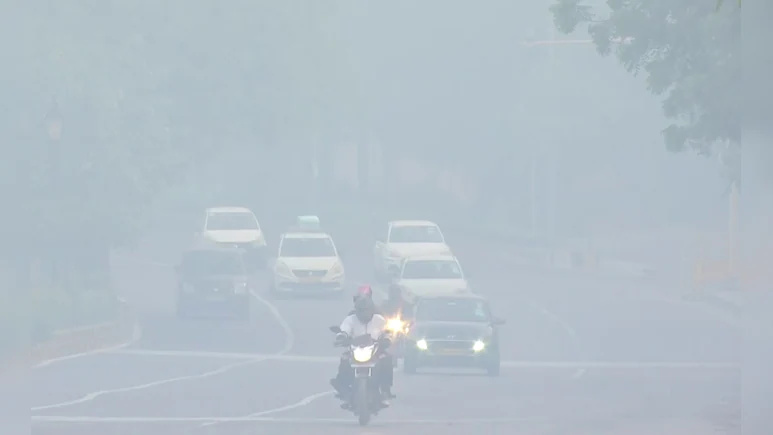
- Centre says monitoring mechanism in place for 95 CAQM directives in Delhi-NCR.
- Environment Minister Bhupender Yadav silent on whether Delhi under-utilised ₹1,200-crore NCAP funds.
- Reply shifts focus to Central initiatives, revised GRAP norms, and improved AQI statistics.
- No clarity on accountability or actual expenditure by Delhi government.
GG News Bureau
New Delhi, 1st Dec: A monitoring system has been established to track compliance with 95 directives issued by the Centre-appointed Commission for Air Quality Management (CAQM), Union Environment Minister Bhupender Yadav informed the Lok Sabha on Monday. Responding to concerns over the toxic air choking Delhi and its neighbouring areas, the minister refrained from confirming whether the Delhi government had under-utilised the ₹1,200-crore Central allocation meant for clean air initiatives.
In a written reply to a question by Congress MP Dr Kirsan Namdeo Rao, Yadav avoided directly addressing queries on Delhi’s spending pattern under the National Clean Air Programme (NCAP). Instead, he said the Delhi government had “reported implementation” of several activities, including procurement of 14 mechanical road sweepers, road paving, and greening of 2.6 hectares — all still at “various stages”.
The minister highlighted updates from the New Delhi Municipal Council, which has initiated procurement of new anti-smog guns and undertaken road improvement projects. However, his reply did not disclose how much of the sanctioned funds had actually been spent, nor did it address accountability for any under-utilisation.
Shifting the focus, Yadav underlined Central efforts, including tougher emission norms, the revised Graded Response Action Plan (GRAP) notified on November 21, and multiple high-level reviews chaired by him. The ministry claimed measurable gains: 200 “good to moderate” AQI days in 2025 compared to 110 in 2016, and the lowest average AQI in eight years, excluding the pandemic year.
The revised GRAP tightens air pollution response measures, moving several key interventions to earlier stages of AQI deterioration. Uninterrupted power supply, traffic synchronisation, and expansion of CNG/electric buses now begin at Stage I. Staggered office timings shift to Stage II, while 50% work-from-home moves to Stage III.
With Delhi’s air quality oscillating between “Very Poor” and forecasted “Severe” levels, questions over ground-level implementation and utilisation of Central funds by the Delhi government are expected to intensify as winter pollution worsens.
