
New Babri Masjid in Murshidabad: Reviving Faith or Reigniting Old Wounds?
“A New Controversy in the Making: The Political and Cultural Ripples of Rebuilding Babri in Bengal.”

Paromita Das
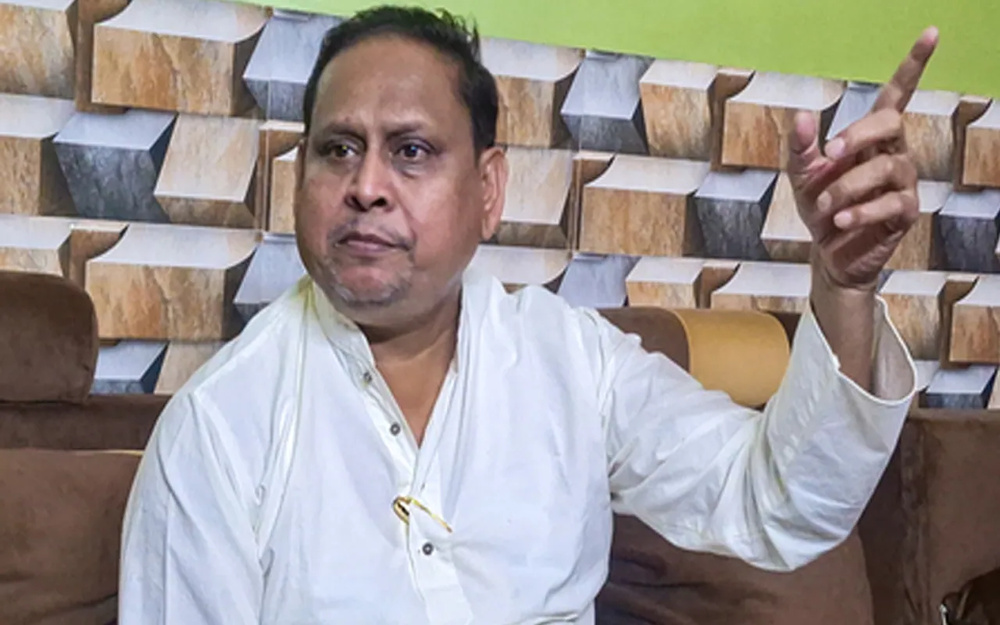
New Delhi, 24th November: Bharat’s social and political landscape is once again stirring with the tremors of an old controversy. In a development that has reignited debate across the nation, a new Babri Masjid is set to be built in West Bengal’s Murshidabad district. The announcement, made by Trinamool Congress MLA Humayun Kabir, has instantly rekindled memories of one of the most polarizing chapters in Bharat’s post-independence history.
As plans unfold to lay the foundation of this mosque in Beldanga’s Mirzapur on December 6—a date heavy with symbolic resonance—the move has invited a complex mix of support, suspicion, and unease. What to some seems like a rightful act of religious freedom appears to others as a provocative gesture reopening wounds from a past Bharat has long tried to heal.
The Symbolism of Babri: A Past That Refuses to Fade
The original Babri Masjid, demolished in Ayodhya in 1992, remains an emotional fault line shaping Bharat’s religious and political consciousness. For many Hindus, it symbolized an era of cultural loss and foreign dominance; for many Muslims, it represented a place of faith unjustly erased.
Now, decades later, the idea of constructing a “new Babri Masjid” carries immense symbolic charge. To some, it is a statement of resilience—a chance to rebuild what history took away. To others, it is the reopening of a scar that Bharat has only recently begun to mend through the Supreme Court verdict and the construction of the Ram Temple in Ayodhya.
By retaining the name “Babri,” the project transcends its physical form—it becomes a message, one that intertwines remembrance, assertion, and resistance.
The Murshidabad Project – A Plan Wrapped in Controversy
According to Humayun Kabir, the proposed Babri Masjid will rise on a two-acre plot in Mirzapur, Murshidabad. The structure, he claims, will be larger than the original mosque that once stood in Ayodhya and will include a hospital, school, and rest house—an attempt to weave social welfare into spiritual purpose.
Yet, the timing and tone of this announcement have stirred sharp criticism. Many see it as a politically calculated move in a state already prone to religious polarization. Murshidabad, a region that embodies Bengal’s pluralistic heritage, now finds itself at the crossroads of devotion and discord.
Akhilesh Yadav Weighs In – “Faith is a Constitutional Right”
As debates deepened across political and social platforms, Samajwadi Party chief Akhilesh Yadav stepped forward to defend the right to build the new mosque, grounding his argument firmly in constitutional principles.
“The Constitution of Bharat gives every citizen the freedom to build a temple, mosque, church, or gurudwara. Faith cannot be controlled by politics; it is protected by law,” Yadav said in a recent media interaction, responding to questions about the Murshidabad project.
He added that while history must be remembered, Bharat’s democracy cannot deny anyone the right to practice and express their religion peacefully. His remarks struck a chord among secular voices, who argue that the freedom to build any place of worship lies at the heart of Bharat’s pluralistic identity.
Yadav’s statement also reframed the debate: if the right to build a temple in Ayodhya is celebrated as a triumph of faith, then the right to construct a mosque elsewhere, within the boundaries of the law, must be equally respected.
Politics, Faith, and the Power of Memory
Religion and politics in Bharat have long shared an uneasy alliance. Faith often becomes both an emotional mobilizer and a political instrument. Kabir’s affiliation with the Trinamool Congress, combined with West Bengal’s complex communal landscape, gives this issue layers far deeper than faith alone.
Observers believe that in a state where religious identity plays a growing role in electoral discourse, the “new Babri Masjid” could become a litmus test of both tolerance and political strategy. For some, it represents inclusion; for others, it’s an avoidable flashpoint that risks reviving the divisions of the past.
But the larger question persists—can a nation ever truly move beyond the symbols that once tore it apart, or do those symbols forever dictate its collective conscience?
The Emotional and Cultural Undertones
The word “Babri” has long transcended its architectural origin. It has become a metaphor—a memory of conflict, loss, and transformation. For millions, it signifies a time when Bharat’s unity was tested by communal strife. Choosing to revive that name, therefore, is not a neutral act—it carries emotional gravity and moral consequence.
Yet, Akhilesh Yadav’s constitutional reminder brings an important counterpoint: rights cannot be selectively applied based on sentiment. For a democracy to thrive, freedom of faith must be universal, even when its expression challenges our emotional comfort zones.
To some, this project represents courage and continuity—a way to reclaim space through peace. To others, it risks turning sacred remembrance into political provocation.
Between Faith and Sensitivity
In a pluralistic society like Bharat, faith must walk hand in hand with empathy. The Constitution guarantees the right to worship, but society must practice that right with awareness. The new Babri Masjid in Murshidabad is a constitutional right, yes—but whether it becomes a bridge or a barrier depends on how responsibly that right is exercised.
Reconciliation cannot occur through replication. If unity is the goal, perhaps a name less burdened by the past could have carried the same spiritual power with greater sensitivity. “Babri” is a reminder—but it is also a trigger.
The Path Bharat Chooses
Bharat’s greatest strength lies in remembering without reigniting. The proposed Babri Masjid in Murshidabad stands as more than a construction project—it is a reflection of Bharat’s ongoing dialogue between faith and fraternity.
Whether this monument becomes a symbol of peace or a spark of division will depend not on its architecture but on the collective maturity of the society that surrounds it.
In the end, Bharat must decide: does it wish to rebuild the monuments of its memory—or rise above them to create new symbols of harmony? The answer will not only shape Murshidabad’s skyline, but the soul of the nation itself.
